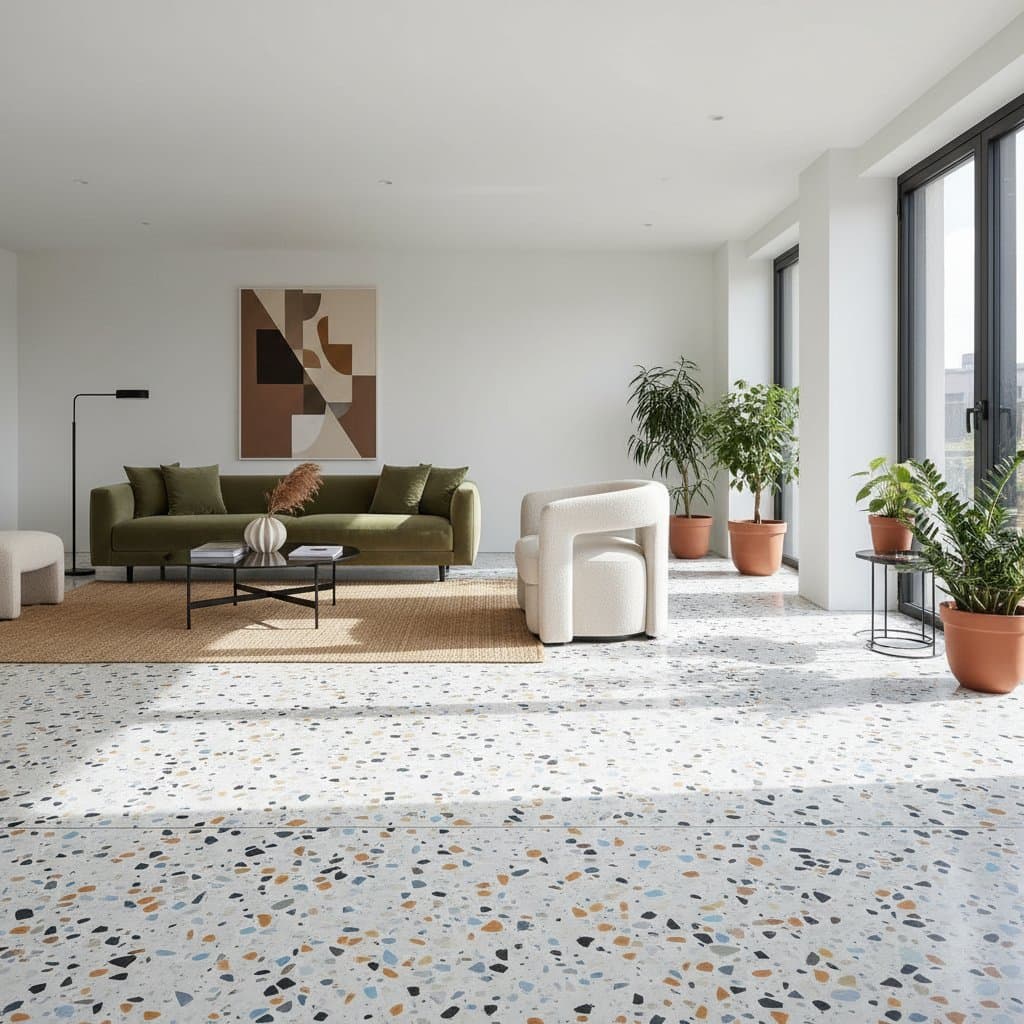
Why Terrazzo Flooring Leads 2026 Home Buyer Wish Lists
Installed cost range: $18 to $35 per square foot.
Home buyers increasingly select terrazzo flooring for its exceptional durability, versatile design capabilities, and superior long-term value. When professionals install it properly, terrazzo endures for decades, withstands intense foot traffic, and delivers a bespoke appearance that complements both contemporary constructions and vintage-inspired spaces.
The Resurgence of Terrazzo in Residential Design
Terrazzo originally graced public spaces such as airports and government facilities, yet it now reclaims prominence in private homes by addressing key priorities for discerning buyers. This material demands little upkeep, promotes sustainability, and captivates with its bold visual impact. Modern residential consumers seek flooring solutions that perform reliably while maintaining aesthetic allure over extended periods. The composition of terrazzo, featuring marble, quartz, or recycled glass aggregates embedded in a cement or epoxy matrix, achieves this ideal equilibrium.
Interior designers note that terrazzo integrates effortlessly into minimalist new constructions and nostalgic mid-century renovations alike. It accommodates underfloor radiant heating systems, ensuring a warm and inviting surface. As enthusiasm for retro aesthetics surges, terrazzo stands out as a rare option that evokes historical charm while aligning with current trends.
Exploring Terrazzo Varieties and Enhancements
Terrazzo manifests in three primary forms, each aligned with varying budgets and installation expertise levels.
1. Cement-Based Terrazzo
- Cost: $18 to $25 per square foot.
- Expected Lifespan: 50 years or longer.
- Aesthetic Profile: Traditional matte texture, prominent chip sizes, and a restrained palette of hues.
- Ideal Applications: Period properties or environments with consistent moisture levels.
- Key Considerations: Requires extended curing time and may develop fissures if the underlying base shifts.
2. Epoxy-Based Terrazzo
- Cost: $28 to $35 per square foot.
- Expected Lifespan: 40 to 60 years.
- Aesthetic Profile: High-gloss sheen, vibrant color selections, and refined surface quality.
- Ideal Applications: Indoor projects prioritizing rapid completion and dramatic visual statements.
- Key Considerations: Vulnerable to ultraviolet exposure, rendering it unsuitable for exterior settings.
3. Prefabricated Terrazzo Tiles or Panels
- Cost: $15 to $25 per square foot.
- Expected Lifespan: 30 to 50 years.
- Aesthetic Profile: Pre-formed units or tiles that facilitate straightforward repairs.
- Ideal Applications: Amateur-led projects or modest updates avoiding comprehensive on-site pouring.
- Key Considerations: Visible seams disrupt the continuous flow and demand periodic resealing.
For optimal performance, apply a professional-grade sealer compatible with the chosen binder. This treatment shields against stains and preserves vibrancy over time.
Ensuring Safety and Regulatory Adherence
Prior to commencing terrazzo installation:
- Deactivate electrical circuits in the vicinity when operating grinders or wet polishing equipment.
- Equip workers with essential protective equipment, including respirators, gloves, safety goggles, and ear defenders.
- Test for asbestos presence in legacy adhesives or subflooring materials; any remediation must comply with regional guidelines.
- Secure necessary permits for initiatives involving structural modifications or integration of heating elements.
- Exercise caution with epoxy components, which emit potent vapors and require thorough ventilation during mixing.
Neglecting these protocols may result in expensive remedial actions down the line.
Upkeep Strategies and Coverage Options
Although resilient, terrazzo benefits from consistent maintenance to retain its luster.
Routine Daily Practices:
- Employ sweeping or dust mopping to eliminate abrasive particles.
- Clean with pH-neutral solutions, steering clear of acidic or bleaching agents.
Yearly Maintenance Protocols:
- Reseal zones with heavy usage at intervals of 12 to 18 months.
- Polish surfaces to reinstate original gloss.
Common Vulnerabilities:
Sealant degradation and surface dullness typically precede any foundational issues. Structural fractures remain uncommon absent base instability.
Standard Warranties:
Professional installers commonly provide 5 to 10 years of assurance on labor quality, with the inherent materials far exceeding this duration. Secure documented protections encompassing both the binding agent and filler components.
To maximize durability:
- Position doormats at entrances to trap debris.
- Refrain from sliding heavy items across the surface.
- Regulate indoor humidity to minimize base expansion or contraction.
Trends Shaping the Terrazzo Market Through 2025 and Beyond
Industry professionals observe sustained expansion in terrazzo demand across residential and commercial domains. Buyers appreciate its favorable life-cycle economics. Although the initial outlay surpasses alternatives like vinyl or laminate, terrazzo's extended service life frequently offsets this through reduced replacement frequency.
Comparative Analysis:
| Material | Initial Cost per Sq. Ft. | Lifespan (Years) | Maintenance Level | Cumulative Value |
|---|---|---|---|---|
| Vinyl | $4 to $8 | 10 to 15 | Medium | Low |
| Ceramic Tile | $8 to $15 | 20 to 30 | Medium | Moderate |
| Engineered Wood | $10 to $20 | 15 to 25 | High | Moderate |
| Terrazzo | $18 to $35 | 40 to 75 | Low | High |
Over multi-decade horizons, terrazzo delivers lower annualized expenses compared to short-lived options necessitating repeated renewals.
Projections indicate reliable sourcing of raw aggregates and binding agents, though skilled labor shortages persist. This constraint may extend timelines or elevate quotations. Prospective buyers should initiate planning well in advance for terrazzo-inclusive renovations.
The Sustainable Advantages of Terrazzo
The protracted usability and modest care requirements position terrazzo among premier eco-conscious flooring selections. It obviates the need for periodic overhauls or toxic treatments. Binders may incorporate post-consumer glass, while aggregates derive from regional quarry byproducts.
Sustainability Highlights:
- Extended operational duration curtails overall resource demands.
- Low-emission sealants enhance interior atmospheric purity.
- Substantial thermal inertia aids in stabilizing ambient temperatures.
For properties marketed on green credentials, terrazzo contributes tangible worth. Certification programs for sustainable construction frequently award credits for its recycled elements and robust endurance.
Steps to Integrate Terrazzo into Your Space
Begin by consulting certified installers to assess your subfloor and design vision. Select the terrazzo type that aligns with your climate, usage patterns, and stylistic preferences. Budget for professional application to guarantee seamless results and full warranty eligibility. With thoughtful preparation, terrazzo transforms floors into enduring assets that elevate home value and satisfaction for generations.