Introduction to Wet Rooms and Their Value Boost
Wet rooms represent a significant evolution in bathroom design, offering seamless integration of shower areas into the overall space. Unlike traditional setups with curbs or enclosures, wet rooms utilize fully waterproofed floors and walls to create an open, barrier-free environment. This approach not only enhances aesthetics but also improves functionality for daily use.
Homeowners who incorporate wet rooms during renovations often see a substantial return on investment. Projections for 2026 indicate that these installations can elevate property values by 11 percent, driven by growing demand for accessible and modern living spaces. Factors such as aging-in-place trends and buyer preferences for low-maintenance features contribute to this uplift. As urban living intensifies, wet rooms appeal to a broad audience, from young professionals seeking luxury to families prioritizing safety.
The appeal extends beyond mere valuation. Wet rooms facilitate easier cleaning, reduce the risk of water damage, and promote a sense of spaciousness in even compact bathrooms. Professional installers emphasize the importance of quality materials to ensure long-term performance. Many waterproofing kits require licensed installers for full product warranties; skipping professional installation can void coverage if leaks develop later.
Essential Safety and Building Code Considerations
Safety forms the foundation of any wet room project. Proper adherence to codes prevents hazards and ensures compliance during home inspections. Electrical safety requires positioning outlets and switches outside the wet zone, with ground fault circuit interrupter (GFCI) protection mandatory for all nearby fixtures.
Ventilation plays a critical role in maintaining air quality. Install an exhaust fan rated for continuous operation in high-moisture environments to prevent condensation buildup. Permits become necessary in most regions when relocating plumbing lines or altering floor structures, so consult local authorities early in the planning phase.
Address slip risks by selecting materials with proven wet-grip ratings; always test tiles under wet conditions prior to purchase. Waterproof integrity demands careful execution: avoid drilling new holes into sealed walls after completion, as this compromises the barrier. These measures not only safeguard users but also protect the home's structural integrity over time.
Design Choices That Maximize Value and Appeal
Strategic design decisions elevate wet rooms from functional spaces to premium features that attract buyers. Focus on elements that balance style, practicality, and durability to achieve the highest resale impact.
Tile Selection
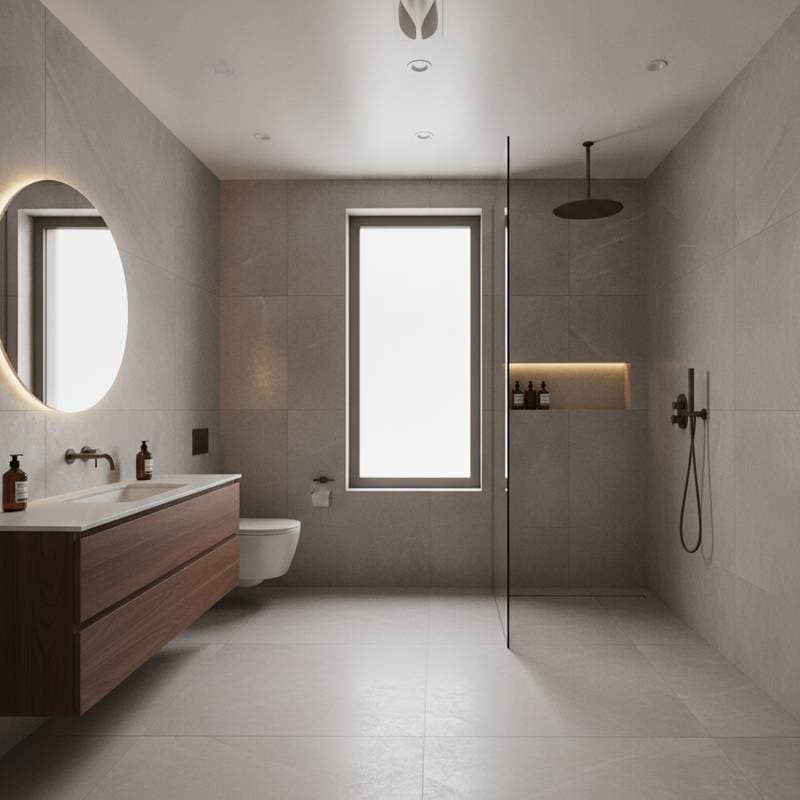
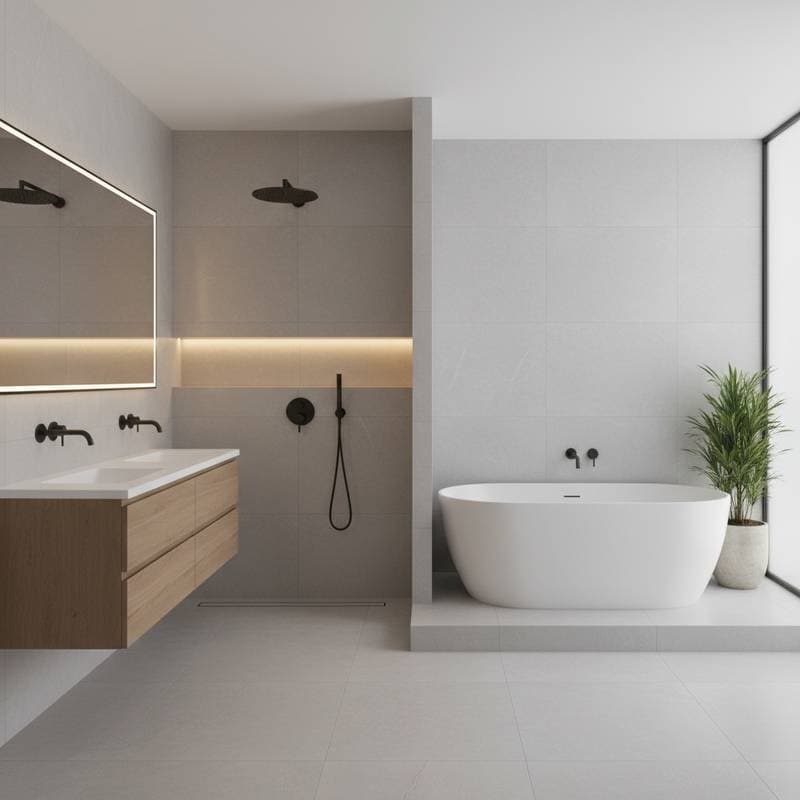
Opt for large-format tiles to achieve a seamless appearance with minimal grout lines, which simplifies cleaning and reduces dirt accumulation. Mosaic tiles on floors provide superior traction while allowing precise slope adjustments for efficient drainage. Choose neutral color palettes, such as soft grays or whites, to broaden buyer appeal and minimize visible water spots.
Lighting Solutions
Recessed LED fixtures excel in wet rooms due to their moisture-resistant construction and ability to maintain a clutter-free ceiling. Incorporate dimmer switches to enable adjustable ambiance, transforming the space into a relaxing retreat during evening routines.
Fixture and Hardware Options
Wall-mounted faucets and floating vanities preserve an open floor plan, enhancing the perception of space. Popular finishes like brushed nickel or matte black offer a contemporary edge while resisting corrosion from constant humidity exposure.
Layout Planning
Position the shower zone adjacent to a corner or rear wall to contain water spray and streamline drainage paths. This configuration minimizes splash zones and integrates effortlessly with existing bathroom footprints.
Storage Integration
Incorporate built-in wall niches for storing essentials like shampoo and soap, eliminating protruding shelves that collect moisture. These recessed options maintain a clean, streamlined look without sacrificing utility.
Common Pitfalls and How to Avoid Them
Even experienced renovators encounter challenges with wet rooms. Awareness of frequent errors allows for smoother execution and better outcomes.
-
Neglecting the Slope Test. Prior to tiling, perform a flood test by pouring water across the floor to verify proper drainage toward the drain. Inadequate sloping leads to pooling and potential water damage.
-
Selecting Standard Drywall. Reserve cement board or specialized waterproof backer materials for all surfaces in contact with moisture. Ordinary drywall absorbs water, fostering mold growth and structural weakening.
-
Choosing Inferior Drains. Invest in high-quality, rust-resistant drains designed for heavy use; substandard models clog easily and fail prematurely.
-
Inadequate Ventilation Setup. Insufficient airflow results in persistent humidity, causing paint to peel and mildew to form. Ensure fans meet or exceed room size requirements.
-
Overly Complex Layouts. Maintain plumbing runs as short and direct as possible to control costs and minimize leak risks during installation.
Professional Tips for a Flawless Wet Room
Experienced designers share insights that streamline the process and enhance results. Apply these strategies to optimize your project.
- Order 10 percent more tile than calculated to accommodate cuts, breaks, and future replacements.
- Select a uniform tile throughout floors and walls for a cohesive, expansive visual effect.
- Install radiant floor heating to accelerate water evaporation, thereby lowering slip hazards.
- Include a handheld showerhead for versatile use and simplified maintenance tasks.
- Retain all waterproofing warranty documentation and installation photographs as evidence for potential home sales.
Decision-Making Guide for Wet Room Projects
Tailor your approach based on specific circumstances to ensure efficiency and effectiveness.
| Situation | Recommended Action | Rationale |
|---|---|---|
| Small bathroom with limited access | Install a single-panel wet room | Conserves space and enhances mobility |
| Large bathroom renovation | Adopt a full open-plan design | Amplifies visual spaciousness |
| Older home with wood floors | Reinforce floor joists prior to waterproofing | Prevents flexing and subsequent cracks |
| Constrained budget | Retain the existing plumbing layout | Eliminates expenses from rerouting |
| Region with high humidity | Select epoxy grout and robust ventilation | Mitigates mold development and odors |
Comparing Wet Rooms to Traditional Showers
Wet rooms offer distinct advantages over conventional shower enclosures, influencing both immediate usability and long-term value.
| Feature | Wet Room | Traditional Shower |
|---|---|---|
| Entry | Step-free access | Curb or tray required |
| Cleaning | Quick with few joints | Requires more effort |
| Style | Open and contemporary | Enclosed and conventional |
| Initial Cost | Elevated | More affordable |
| Accessibility | Universal compatibility | Restricted options |
| Resale Appeal | Strong market draw | Standard buyer interest |
Although wet rooms involve higher upfront costs, they deliver superior returns through enhanced usability and property appreciation.
Expanding the Wet Room Influence
The popularity of wet rooms extends into diverse housing segments. Beyond high-end properties, mid-tier homes increasingly feature hybrid designs, like open showers paired with partial glass partitions. These adaptations provide similar benefits at reduced complexity.
Multi-generational families particularly value the safety and inclusivity of wet rooms, accommodating varying mobility needs without major alterations. As 2026 approaches, this trend signals a shift toward versatile, future-proof bathrooms that prioritize wellness and convenience. Homeowners who embrace these changes position their properties favorably in competitive markets, securing both personal enjoyment and financial gains.
Frequently Asked Questions
What is the average cost to install a wet room? Installation typically ranges from $10,000 to $25,000, depending on size, materials, and location. Factor in professional labor to maintain warranties.
How long does a wet room renovation take? Projects usually span 4 to 6 weeks, including waterproofing, tiling, and fixture setup. Delays may occur with permitting.
Are wet rooms suitable for all home styles? Yes, they adapt well to modern, transitional, or even rustic aesthetics through material choices.
Do wet rooms increase insurance rates? Generally no, as they reduce slip-and-fall risks; however, confirm with your provider.
Can I convert an existing shower to a wet room? Conversion is feasible but requires assessing floor structure and drainage compatibility.