Terrazzos Resurgence: The Premier Sustainable Flooring Trend for 2026
Terrazzo flooring returns with significant appeal. This option combines style, minimal waste production, and remarkable longevity. Incorporating innovative eco-conscious binders alongside recycled aggregates, terrazzo positions itself at the forefront of sustainable flooring selections for the current period. Homeowners anticipate its presence in kitchens, foyers, and comprehensive living areas that demand both robustness and visual interest.
Distinctive Features of Terrazzo
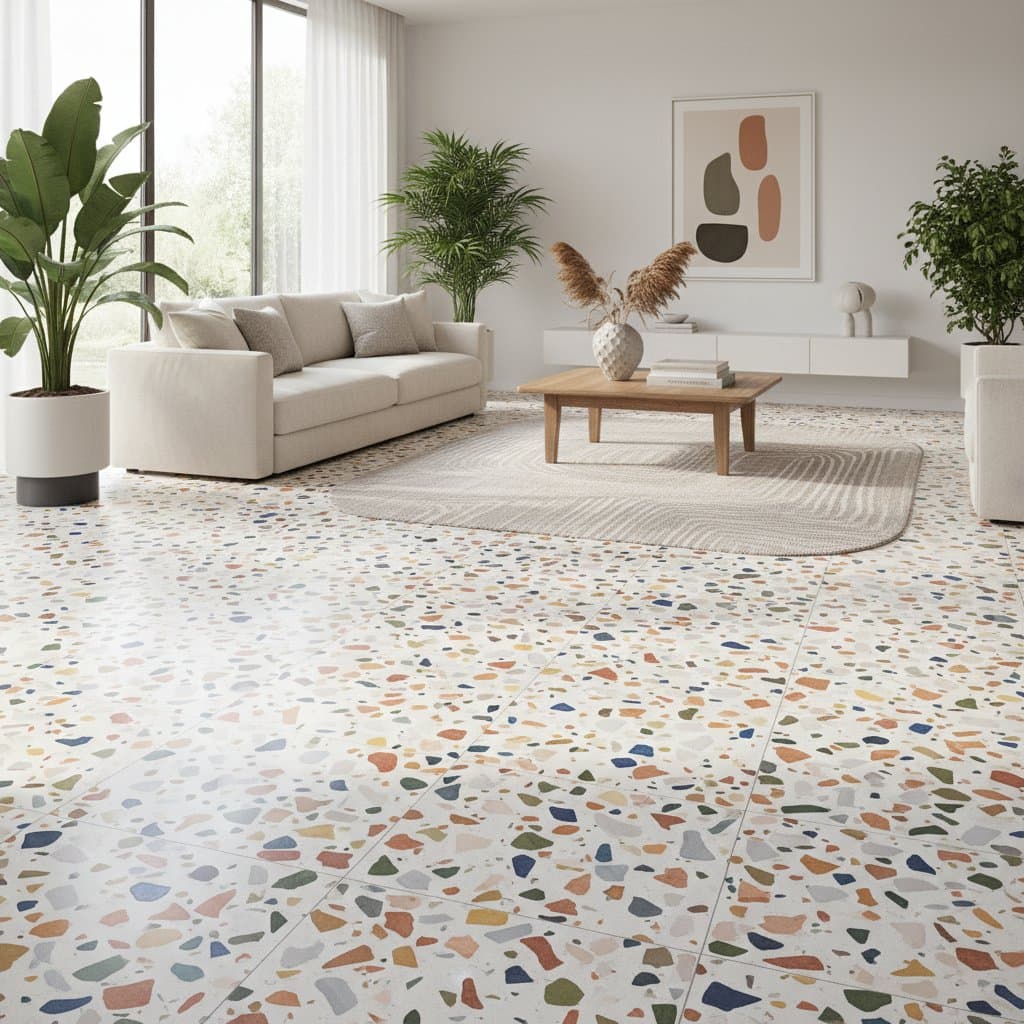
Terrazzo constitutes a composite substance formed by embedding chips of marble, glass, quartz, or stone within a matrix of cement or resin. After pouring, the mixture undergoes grinding and polishing to achieve a uniform surface. This process yields a patterned, lustrous floor capable of evoking either vintage charm or contemporary sophistication based on selected hues and configurations.
In contrast to vinyl or laminate alternatives, terrazzo avoids delamination or distortion. Proper sealing renders it impervious to moisture and discoloration. Furthermore, its service life extends over multiple decades, thereby reducing the necessity for replacements and minimizing landfill contributions.
Factors Fueling Terrazzos Renewed Popularity
The resurgence of terrazzo stems from three primary influences: environmental responsibility, personalization potential, and nostalgic allure. Designers seek materials that convey narrative depth, while homeowners desire resilient surfaces, and all parties aim to diminish ecological impact.
Contemporary formulations incorporate recycled glass, porcelain fragments, or metallic residues. Binders often feature low-volatile organic compound compositions and originate from local sources. Advanced digital tools enable precise color coordination, allowing individuals to formulate unique mixtures that harmonize with cabinetry, wall treatments, or furnishings.
The vintage aesthetic resonates effectively. Terrazzo evokes mid-century modernism yet integrates seamlessly into fresh constructions or renovations. Its pristine, timeless quality complements diverse stylistic preferences.
Installation Process for Terrazzo Flooring
- Subfloor Preparation. Ensure the underlying surface remains free of debris, perfectly even, and fully cured. Concrete subfloors prove most suitable.
- Primer Application. Employ this layer to facilitate adhesion between the terrazzo mixture and subfloor, thereby mitigating crack formation.
- Mixture Pouring. Blend aggregates with binder, then distribute the composition uniformly to attain the desired depth.
- Curing and Grinding. Permit hardening, followed by abrasion with diamond-tipped tools to refine the surface smoothness.
- Polishing and Sealing. Conclude with an environmentally safe sealant to safeguard against humidity and spotting.
Precision defines each phase. Inaccuracies in leveling or curing duration may result in fissures or inconsistent luster.
Cost Breakdown for Terrazzo Installation
| Task | Typical Cost | Influencing Factors |
|---|---|---|
| Standard Installation | $25 to $70 per square foot | Aggregate variety, binder selection, and pattern intricacy |
| Customized Hues or Designs | $60 to $120 per square foot | Manual aggregate placement or unique inclusions |
| Polishing and Sealing | $3 to $7 per square foot | Sealant grade and polish iterations |
Regional differences influence pricing. Labor expenses and material accessibility exert greater variability than in many comparable flooring options. Opting for recycled or regionally sourced aggregates occasionally reduces overall expenditure.
Timeline Expectations
Terrazzo installation demands time investment. Plan for 7 to 10 days encompassing preparation through completion for a standard room. Expansive or intricate projects may extend to two weeks. Curing periods represent the principal constraint, as acceleration risks structural defects.
Selecting precast terrazzo tiles over on-site pouring shortens the process to 2 to 4 days. Tiles further simplify subsequent repairs.
Evaluating DIY Against Professional Installation
Consider DIY when: prior experience with concrete or epoxy applications exists, grinding equipment proves accessible, and the scope limits to compact zones such as countertops or splashbacks.
Engage professionals for: areas exceeding 100 square feet, bespoke designs, or integrations with underfloor heating systems.
Experts excel in managing aggregate placement for uniformity and achieving balanced polishing. They utilize specialized machinery to minimize dust generation. Foregoing professional services may yield initial savings, yet potential future repairs from failures could elevate long-term costs.
Essential Tools and Materials
- Mixing containers and stirring implements
- Spreading tools and leveling devices
- Diamond-impregnated grinding machines
- Buffing attachments
- Ecologically benign sealant
- Personal protective equipment: breathing apparatus, eye shields, hand coverings
- Aggregate selections: marble, glass, or quartz fragments
- Binding agents: cementitious or epoxy formulations
Equipment rental for grinders and buffers often proves economical. Protective attire remains essential, given the respiratory and ocular hazards posed by terrazzo particulates.
Ecological Advantages
Terrazzo excels in sustainability credentials. It repurposes aggregate remnants that might otherwise contribute to waste disposal sites. Numerous current binders emit minimal volatile organic compounds, thereby enhancing interior air purity. The extended durability curtails replacement frequency and conserves resources across the product lifecycle.
Certain producers provide carbon-neutral variants utilizing recycled components and bio-derived binders. For maximal environmental alignment, request supplier documentation such as Environmental Product Declarations or GreenGuard validations.
Versatile Design Possibilities
Terrazzo ranks among the most adaptable flooring solutions available. Control resides in base pigmentation, aggregate composition, and surface treatment.
- Subdued Palettes: Gentle grays or beiges paired with white marble fragments for perennial versatility.
- Vibrant Configurations: Infusions of tinted glass or metallic elements for progressive environments.
- Prominent Aggregates: Larger particles foster a classic retro ambiance.
- Subtle Finishes: Minute chips yield a refined, stone-like appearance.
Extend the material to worktops or risers for cohesive continuity. The uninterrupted expanse simplifies sanitation and enhances spatial cohesion.
Considerations for Regional and Climatic Variations
Epoxy-based terrazzo suits humid or marine locales due to superior moisture resistance. In regions prone to thermal fluctuations, cement variants require expansion joints to accommodate movement.
Verify compliance with local regulations. Certain municipalities mandate moisture barriers beneath installations or designate sealants to satisfy ventilation criteria. Consult installers regarding locale-specific protocols when uncertainties arise.
Effortless Upkeep Strategies
Sealed terrazzo requires minimal ongoing care. Regular sweeping or vacuuming eliminates abrasive particles that might diminish sheen. Employ pH-balanced solutions for mopping, steering clear of corrosive agents that erode protective coatings.
Periodic resealing, typically every several years, sustains vibrancy and stain resistance. Minor abrasions respond to targeted buffing, obviating the need for full replacement.
Indicators for Professional Intervention
Summon a specialist upon observing fissures exceeding credit card width, persistent dullness unresponsive to cleansing, or sealant degradation. Contractors perform targeted regrinding and reapplication without necessitating complete removal.
Professionals also handle restoration of legacy terrazzo concealed beneath coverings like carpeting or tiling. They expertly excise residues to revive inherent gloss.
Terrazzo Versus Alternative Green Flooring Options
| Material | Longevity | Sustainability Rating | Average Cost per Square Foot | Upkeep Level |
|---|---|---|---|---|
| Terrazzo | 50+ years | High | $25 to $70 | Low |
| Bamboo | 10 to 25 years | Medium | $5 to $12 | Medium |
| Cork | 10 to 20 years | High | $6 to $15 | Medium |
| Reclaimed Wood | 20 to 40 years | High | $10 to $25 | Medium |
Although initial investment in terrazzo exceeds competitors, its superior endurance justifies the premium.
Strategies for Optimal Results
- Select lighter aggregates for confined areas, darker ones for intensive use.
- Review physical samples prior to commitment to assess authentic tonal blends.
- Maintain consistent ambient temperatures throughout curing to avert fractures.
- Position protective pads beneath substantial furnishings to prevent marring.
- Schedule periodic buffing to preserve a reflective finish.
Frequently Asked Questions
How does terrazzo contribute to sustainability? It repurposes industrial byproducts as aggregates and employs durable binders that reduce replacement needs.
Is terrazzo suitable for bathrooms? Yes, particularly epoxy variants, which resist water effectively when sealed.
Can terrazzo integrate with underfloor heating? Absolutely, provided professionals ensure compatibility during installation.
What if my terrazzo cracks? Minor issues often stem from subfloor movement; pros can repair via patching and resealing.
Does terrazzo work in rentals? Precast tiles offer a removable option, though poured versions suit permanent setups.
Realizing Your Terrazzo Vision
Embracing terrazzo elevates spaces with enduring eco-elegance. By selecting recycled elements and expert execution, homeowners secure floors that withstand time while honoring planetary limits. Consult local specialists to tailor this timeless material to your unique environment, ensuring beauty and responsibility converge seamlessly.