Terrazzo Flooring Returns as a 2026 Design Favorite
Typical cost: 15 to 50 dollars per square foot installed. This option suits those seeking a durable patterned surface that lasts for decades.
Terrazzo flooring appears in homes, offices, and retail spaces because it combines nostalgia with sustainability. Once limited to mid century buildings, it now appeals to designers who blend vintage charm with modern performance. The higher initial investment delivers a floor that outlasts most materials while requiring little upkeep.
Cost Factors
Costs vary based on the mix, finish, and installation method. Understanding these elements supports accurate planning before contacting a contractor.
- Material Mix: Marble, glass, or metal chips create price differences. Classic marble chips cost 8 to 15 dollars per square foot in materials. Recycled glass adds color options yet runs 10 to 20 dollars per square foot.
- Binder Type: Cement based terrazzo costs less but remains more porous. Epoxy based terrazzo runs 20 to 35 dollars per square foot and produces a smoother seamless appearance.
- Labor: Skilled installers charge 7 to 15 dollars per square foot depending on pattern complexity. Intricate geometric layouts or color divisions increase time and precision requirements.
- Subfloor Prep: Old concrete may require leveling or crack repair. Budget 2 to 6 dollars per square foot for prep work. Skipping this step leads to cracks that appear later.
- Sealing and Finish: Final polishing and sealing cost 1 to 3 dollars per square foot and need repetition every few years to maintain shine.
Allocate an extra 10 to 15 percent for unexpected issues in older homes, particularly when uneven slabs or hidden moisture appear.
DIY versus Professional Installation
Conditions for DIY
- The project uses pre cast terrazzo tiles for an area under 100 square feet.
- The subfloor is already perfectly level.
- Access to a wet saw and protective gear exists.
Risks include cracks, dull spots, or weak bonding from improper mixing or curing. Cement terrazzo proves heavy and messy to pour. Epoxy versions demand exact ratios and temperature control.
Conditions for Professional Help
- Seamless floors across large or connected rooms are required.
- Custom color or pattern work is planned.
- Moisture or uneven concrete is discovered during preparation.
Professionals supply diamond grinders, moisture meters, and industrial polishers that prove costly for single use. They also understand local code requirements for slip resistance and VOC limits.
Project Timing and Potential Savings
Expect 2 to 5 weeks from preparation to final polish. Duration depends on curing conditions and labor availability.
- Lead Times: Recycled glass or custom pigments may require 2 to 3 weeks for sourcing.
- Curing: Cement terrazzo needs at least 7 days before polishing. Epoxy versions cure faster yet require stable temperatures.
- Scheduling Tip: Perform installation in dry months to prevent humidity delays.
- Rebate Check: Some regions provide green building credits for recycled content. Request documentation from installers before purchase.
When supply chains tighten, source local aggregate suppliers to reduce transport costs and support regional materials.
Alignment with 2026 Design Preferences
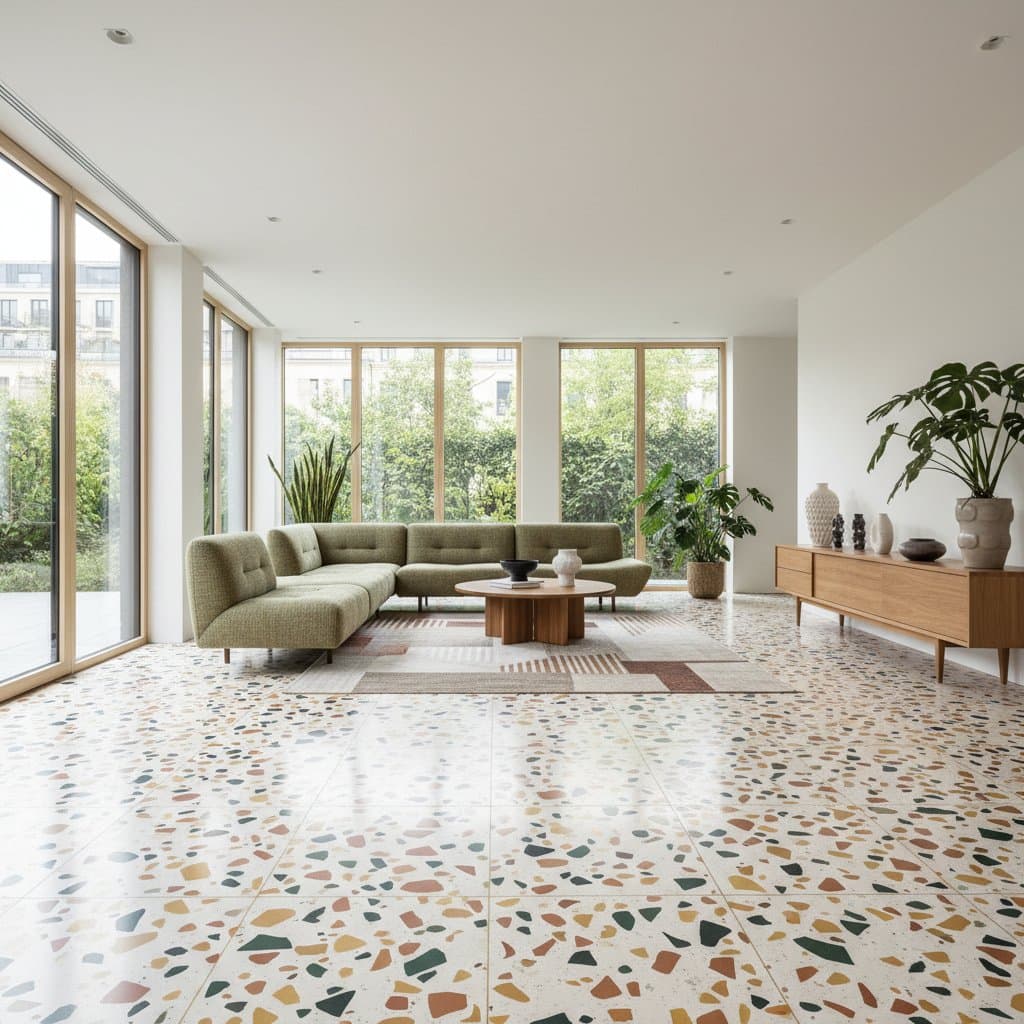
Designers select terrazzo for its combination of retro charm and sustainable content. Emphasis on material reuse and circular design has strengthened its standing. Recycled glass and marble chips that once entered landfills now form colorful durable floors.
The appearance matches the trend toward playful minimalism. Terrazzo introduces pattern and warmth without added clutter. In open layouts with neutral walls it serves as both surface and focal element.
Market interest also signals a preference for long term value. Homeowners who tire of replacing vinyl or laminate every decade view terrazzo as a lifetime choice. The low maintenance and extended lifespan offset the higher upfront cost over time.
Steps to Proceed
Confirm subfloor condition and square footage when terrazzo matches design goals and budget. Collect three quotes from licensed installers experienced with both cement and epoxy systems. Inquire about current material lead times, moisture barrier options, sealer brands, maintenance needs, and warranty terms.
Request a small sample pour when uncertainty remains. Many professionals can cast a 2 by 2 foot panel to display color and chip mix before commitment.
After selection, allow at least two weeks of limited room access. Keep pets and children away during curing.
Practical Next Actions
- Inspect the subfloor for cracks or dampness before finalizing the budget.
- Establish a range of 15 to 50 dollars per square foot plus a 10 percent contingency.
- Select cement or epoxy based on location and expected traffic.
- Engage a certified terrazzo installer for jobs larger than 100 square feet.
- Schedule work during dry months to shorten curing and limit delays.
- Apply sealer on a routine schedule to preserve gloss and stain resistance.
Terrazzo rewards careful selection with decades of service across generations.