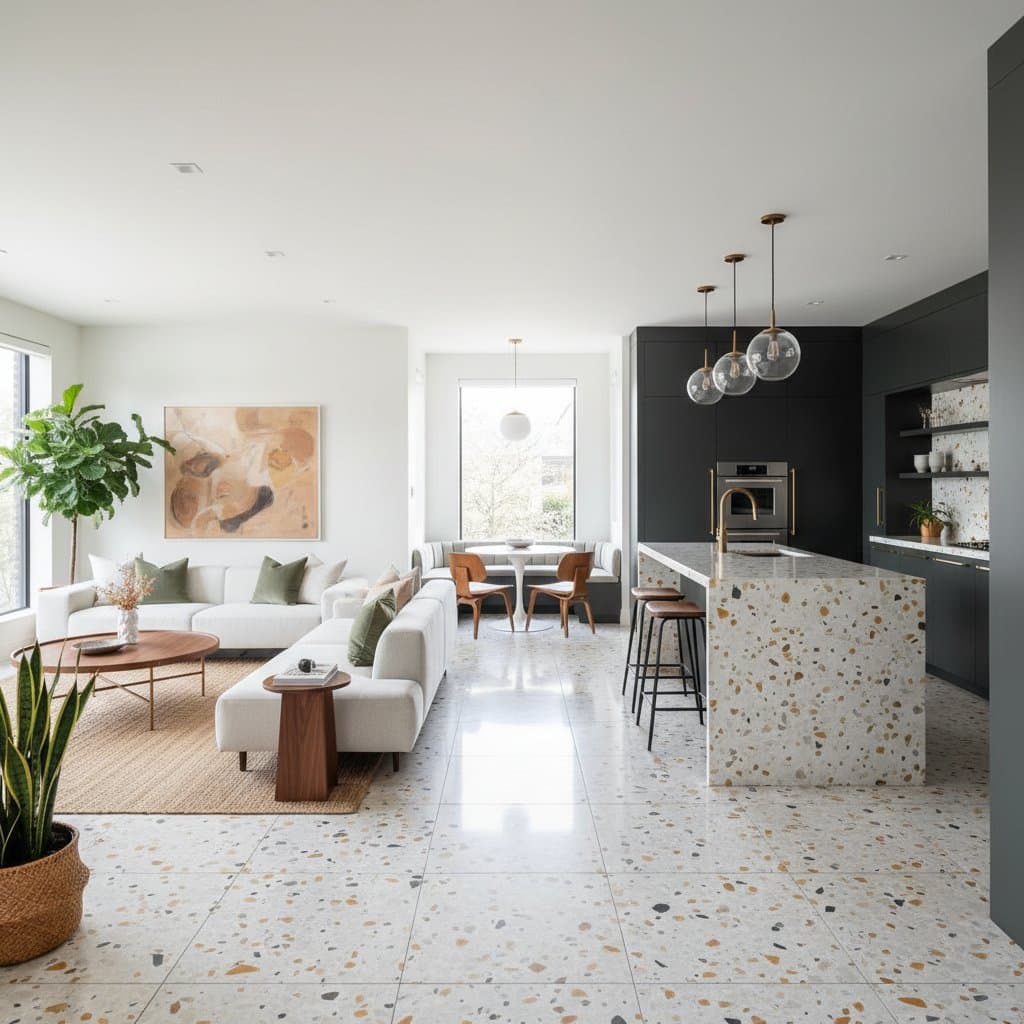
The Resurgence of Terrazzo: Commanding a 6% Premium in 2026
Terrazzo flooring and countertops regain prominence among discerning buyers. Properties equipped with this resilient, vintage-inspired material command approximately 6 percent higher prices. The appeal stems from its distinctive aesthetic, exceptional durability, and straightforward maintenance, making it ideal for both contemporary layouts and mid-century modern interiors.
Understanding Terrazzo
Terrazzo consists of aggregate chips, such as marble or glass, embedded in a binder of cement or epoxy resin. After pouring, the mixture undergoes grinding and polishing to create a uniform, mottled appearance. This versatile material applies to floors, countertops, and even wall accents, offering subtle color diversity without overwhelming patterns. It performs reliably in diverse environments, from humid coastal regions to arid interiors, and aligns with preferences for environmentally responsible building elements.
Pricing Overview
Installed costs average $25 to $80 per square foot nationwide. Most residential installations range from $40 to $60 per square foot. Elaborate designs or premium aggregates can exceed $100 per square foot.
Key cost influencers include:
- The dimensions and configuration of the installation area
- The selected binder, whether cement or epoxy
- The variety and scale of aggregates, from marble and glass to shells or metallic elements
- The degree of finishing and polishing techniques applied
- Preparation of the substrate and existing floor conditions
For a standard 10-by-12-foot kitchen, flooring installation typically costs $4,800 to $7,200, while countertops range from $3,000 to $5,000.
Advantages and Drawbacks
Advantages:
- Exceptional longevity, frequently surpassing 50 years
- Minimal ongoing maintenance after initial sealing
- Extensive customization in colors and aggregate selections
- Strong resistance to stains, moisture, and wear
- Enhanced property appeal and market value
Drawbacks:
- Substantial initial investment
- Necessity for expert craftsmanship during installation
- Cool sensation underfoot in unheated spaces
- Potential slipperiness on highly polished surfaces when damp
- Challenges in repairing isolated cracks or chips
Varieties of Terrazzo
Cement-based terrazzo:
This classic formulation blends marble aggregates with cement, suiting expansive floor applications and historic renovations. It maintains slight porosity, requiring periodic sealing for protection.
Epoxy terrazzo:
A contemporary resin-based approach enables thinner applications, perfect for residential kitchens, bathrooms, and upright features. It offers superior moisture resistance and vibrant color retention.
Precast terrazzo:
Produced in controlled factory settings as slabs or tiles, this option facilitates installation on countertops, stair treads, and splashbacks. While quicker to place, it may not achieve the same fluid seamlessness as poured versions.
Recycled glass terrazzo:
Incorporating crushed post-consumer glass, this sustainable variant delivers vivid hues and environmental benefits. It complements sleek modern aesthetics or relaxed coastal themes.
Professional Installation Versus DIY Attempts
Terrazzo demands precision that exceeds novice capabilities. Professionals employ exact mixing ratios, industrial grinders, and robust equipment to achieve flawless results. A compact countertop project may span one to two days for an expert, whereas full-floor installations extend to a week or longer. Limited DIY kits or precast elements offer entry points, though outcomes often lack professional uniformity.
Opt for professional services in these scenarios:
- Handling expansive or interconnected surfaces
- Utilizing epoxy binders for optimal adhesion
- Coordinating with pre-existing terrazzo elements
- Adhering to commercial standards or regulatory codes
Experienced installers guarantee even distribution, adequate curing periods, and consistent sheen. Inadequate substrate preparation or aggregate inconsistencies can compromise the final appearance and performance.
Essential Installation Process
- Evaluate and thoroughly clean the subfloor to remove debris and ensure stability.
- Position metal or plastic divider strips to define design divisions and prevent cracking.
- Blend the binder and aggregates to a uniform consistency, avoiding air pockets.
- Spread and level the mixture using trowels for a flat base.
- Permit sufficient curing, typically 24 to 72 hours depending on the binder.
- Grind the surface progressively to reveal the embedded chips.
- Apply polishing compounds to attain the preferred level of gloss.
- Seal the finished product to guard against stains and enhance durability.
- Perform a final cleaning and buffing to reveal the pristine surface.
Upkeep and Durability
Daily maintenance proves effortless. Weekly sweeping or vacuuming removes abrasive particles. Monthly mopping with a pH-neutral solution preserves cleanliness. Reapply sealant every three to five years, based on traffic and exposure levels. Steer clear of acidic cleaners or abrasive tools that could etch the surface.
When installed correctly, terrazzo endures for decades with little intervention. Installations from mid-20th-century structures continue to function effectively today. Epoxy variants typically carry warranties of 10 to 15 years, and cement-based systems allow for resurfacing rather than full replacement.
Comparable Materials
- Polished concrete: Offers a budget-friendly alternative with a comparable industrial vibe, though it provides less flexibility in coloration.
- Engineered quartz: Delivers consistent patterns and simpler care, but lacks the bespoke charm of terrazzo.
- Porcelain or ceramic tiles: Supports straightforward self-installation, yet visible grout joints disrupt the seamless visual continuity.
- Natural stone slabs: Evokes timeless elegance, but demands more frequent sealing due to inherent porosity.
Regional Considerations
Installation expenses fluctuate with local labor markets. In coastal areas, elevated material prices arise from shipping logistics and climate-controlled storage. Colder climates benefit from integrating radiant heating systems to counter the material's inherent chill. Municipal regulations in some locales mandate anti-slip treatments for high-traffic zones. Consult applicable building codes early in the planning phase.
Investment Return and Market Impact
Terrazzo appeals to buyers seeking evidence of superior build quality and enduring performance. Real estate professionals equate its value to high-end natural stone installations. In prominent spaces such as foyers, kitchens, or bathrooms, it contributes a 5 to 6 percent uplift to resale prices. Beyond immediate gains, its robustness reduces future renovation expenses, yielding sustained financial advantages.
Safety Protocols
During grinding and polishing phases, don personal protective equipment including respirators and goggles. Employ dust extraction systems to minimize airborne particles. Ensure ample ventilation when applying sealants or epoxy, as vapors can irritate. For moisture-prone or entry areas, select textured or satin finishes to enhance grip. Verify compliance with standards like ASTM D2047 for coefficient of friction.
Practical Implementation Guide
Consider initiating with a modest project, such as a powder room floor or a kitchen peninsula, to assess terrazzo's fit. Solicit bids from at least three certified specialists in terrazzo work. Request portfolios of completed installations and details on their preferred binder systems. Evaluate long-term care requirements to align with your lifestyle. In renovations spanning modern builds or nostalgic updates, terrazzo provides an enduring foundation that sustains both visual allure and economic worth over time.