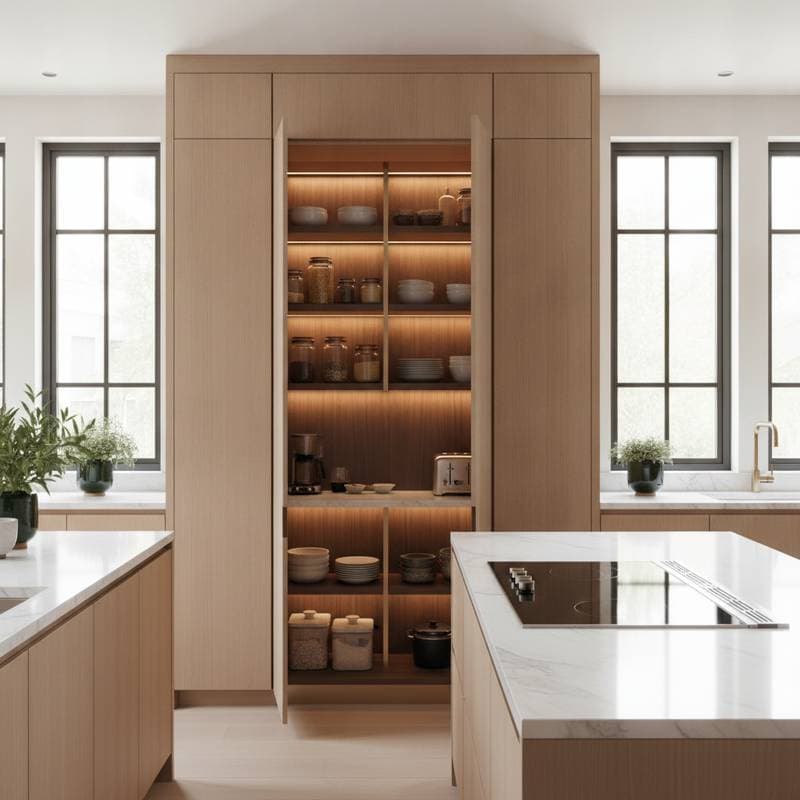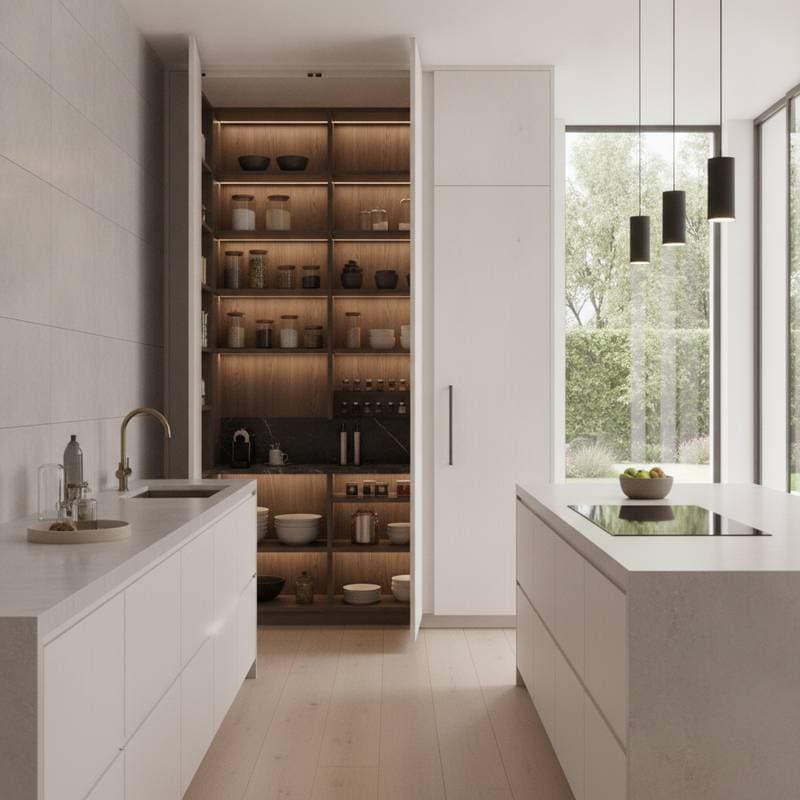
Hidden Pantries Deliver Higher Resale Value in 2026
Typical costs range from 6000 to 18000 dollars. This addition can increase resale value by 8 to 15 percent in mid to high end homes.
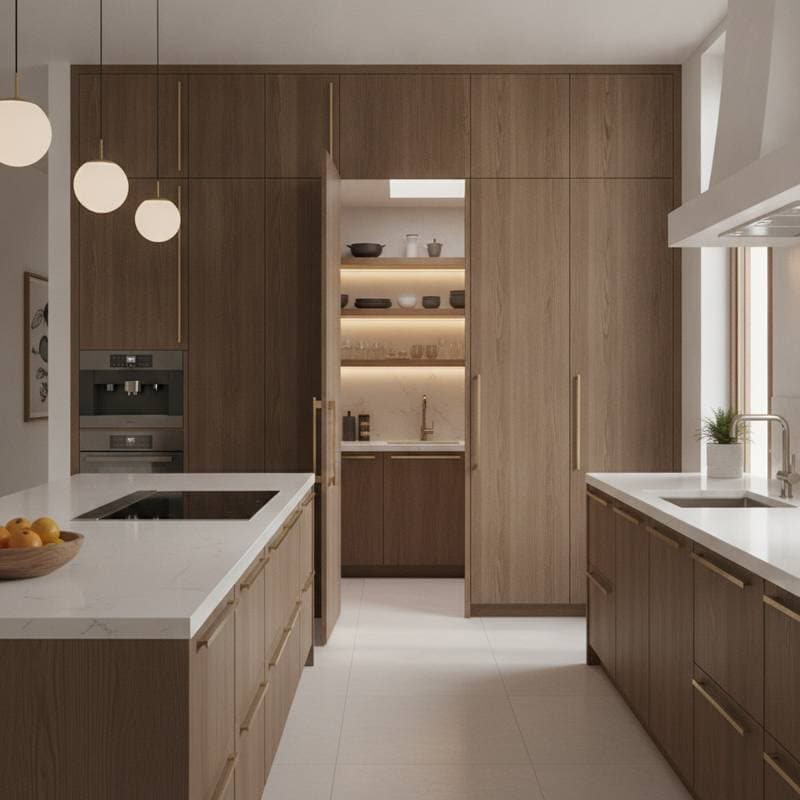
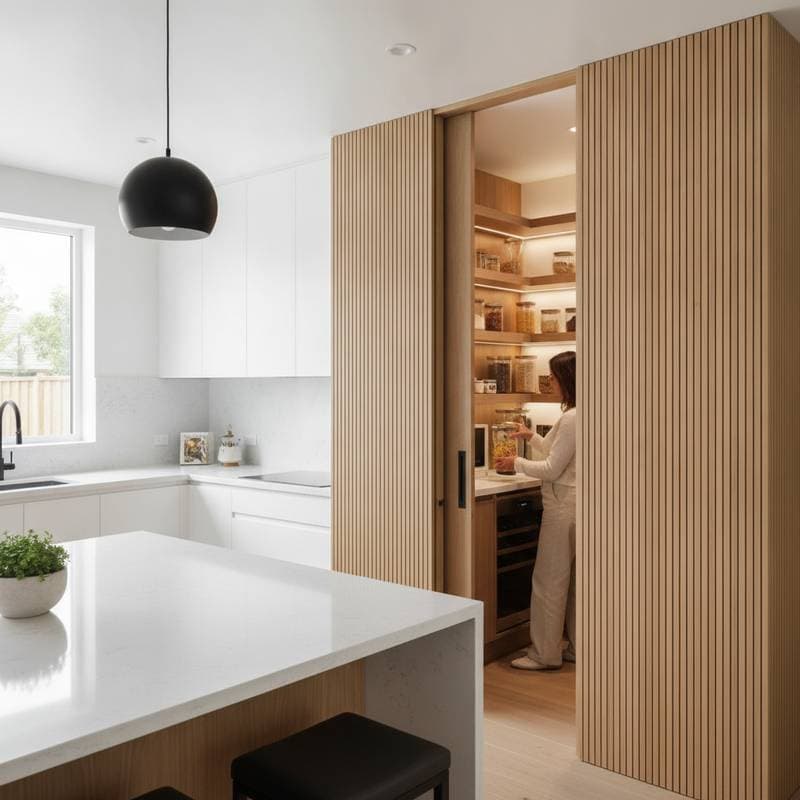
A hidden pantry creates a clean and high end kitchen appearance. It provides substantial storage that appeals directly to buyers. Bulk items, small appliances, and general clutter stay out of sight behind matching cabinetry or a disguised door. The upgrade enhances both daily use and long term market appeal.
Cost Breakdown
Project expenses depend on available space, chosen access method, and finish level. The following categories show typical allocations.
- Cabinetry and doors account for 40 to 55 percent of the total. Custom panels, concealed hinges, and coordinated finishes usually require 3000 to 10000 dollars in materials.
- Framing and drywall represent 10 to 20 percent. New construction or modification of an alcove adds 800 to 3000 dollars. Existing recesses reduce this expense.
- Electrical and lighting consume 5 to 10 percent. LED strips or recessed fixtures cost 250 to 800 dollars. Motion sensors provide convenient operation.
- Flooring and trim require 5 to 10 percent. Matching the kitchen surface costs 400 to 1200 dollars.
- Labor and permits make up 15 to 25 percent. Carpentry, finishing work, and inspections add 2000 to 5000 dollars.
- A contingency fund of 10 to 15 percent covers unexpected plumbing or wiring adjustments.
Safety and Code Requirements
Inspect the space behind kitchen walls for plumbing stacks or electrical mains before any work begins. Turn off power at the breaker when adding lighting or relocating outlets. Wear an N95 rated mask during drywall or cabinet removal to limit dust exposure. Older homes benefit from a professional inspection of wiring and framing.
Permits are required for electrical or plumbing changes, structural modifications, and new ventilation connections. Proper documentation prevents delays during future appraisals or sales.
Construction Process
- Assess available space behind cabinets or interior walls. A functional pantry requires at least 2 feet of depth and 3 feet of width.
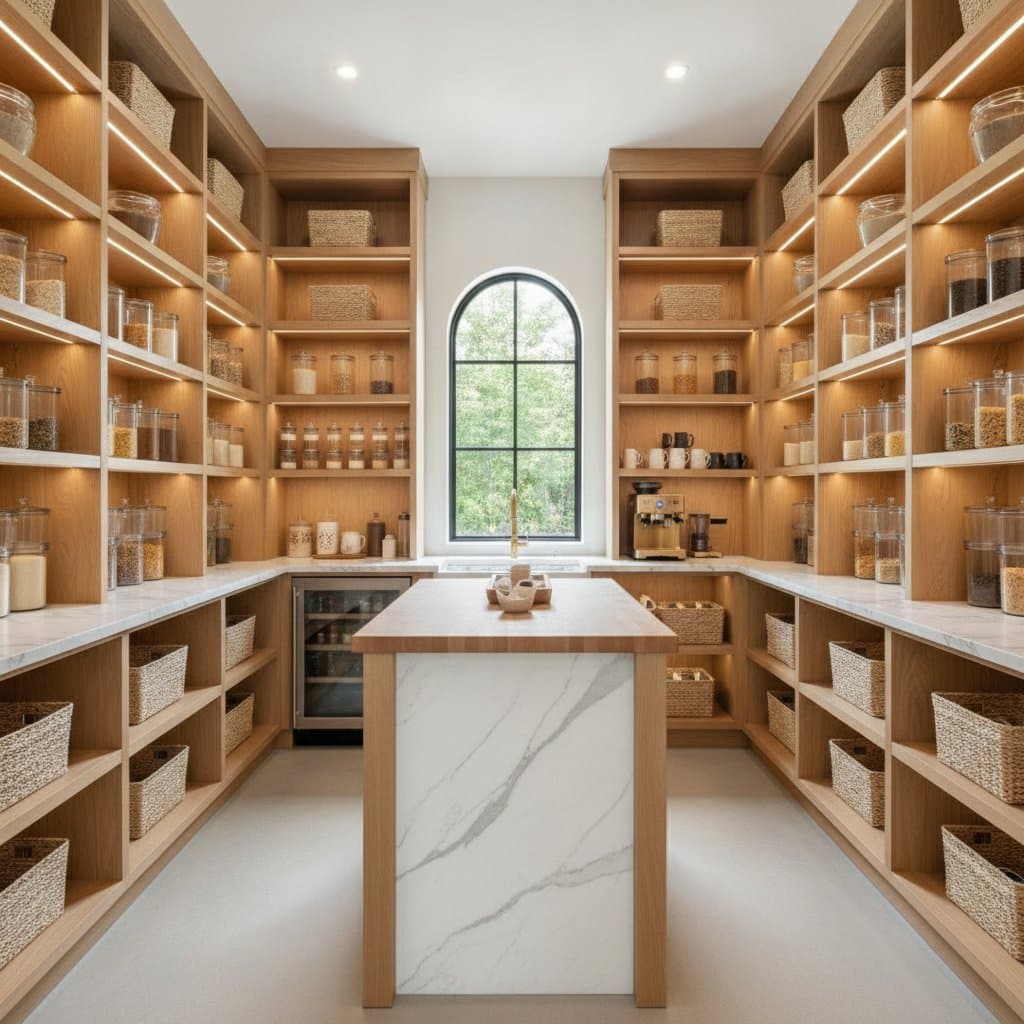
- Sketch the layout. Choose between a concealed closet, walk in design, or butlers pantry with prep space. Note shelf heights and light locations.
- Obtain quotes. Cabinetmakers typically need 4 to 8 weeks for custom doors.
- Prepare the area. Clear nearby cabinets and verify the location of studs, wires, and pipes.
- Frame and finish. Install walls, door frames, and shelves with moisture resistant materials.
- Apply trim and paint. Match existing finishes to maintain concealment. Verify door swing clearance.
- Install lighting and organization systems. Motion activated lights and adjustable shelves improve usability.
- Complete final inspection. Retain all permits and receipts for resale records.
Ongoing Care
A properly constructed hidden pantry lasts 20 years or longer. Add ventilation or keep the door slightly open to control humidity. Check concealed hinges and seals each year. Repaint panels every 7 to 10 years to maintain visual consistency. Replace LED components after approximately 10 years of use. Limit shelf loads to 40 to 60 pounds. Any added sink or refrigerator requires regular leak checks.
Errors That Reduce Value
Failure to provide ventilation leads to moisture damage and odors. Thin shelving sags quickly under normal loads. Work completed without permits can complicate appraisals. Inadequate lighting makes the space feel smaller. Mismatched finishes break the seamless appearance.
Buyer Preferences in the Current Market
Home shoppers continue to favor kitchens that combine storage with a streamlined look. A hidden pantry meets both needs without requiring major structural changes. Properties that include this feature often sell faster and command stronger offers in competitive segments.
Recommended Actions
Measure the space adjacent to the kitchen to determine feasible pantry dimensions. Establish a budget of 6000 to 18000 dollars with a 15 percent reserve. Clarify whether the primary goal is added storage, improved appearance, or resale enhancement. Collect multiple bids from qualified remodelers and confirm lead times for custom components. Verify local permit rules before starting electrical or plumbing work. Order cabinetry early and coordinate framing with delivery dates. Plan lighting and ventilation details prior to closing walls. Retain all documentation to support value claims at sale.