EV Chargers: The 2026 Home Upgrade That Boosts Value
Homeowners install electric vehicle chargers more rapidly than other green features. The trend reflects buyer demand for home charging convenience and long term property appeal. An EV charger improves daily routines while supporting higher resale prices.
Cost Snapshot
Most installations range from $700 to $2500. This price covers equipment and labor for standard homes. Complex projects that require panel upgrades may reach $4000 or more.
Average price breakdown:
| Type | Typical Range | Notes |
|---|---|---|
| Level 1 (120V plug in) | $200 to $400 | Slow charge with no wiring changes |
| Level 2 (240V hardwired) | $700 to $2500 | Standard home solution |
| High output or dual port | $2500 to $4000+ | Suitable for multiple vehicles |
Factors that affect price:
- Distance between the electrical panel and charger location
- Need for panel capacity upgrades
- Charger amperage and smart features
- Wall construction and mounting requirements
- Local permit fees and labor rates
Charger Types
Level 1 Charger
A Level 1 unit uses a standard 120V outlet. It charges slowly and works best for short daily commutes with overnight parking.
Level 2 Plug in Charger
This model connects to an existing 240V outlet such as a dryer circuit. It offers faster charging without extensive rewiring when the outlet sits near the parking area.
Level 2 Hardwired Charger
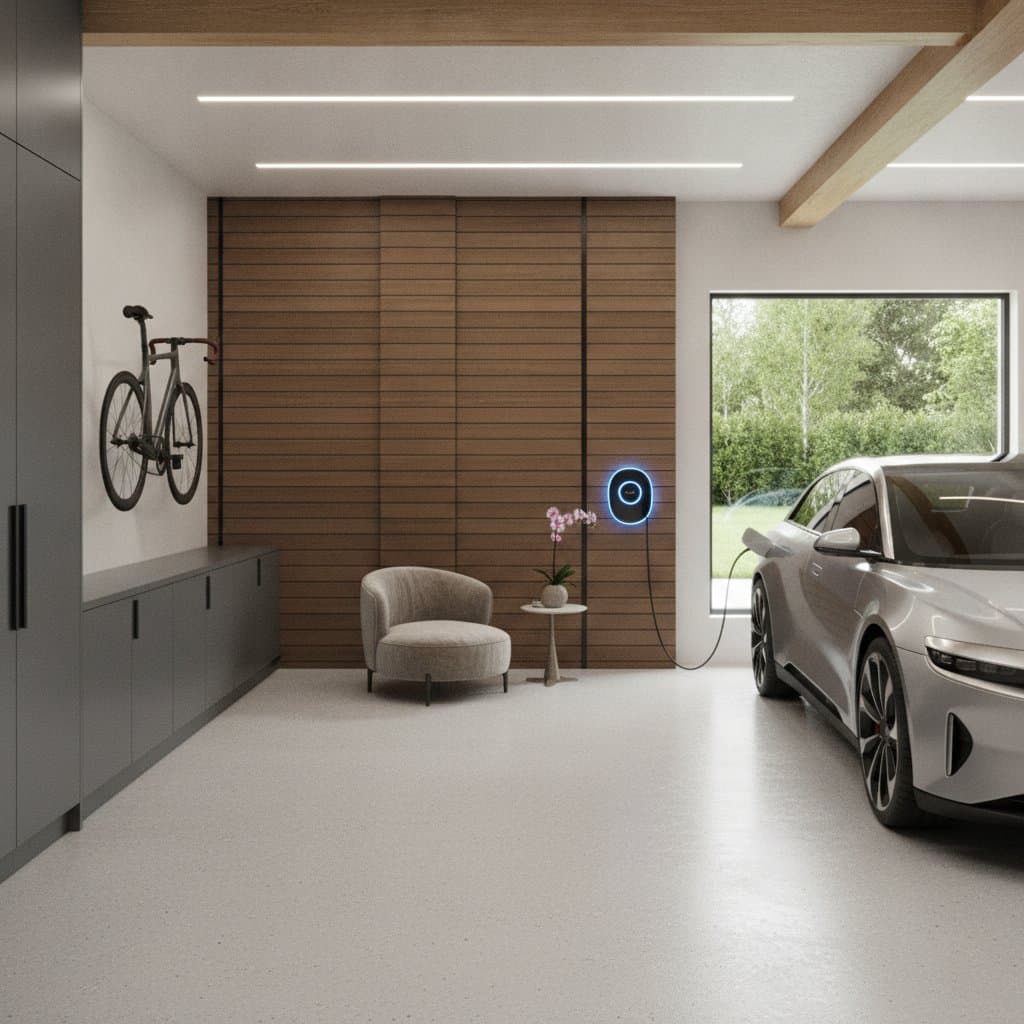
Direct wiring to the panel provides steady power and a finished appearance. It suits permanent indoor or outdoor placements.
Smart Charger
Wi Fi or Bluetooth models track energy use and schedule charging during off peak hours. Many integrate with home solar systems.
Dual Port Charger
A dual port unit charges two vehicles simultaneously. It serves households with multiple electric cars or rental properties.
Installation Steps
- Select a location near the parking spot with access to the electrical panel.
- Confirm the panel has space for a 40 to 60 amp breaker.
- Obtain required electrical permits before work begins.
- Run conduit or cable from the panel to the mounting site.
- Secure the charger to a stud or solid surface.
- Connect the wiring to the breaker and ground.
- Verify correct voltage and tighten all connections.
- Configure amperage limits and smart settings through the app.
- Label the breaker and store the manual in a safe place.
Alternative Options
240V Dryer Outlet Adapter
An adapter provides an inexpensive portable solution when a suitable outlet already exists nearby.
Portable EV Charger
Portable units work with multiple outlet types through adapters. They fit renter situations but deliver lower speeds.
Public Charging Subscription
Monthly plans replace home installation for properties without off street parking.
Solar Integrated Charging
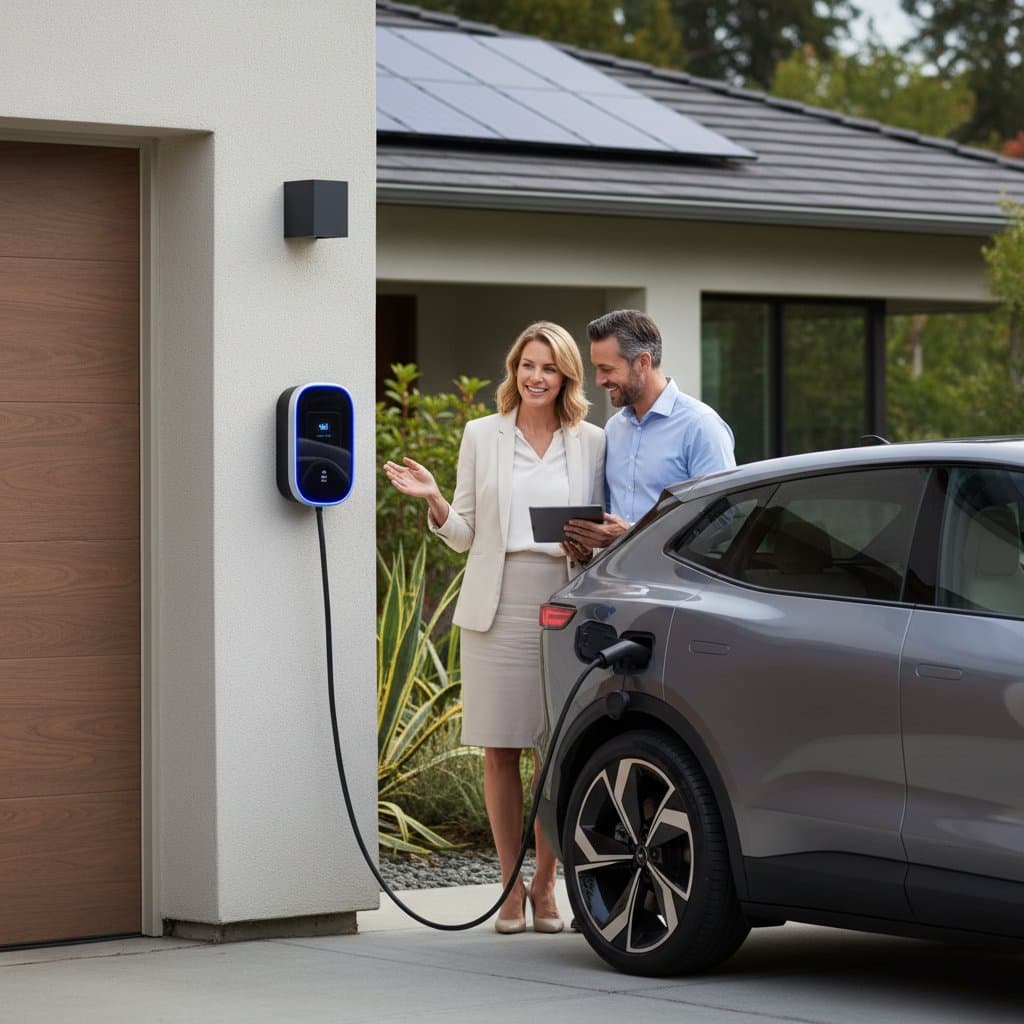
Pairing a solar array with a smart charger reduces long term electricity costs.
Value Impact and Resale
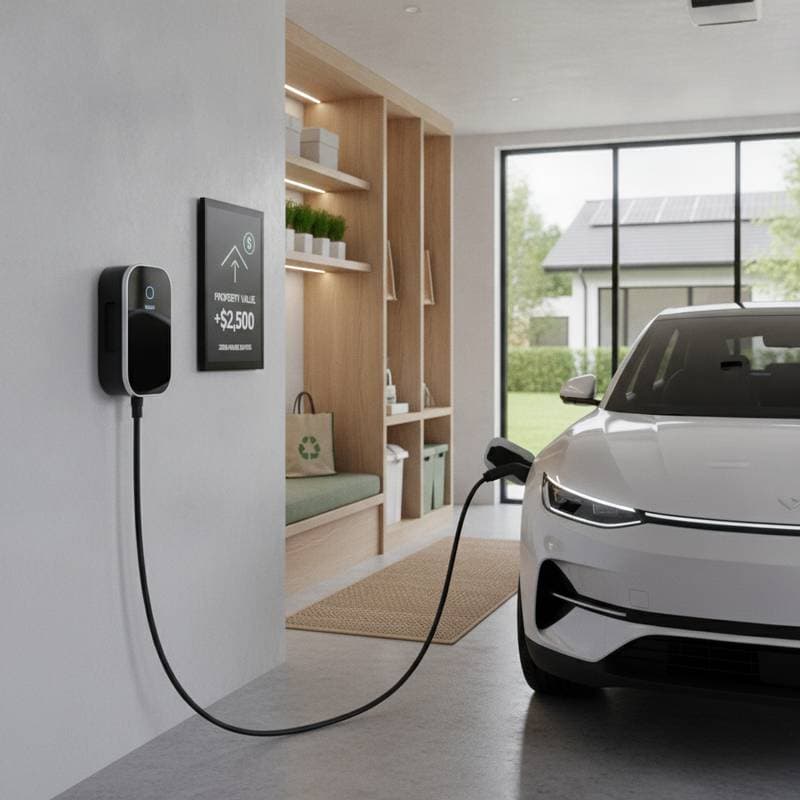
Homes equipped with EV chargers attract buyers who plan to own electric vehicles. Agents note faster sales and stronger interest in energy efficient listings.
Typical benefits:
- Perceived value increase of $1000 to $3000 in active markets
- Better visibility in green home searches
- Improved rental competitiveness for premium units
Pairing the charger with solar further lowers operating costs and appeals to long term owners.
Common Questions
Can a dryer outlet power an EV charger?
Yes when the outlet matches the plug type and amperage. An adapter or dedicated circuit prevents overload.
Is a permit necessary?
Most jurisdictions require a permit for new 240V circuits. The electrician typically manages this step.
How quickly does a Level 2 charger add range?
It supplies 20 to 40 miles of range per hour depending on vehicle and amperage. Level 1 units add 3 to 5 miles per hour.
Will the charger raise the electric bill?
Usage increases the bill yet replaces fuel expenses. Nighttime or solar charging and smart scheduling limit the added cost.
Does outdoor installation remain safe?
Chargers rated for exterior use combined with weatherproof wiring maintain safety. Protect cords from weather exposure.
Next Actions
Review panel capacity and parking layout first. Obtain quotes from three licensed electricians experienced with EV chargers. Confirm permit handling, rebate options, and warranty coverage during discussions. After installation monitor usage and shift charging to off peak periods for maximum savings and convenience.