The Appeal of Hidden Pantries in Contemporary Kitchens
Homeowners seek ways to maximize space and style in kitchen remodels. Hidden pantries address these needs by concealing storage behind seamless surfaces, creating a clutter-free environment. This trend gains momentum in 2025 as buyers prioritize functional yet elegant designs.
These features extend beyond mere utility. They contribute to a sense of order and luxury, appealing to those who value streamlined aesthetics. As remodel costs rise, investments like hidden pantries offer tangible returns on expenditure.
Defining Hidden Pantries
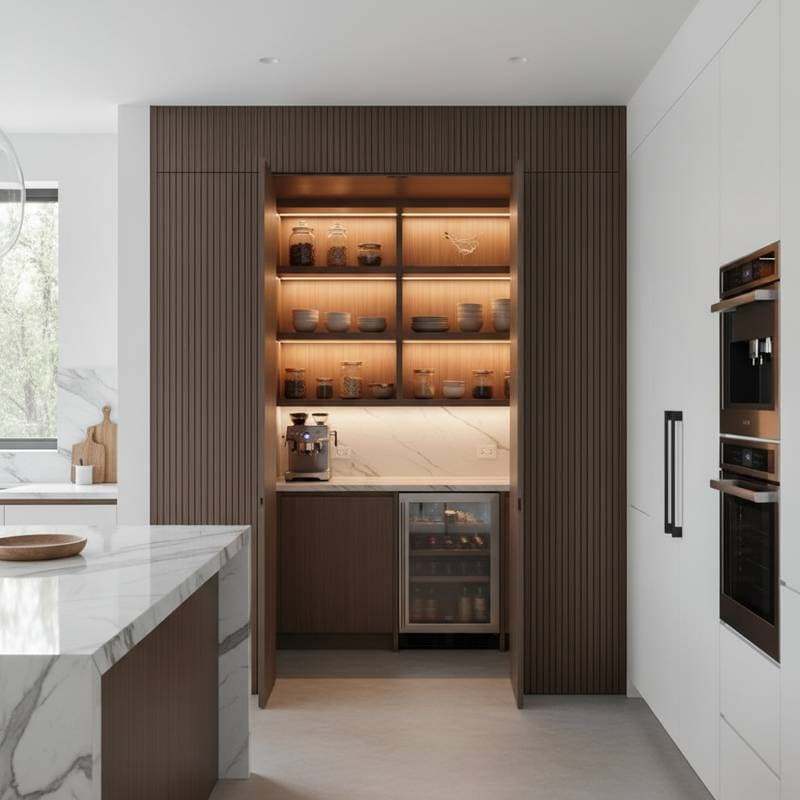
A hidden pantry refers to any storage solution integrated into the kitchen layout without visible doors or shelves. Traditional pantries often feature open shelving or obvious cabinetry, but hidden versions disguise themselves as part of the wall or countertop. This design choice maintains visual continuity while housing essentials like dry goods, appliances, and cookware.
The concept draws from historical butler’s pantries, evolved for modern use. In smaller homes, these spaces prevent overcrowding on countertops. Larger kitchens benefit from the added organization, allowing for customized zones dedicated to specific items.
Varieties of Hidden Pantry Designs
Designers offer multiple configurations to suit different spaces and preferences.
Walk-In Hidden Pantries
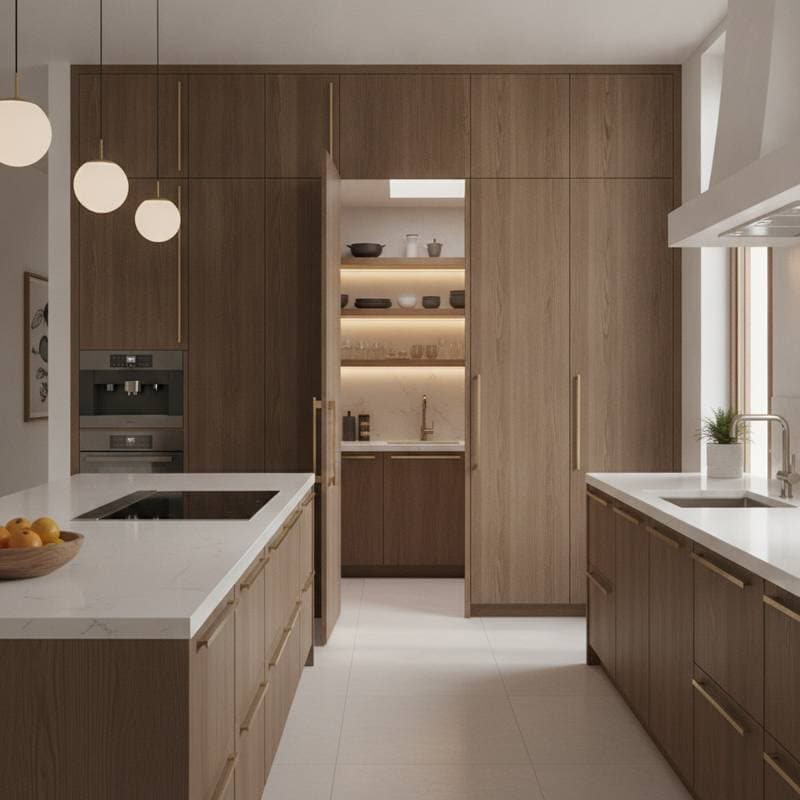
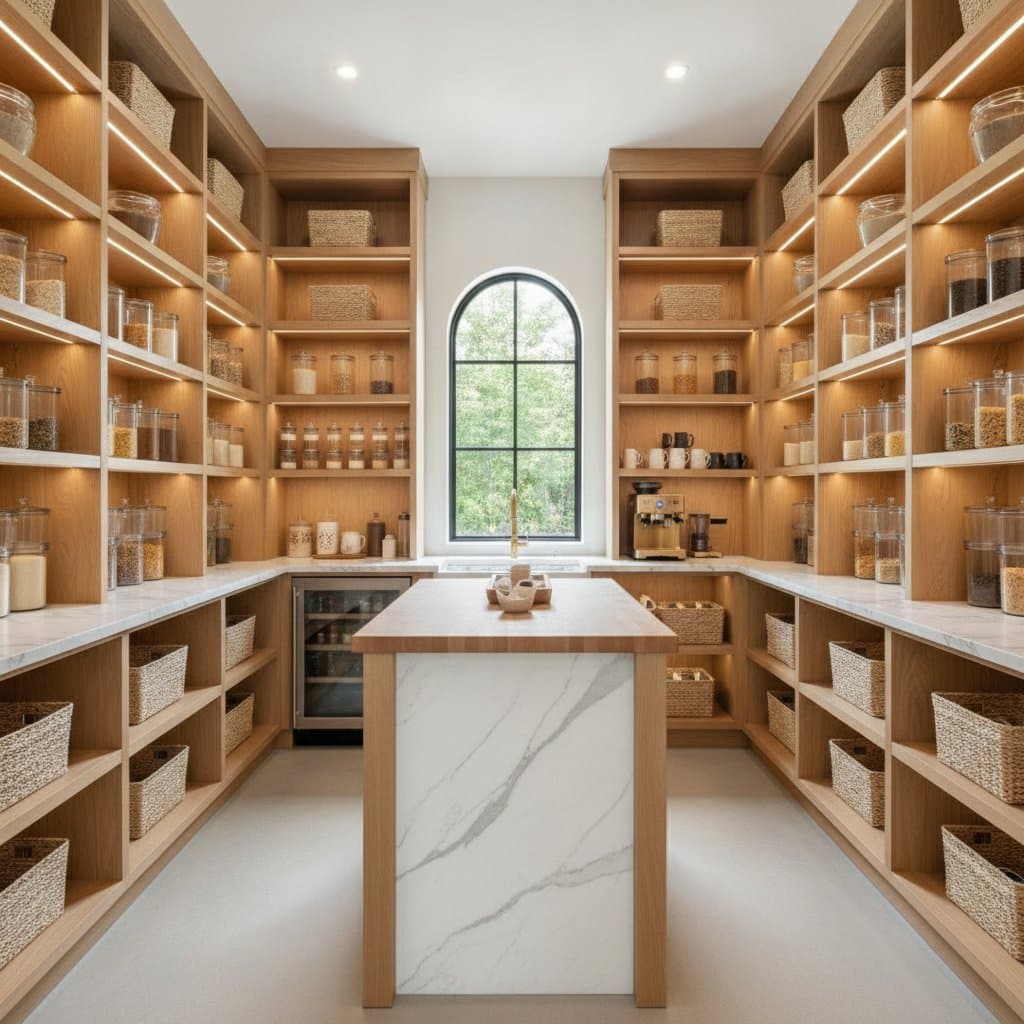
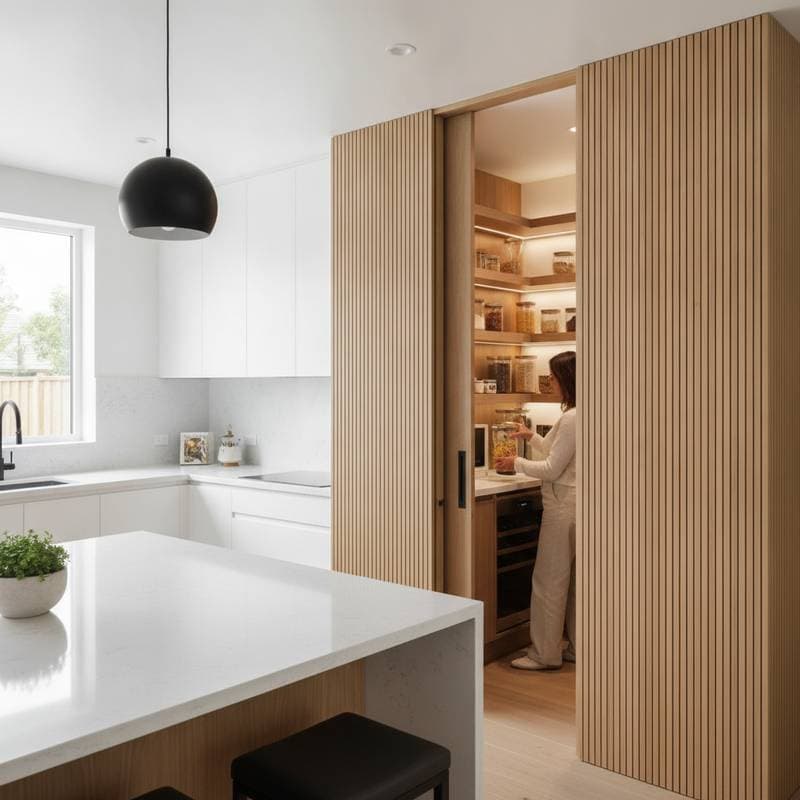
Walk-in options provide generous capacity, often tucked behind sliding panels or pocket doors. These suit expansive kitchens where square footage allows for a dedicated room. Interior layouts include pull-out drawers, adjustable shelving, and even integrated lighting to illuminate contents.
Homeowners appreciate the ability to stock bulk items without compromising the main area’s appearance. Installation requires careful planning to ensure structural support for heavy loads.
Cabinet-Integrated Solutions
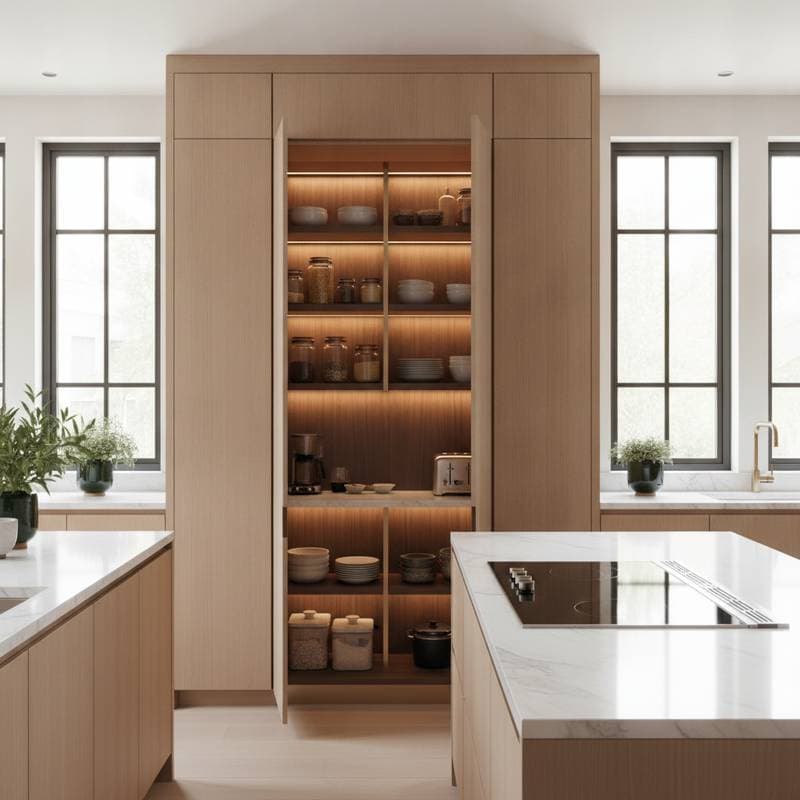
For compact setups, hidden pantries embed within existing cabinetry. A false front panel swings open to reveal organized compartments. This approach works well in island units or along wall lines, preserving counter space.
Materials match surrounding finishes, such as wood veneer or laminate, for a cohesive look. Electrical outlets inside facilitate charging small appliances discreetly.
Pull-Out and Slide Mechanisms
Narrow pull-out pantries fit into tight corners or between cabinets. These utilize vertical space with tiered baskets or wire racks that glide smoothly. Accessibility remains high, as users retrieve items without bending excessively.
Advanced models incorporate soft-close hardware and locking features for safety in family homes.
Enhancing Home Value Through Hidden Storage
Real estate experts project that hidden pantries will add up to $18,000 to a home’s market value in 2025. This estimate stems from buyer demand for innovative storage amid rising living costs. Appraisers recognize these features as upgrades that elevate perceived quality.
The return on investment varies by location and execution. In urban markets, where space commands a premium, the impact proves most significant. Well-designed pantries signal thoughtful planning, attracting offers above asking price.
Data from recent surveys indicates that kitchens influence 80 percent of buying decisions. Properties with concealed storage sell 15 percent faster than comparable listings without such amenities.
Practical Steps for Incorporating a Hidden Pantry
Begin the process by assessing your kitchen’s layout. Measure available wall or cabinet space to determine feasible options. Consult blueprints to identify load-bearing areas that may require professional reinforcement.
Select materials that align with your overall design theme. Durable options like plywood cores with laminate exteriors withstand daily use. Consider ventilation to prevent moisture buildup in enclosed spaces.
Hire certified contractors experienced in custom cabinetry. They handle permits and ensure compliance with building codes. Budget allocation typically dedicates 10 to 15 percent of remodel costs to storage features.
Test prototypes during construction. Adjust shelving heights based on item sizes, such as placing frequently used spices at eye level. Integrate smart elements like motion-sensor lights for added convenience.
Maintenance and Long-Term Benefits
Hidden pantries demand minimal upkeep when installed correctly. Regular dusting of interiors prevents accumulation, and organizers keep contents tidy. Avoid overloading shelves to maintain structural integrity.
Over time, these spaces adapt to changing needs. Modular components allow reconfiguration without major renovations. Families find them invaluable for meal prep, reducing search time for ingredients.
Environmentally, efficient storage minimizes waste by encouraging better inventory management. Homeowners report less food spoilage due to easy visibility of stocked items.
Position Your Remodel for Maximum Resale Success
Investing in a hidden pantry positions your kitchen as a standout feature in 2025. This addition not only streamlines daily routines but also appeals to future buyers seeking modern efficiency. The projected $18,000 value increase underscores its role as a strategic choice.
Plan your remodel with foresight, focusing on seamless integration and quality craftsmanship. Such enhancements transform ordinary spaces into desirable assets, ensuring lasting satisfaction and financial gain.