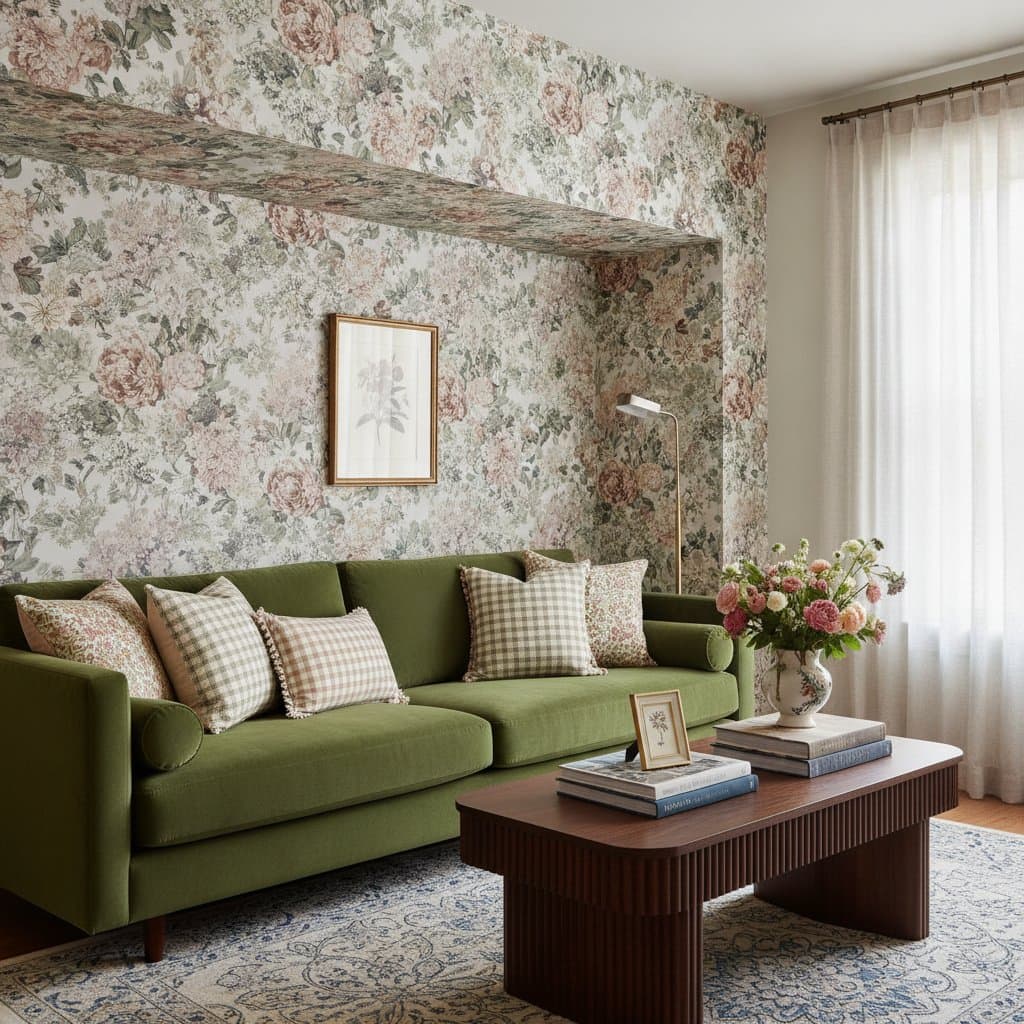
Floral Wallpaper's 2026 Comeback in Grandmillennial Style
Floral wallpaper is back, bigger and bolder than ever. The grandmillennial design movement is driving its return, blending vintage charm with modern comfort. If you thought florals were only for your grandmother sitting room, think again. They are now a statement of warmth, nostalgia, and personal style.
What Grandmillennial Style Really Means
Grandmillennial design celebrates what used to be called granny chic. It mixes the traditional with the contemporary. Think chintz fabrics, needlepoint pillows, skirted furniture, and yes, floral wallpaper. It rejects minimalism and embraces pattern, texture, and history.
This look feels layered and lived in. It balances the past and present, using vintage pieces alongside modern lighting or clean lined furniture. The goal is comfort with character.
Why Floral Wallpaper Fits the Look
Florals are the heart of grandmillennial style. They add color, depth, and a sense of storytelling to a room. Classic botanical prints, English garden motifs, and romantic blooms all play well here.
Floral wallpaper works because it does more than decorate walls. It sets a mood. Large scale blooms make a bold statement, while smaller patterns bring softness. The print can act as a backdrop or the star of the show depending on how you style it.
How to Use Floral Wallpaper Without Overdoing It
You can go full bloom or use restraint. Both approaches work.
- Accent walls. Choose one wall to feature a floral print, then paint the others in a coordinating solid color. This keeps the space balanced.
- Powder rooms. Small spaces are perfect for bold patterns. A floral wallpaper adds surprise and charm.
- Ceilings. For a modern twist, apply wallpaper to the ceiling. It draws the eye up and adds unexpected drama.
- Furniture accents. Cover drawer fronts or the back panel of a bookcase with leftover wallpaper for a quick, cohesive touch.
- Framed panels. If you love the pattern but fear commitment, frame sections of wallpaper like art. It is easy to change later.
Cost and Time
Wallpaper pricing depends on the pattern, material, and room size. Here is a quick guide.
- Wallpaper purchase: 2 to 10 dollars per square foot. Brand, pattern scale, and material affect the price.
- Installation by a professional: 4 to 8 dollars per square foot. Wall prep, pattern match, and height influence the total.
- DIY installation: 1 to 3 dollars per square foot. Type of adhesive and wall condition play a role.
Prices vary by region. Rooms with high ceilings or complex corners increase labor time. Budget friendly peel and stick options are available but may not last as long.
Most wallpaper projects take one to three days depending on room size and drying time between sections.
DIY vs Pro
Choose DIY if you have smooth walls, patience, and basic tools. Peel and stick wallpaper is ideal for renters or first timers.
Hire a pro if you are using traditional pasted wallpaper, have textured surfaces, or plan to align complex patterns. A professional ensures clean seams and avoids waste.
The pro advantage is clear. They know how to prep surfaces, handle corners, and finish edges neatly. This matters for longevity and resale appeal.
Tools and Materials
Here is what you will need for DIY installation:
- Wallpaper rolls measured carefully
- Straightedge and utility knife
- Level or plumb line
- Wallpaper brush or smoothing tool
- Adhesive or paste if not peel and stick
- Sponge and clean cloths
- Step ladder
Have a second person nearby to help align panels. It saves time and frustration.
Regional and Climate Notes
High humidity can loosen wallpaper adhesive. In coastal or damp climates, choose vinyl coated paper or use a primer sealer before application. In dry regions, seams can shrink slightly, so leave a light overlap.
Always check local rental or condo rules before applying wallpaper. Some leases require approval or may limit adhesive types. For historic homes, verify that new wallpaper does not damage plaster or original finishes.
When to Call a Pro
Call a professional installer if you are using expensive designer wallpaper. The pattern requires precise alignment. The surface needs repair or priming. You want the job done quickly without bubbles or seams.
A pro may also advise on wall prep, especially in older homes where paint layers may peel or crack.
Safety and Maintenance
Use non toxic adhesive in small, ventilated spaces. Avoid ladders on uneven flooring. Keep wallpaper out of direct sunlight to prevent fading. To clean, wipe gently with a damp cloth and avoid harsh chemicals.
If mold forms in humid rooms, remove the affected section and treat the wall before reapplying wallpaper. Prevention is easier than repair.
Decorating Tips That Match Grandmillennial Vibes
- Pair floral wallpaper with rattan, wicker, or cane furniture.
- Add brass fixtures for a touch of polish.
- Choose layered window treatments, like Roman shades under floral drapes.
- Mix old and new art for a collected look.
- Keep modern elements simple so they balance the ornate patterns.
Floral wallpaper works best when it feels intentional. Combine it with solid rugs or neutral upholstery to let the walls stand out.
Pro Tips for Success
Start small. A single wall or hallway can help you test the pattern. Light colors make rooms feel larger. Dark florals add coziness. Always order at least one extra roll for future repairs. Patterns can be discontinued, and color batches may vary.
If you are uncertain, request samples first. Tape them to the wall and observe them in different lighting. What looks soft in the morning may appear bold at night. Trust your eye before committing.
Is Floral Wallpaper Outdated
No. Grandmillennial design made it stylish again by mixing vintage prints with modern decor.
Bringing the Look Home
Floral wallpaper delivers a timeless layer that elevates everyday living. With thoughtful placement and proper care, the result is a space that feels personal, welcoming, and enduring for years ahead.