EV Charging Stations Increase Home Resale Value by 11 Percent
Homeowners who install an electric vehicle charging station often realize a substantial return on their investment. Research indicates that properties equipped with these stations sell for approximately 11 percent more than comparable homes without them. With the rising popularity of electric vehicles, such an installation represents a forward-thinking enhancement that emphasizes convenience and environmental responsibility.
This upgrade proves particularly valuable for individuals who own or intend to acquire an electric vehicle. It also draws interest from prospective buyers seeking residences prepared for sustainable lifestyles. The installation works best in single-family homes featuring private parking spaces or attached garages.
Advantages and Disadvantages
Advantages
- Increases resale value by approximately 11 percent
- Enables faster charging rates than conventional outlets
- Minimizes dependence on public charging infrastructure
- Aligns with objectives for renewable energy and reduced emissions
- Appeals to buyers planning to adopt electric vehicles
Disadvantages
- Involves initial expenses for electrical modifications and equipment
- Potentially requires upgrades to the electrical panel or installation of a dedicated circuit
- Necessitates professional expertise for proper setup
- Provides limited advantages in homes lacking off-street parking
DIY Installation Versus Professional Service
Installation difficulty ranges from moderate to high. The process typically requires two to six hours. Essential tools include a drill, conduit, stud finder, voltage tester, and wiring implements.
Potential risks encompass electrical shock and violations of building codes. Individuals with substantial electrical knowledge may attempt a do-it-yourself approach. However, most installations demand a dedicated 240-volt circuit along with necessary permits.
A licensed electrician guarantees appropriate breaker sizing, wire gauge selection, and grounding procedures. Engage a professional if the electrical panel appears outdated, fully occupied, or distant from the intended parking location. Faulty wiring might invalidate manufacturer warranties or pose fire hazards.
Step-by-Step Installation Guide
- Evaluate the electrical system's capacity, including current amperage and available breaker spaces.
- Choose a charger model that aligns with the vehicle's specifications and typical daily mileage requirements.
- Select a mounting position close to the parking area while ensuring protection from moisture exposure.
- Obtain any required permits, as numerous municipalities mandate inspections for new circuit additions.
- Install a dedicated circuit, with an electrician routing fresh wiring from the main panel.
- Affix the charger unit to a wall or pedestal in accordance with the manufacturer's guidelines.
- Attach the wiring, verifying correct grounding and secure breaker connections.
- Test the system's functionality by connecting a vehicle and monitoring voltage levels and charging speed.
- Complete the setup by labeling the breaker and organizing maintenance documentation.
Maintenance Requirements and Expected Durability
Residential EV chargers generally endure for eight to twelve years under routine care. Perform monthly inspections of cords and connectors to detect signs of wear or corrosion. Remove accumulated dust and debris from ventilation areas biannually.
Certain smart chargers require periodic firmware updates. Manufacturers typically provide warranties spanning three to five years. Confirm that the installation adheres to local electrical standards and incorporates suitable weatherproofing measures.
Alternative Charging Solutions
240-Volt Dryer Outlet Adapter
This option presents a more affordable and quicker alternative to basic outlets, though frequent use risks circuit overload.
Public Charging Networks
Suitable for renters or urban residents, these networks incur higher per-charge fees and rely on the availability of nearby stations.
Solar-Powered Charging Systems
These setups demand greater initial investment but yield reduced electricity costs over time. They perform optimally in regions with abundant sunlight and reliable grid connections.
Shared Community Chargers
Common in multifamily developments, such installations lower individual expenses but restrict usage to designated periods.
Considerations for Local Conditions
Expenses related to labor and permits fluctuate by region. Coastal areas often necessitate equipment resistant to corrosion. In colder regions, indoor placements or heated enclosures help preserve charging efficiency.
Several states provide rebates or tax incentives that reduce installation costs by 10 to 30 percent. Explore utility programs offering discounted rates for off-peak charging. Urban properties with constrained parking may experience diminished value appreciation, whereas suburban homes with garages frequently achieve the complete 11 percent uplift.
Prior to commencing work, consult local regulations regarding circuit specifications and conduit materials.
Return on Investment and Impact on Resale
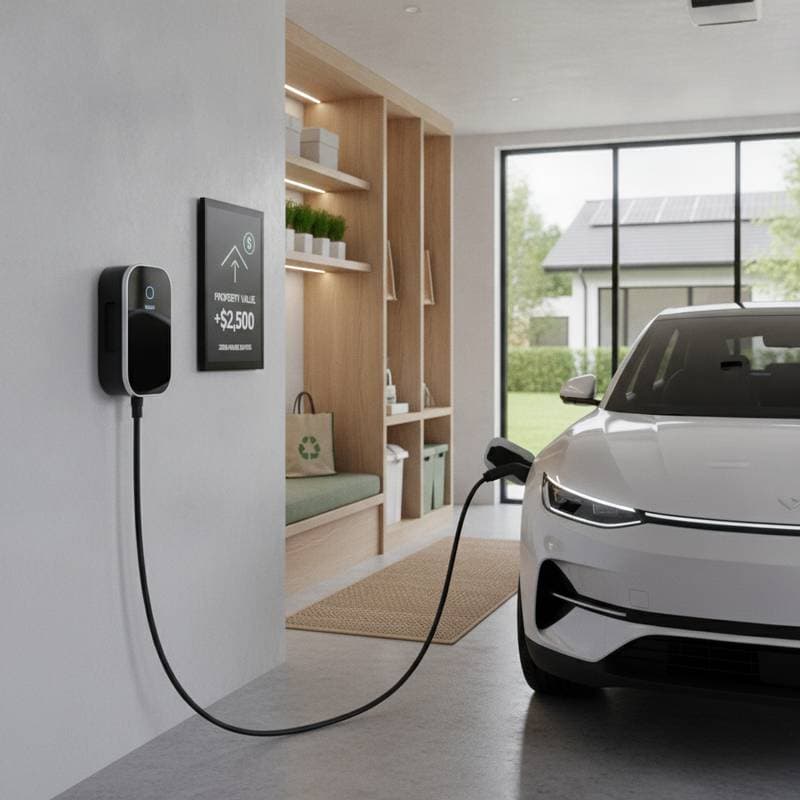
The addition of an EV charger elevates a home's resale value by roughly 11 percent. Prospective buyers regard it as an integrated feature enhancing both practicality and ecological benefits. The extent of this return hinges on regional electric vehicle adoption rates, the charger's specifications, and the property's configuration.
Properties featuring modern electrical panels and sheltered parking benefit most significantly. Real estate professionals note that homes with pre-installed charging capabilities attract quicker offers, as buyers favor seamless, ready-to-use improvements.
Essential Safety Measures
- Employ a dedicated 240-volt circuit for all installations.
- Ensure comprehensive grounding of wiring and incorporate ground-fault circuit interrupter protection where mandated.
- Avoid routing extension cords through doorways or windows.
- Select weather-resistant housings for exterior applications.
- Verify that breakers and wiring accommodate the charger's power demands.
- Disconnect power sources prior to any examination or modification.
Many jurisdictions require permits and subsequent inspections. Non-compliant installations could invalidate insurance coverage or lead to electrical hazards.
Preparing for Installation and Long-Term Benefits
Consider installing a Level 2 charger if you anticipate selling your property or purchasing an electric vehicle. Solicit estimates from at least three licensed electricians to evaluate labor and permit expenses. Verify qualifications for regional rebates and utility programs.
Maintain thorough records for prospective buyers and regulatory inspections. A properly executed, compliant installation delivers everyday utility alongside a tangible enhancement to property worth.