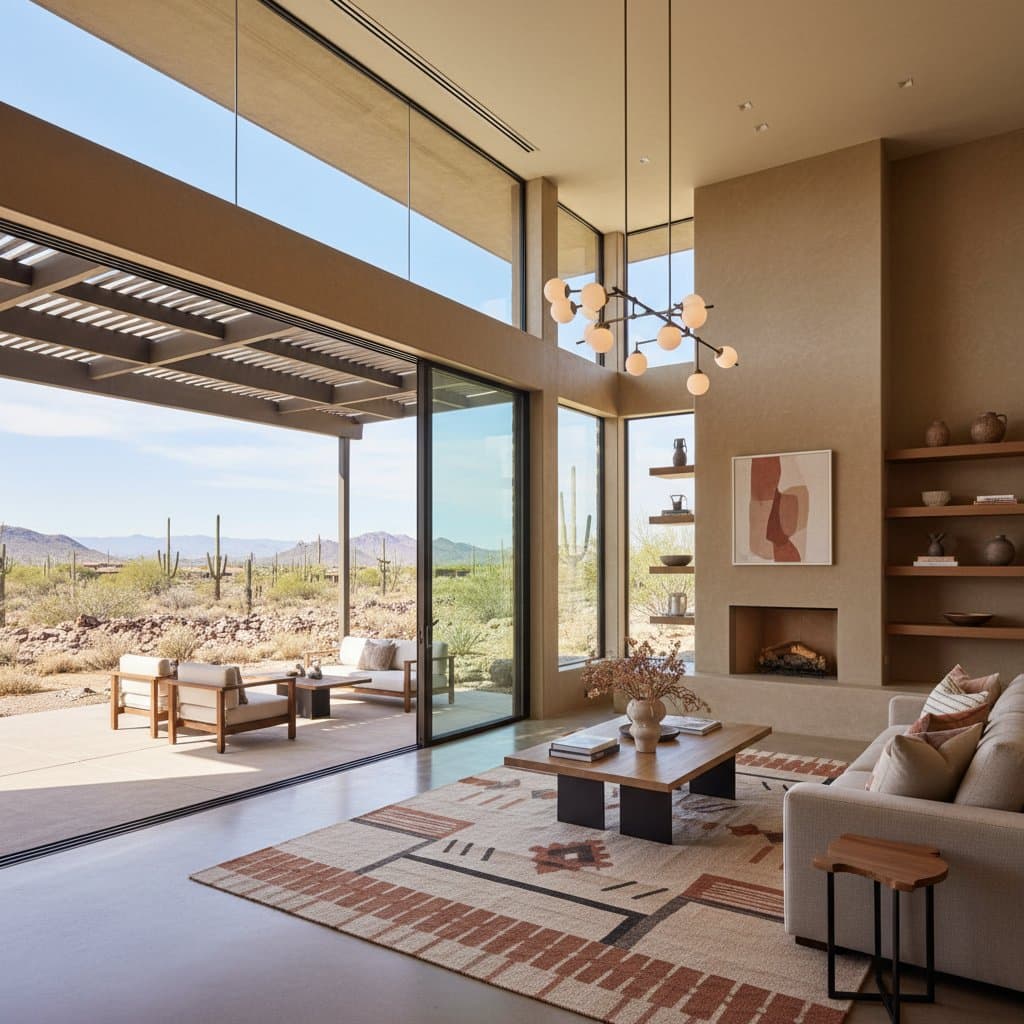
The Rise of Desert Modernism in Southwest Real Estate
Homes featuring desert modernist elements command resale prices 10 to 18 percent higher than comparable properties without such features. Homebuyers seek the sleek profiles, natural textures, and protected outdoor spaces that harmonize with arid environments. Once a specialized aesthetic, desert modernism now serves as a key asset in the competitive Southwest housing market, appealing to those who value sustainability and refined living.
This design philosophy emphasizes harmony with the landscape through features like expansive overhangs for shade, breathable walls to manage heat, and integrated patios that extend indoor spaces. Such elements not only reduce energy demands but also create inviting environments that withstand intense sunlight and dry conditions. As urban development expands in regions like Arizona and Nevada, these adaptations become essential for maintaining property desirability.
Key Cost Considerations for Desert Modernist Upgrades
Implementing desert modernism requires balancing aesthetic goals with practical durability. Expenses vary based on selected materials, required modifications to the existing layout, and the extent of added shading or efficiency measures. Homeowners should budget comprehensively to achieve returns on investment through enhanced market value.
Material Expenses
Stucco, poured concrete, and fabricated steel offer economical options compared to natural stone or compressed earth constructions. Surface refreshes typically range from $8 to $25 per square foot, depending on the finish quality and application complexity. Opt for locally sourced aggregates to minimize transportation costs while supporting regional economies.
Labor Charges
Contractors experienced in desert-specific techniques often request 10 to 20 percent above standard rates, reflecting the precision required for seamless joints and protective sealants. In high-demand areas, scheduling skilled teams may involve wait times of several weeks, so early planning proves beneficial. Verify credentials through local trade associations to ensure workmanship aligns with regional standards.
Window and Shading Investments
Advanced glazing systems paired with substantial eaves contribute $8,000 to $20,000 to project totals, yet they lower air conditioning expenses by 15 to 25 percent annually. Consider automated louvers or retractable awnings for adjustable sun control, which add versatility without excessive upfront spending. These features particularly benefit south-facing elevations exposed to peak solar intensity.
Landscaping Outlays
Incorporating drought-tolerant vegetation and stone mulches costs $6 to $15 per square foot, frequently supplanting water-intensive lawns to promote conservation. Design pathways with permeable pavers to facilitate drainage and reduce erosion during rare but heavy rains. Such landscapes require minimal upkeep, further amplifying long-term savings.
Permitting and Planning Fees
Anticipate $2,000 to $7,000 for architectural consultations and regulatory approvals, especially if alterations involve load-bearing elements or utility integrations. Municipal variations in Phoenix versus Las Vegas necessitate tailored approaches; consult zoning offices early to avoid delays. Professional drawings enhance approval chances and provide clear blueprints for execution.
Deciding Between DIY Efforts and Professional Services
Homeowners can handle certain aspects independently to control costs, provided they adhere to safety protocols and scope limitations. Professional involvement becomes crucial for tasks demanding technical expertise or regulatory adherence.
Suitable DIY Projects
- Apply fresh coats of exterior paint in earth-toned hues to refresh facades.
- Install outdoor fixtures and pathway lighting for evening ambiance.
- Establish gravel ground covers or low-voltage drip systems for plant hydration.
- Rearrange interior furnishings to emphasize open, airy spatial flow.
These initiatives allow personalization while building familiarity with the style's principles.
Projects Requiring Expert Assistance
Engage specialists for modifications to fenestration placements or roof assemblies. Attached pergolas or trellises demand engineering reviews to ensure structural integrity. Relocating wiring or ventilation ducts requires licensed electricians and HVAC technicians to comply with safety codes.
The Importance of Professional Oversight
Improperly sealed exteriors, inadequate runoff management, or substandard window installations may lead to thermal inefficiencies or water intrusion. Experts familiar with local ordinances address requirements for seismic resilience and wildfire buffers. Attempting to economize $5,000 on unlicensed labor risks $20,000 in remediation during buyer appraisals or post-sale disputes.
Ongoing Maintenance and Protection Strategies
Desert modernist surfaces endure harsh conditions when subjected to routine care and protective treatments. Establish a seasonal schedule to preserve both appearance and functionality.
- Reseal stucco and concrete exteriors every five to seven years to seal micro-fissures from thermal expansion.
- Apply UV-resistant coatings to metallic components, preventing fading and corrosion.
- Clean window frames and verify gasket integrity biannually to maintain airtight performance.
- Inspect landscape watering components monthly, adjusting for seasonal dryness.
Certified installers often provide warranties spanning 20 years or longer for fenestration and roofing systems. Document all maintenance activities with records and visual evidence to demonstrate diligence to prospective purchasers.
Ensuring Safety and Regulatory Adherence
Prioritize precautions during renovation phases to safeguard occupants and preserve property integrity. Adherence to protocols minimizes risks associated with construction activities.
Before commencing alterations:
- Disconnect electrical and plumbing supplies prior to any dismantling.
- Test for hazardous substances like asbestos in pre-1980s buildings or lead in older coatings.
- Secure necessary authorizations for foundational, electrical, or plumbing interventions.
- Equip workers with protective gear including hand coverings, vision shields, and breathing apparatus for dust-generating tasks.
Arid-zone regulations mandate elevated insulation ratings and structural testing against gusts exceeding 90 miles per hour. Request documentation of code conformity from service providers prior to settling invoices, confirming the project meets durability benchmarks.
Practical Steps to Implement Desert Modernist Enhancements
Begin your transformation with targeted evaluations and phased commitments.
- Evaluate solar patterns and thermal vulnerabilities through on-site observations over a full day.
- Allocate funds in layers, prioritizing functional improvements before ornamental details.
- Consult architects solely for segments involving frameworks or official permissions.
- Procure specialized supplies in advance, accounting for potential supply chain interruptions from seasonal storms.
- Safeguard upgrades via consistent applications of barriers and periodic assessments.
Desert modernism thrives on deliberate choices and measured progress. These enhancements deliver immediate livability gains alongside enduring financial benefits, creating residences that remain temperate, resource-efficient, and subtly striking across generations.