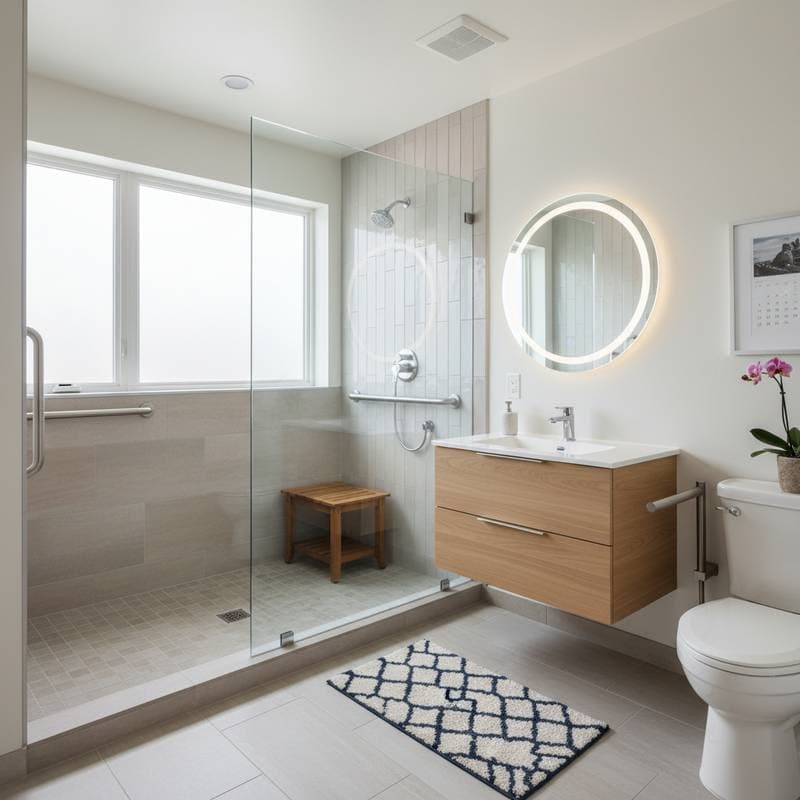
Aging-in-Place Bathrooms: Achieve a 15% Value Increase by 2026
An aging-in-place bathroom renovation elevates home value by as much as 15 percent and ensures long-term safety and ease of use. Real estate professionals increasingly recognize accessibility features as essential assets that contribute to property equity beyond mere convenience.
This article outlines the process for planning, budgeting, and executing an aging-in-place bathroom that delivers substantial returns.
Planning Your Aging-in-Place Bathroom Renovation
1. Conduct Measurements and Assessments
Begin by creating a detailed floor plan. Measure door widths, shower dimensions, and required turning radii. For wheelchair or walker navigation, allocate at least five feet of clear space for maneuvering.
2. Identify Key Priorities
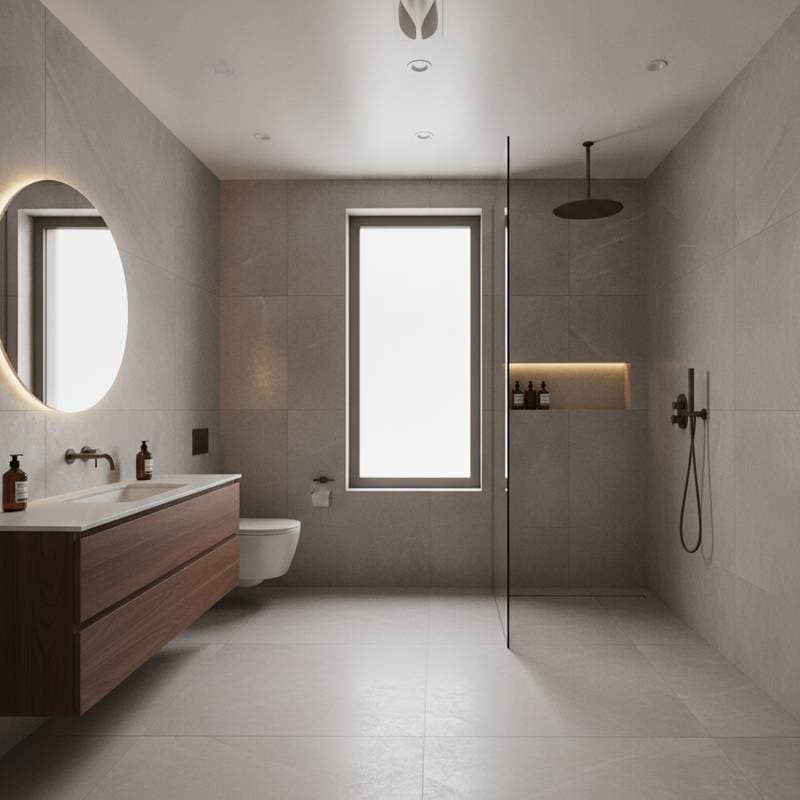
Determine the primary needs based on user requirements. For those with balance concerns, prioritize grab bars and non-slip surfaces. Limited mobility often necessitates a walk-in shower for seamless entry.
3. Select Compliant Fixtures
Opt for products that adhere to ADA standards, which address appropriate heights, reach distances, and safety protocols. Install a durable shower seat and a low-threshold entry to accommodate diverse users effectively.
4. Design Effective Lighting
Incorporate bright, uniform illumination using motion-activated sensors or switches positioned at accessible heights. Eliminate shadows around the shower and toilet areas to prevent hazards.
5. Engage Professionals from the Start
Consult a certified aging-in-place specialist (CAPS) or a remodeler experienced in universal design principles. Request references from previous clients who have undertaken comparable accessibility modifications to ensure reliability.
Project Timeline
A comprehensive renovation typically requires one to three weeks after materials arrive on site. Simpler updates, such as installing grab bars or upgrading lighting, can conclude within one or two days.
Factors that accelerate completion include:
- Pre-approved material selections
- Well-defined design specifications
- Contractors with proven expertise
Elements that may extend the duration encompass:
- Custom installations like specialized tile or cabinetry
- Unexpected plumbing complications
- Delays in obtaining necessary permits
Essential Tools and Materials
Required Tools:
- Tape measure
- Level
- Stud finder
- Drill with appropriate bits
- Caulk gun
- Safety goggles
Key Materials:
- Grab bars supporting at least 250 pounds
- Non-slip floor tiles or vinyl planks
- Fixed or foldable shower seat or bench
- ADA-compliant faucets and showerheads
- Moisture-resistant backer board for walls
- LED lighting fixtures providing balanced warm tones
Stylish Design Strategies for Accessibility
Accessibility need not compromise aesthetics; effective designs maintain a contemporary and inviting atmosphere.
Consider these approaches:
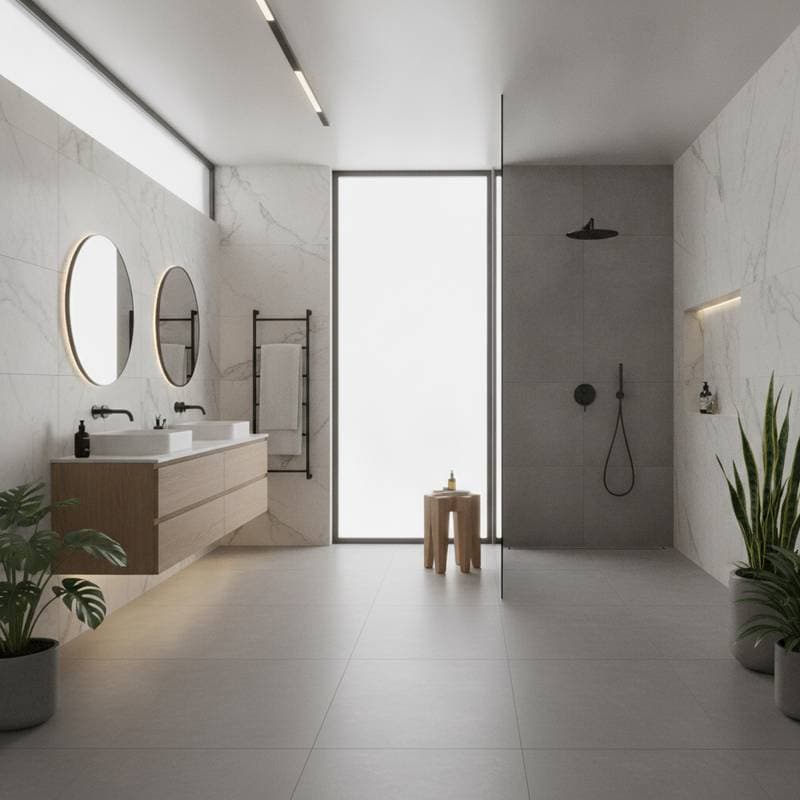
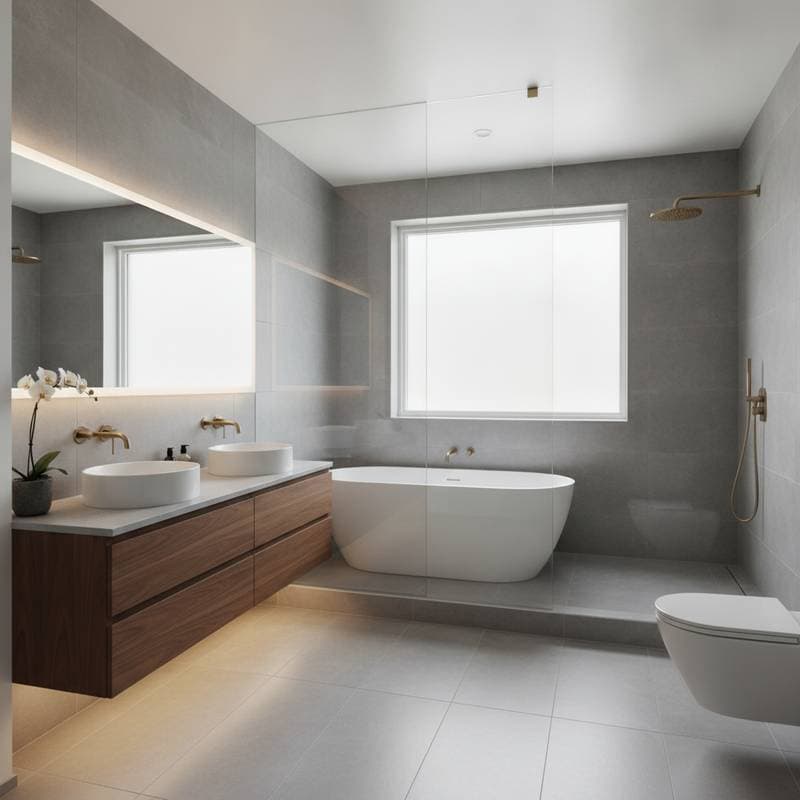
- Color Contrasts: Pair light-colored floors with darker walls, or the reverse, to aid visual depth perception.
- Integrated Safety Elements: Select grab bars that also function as towel holders for a seamless look.
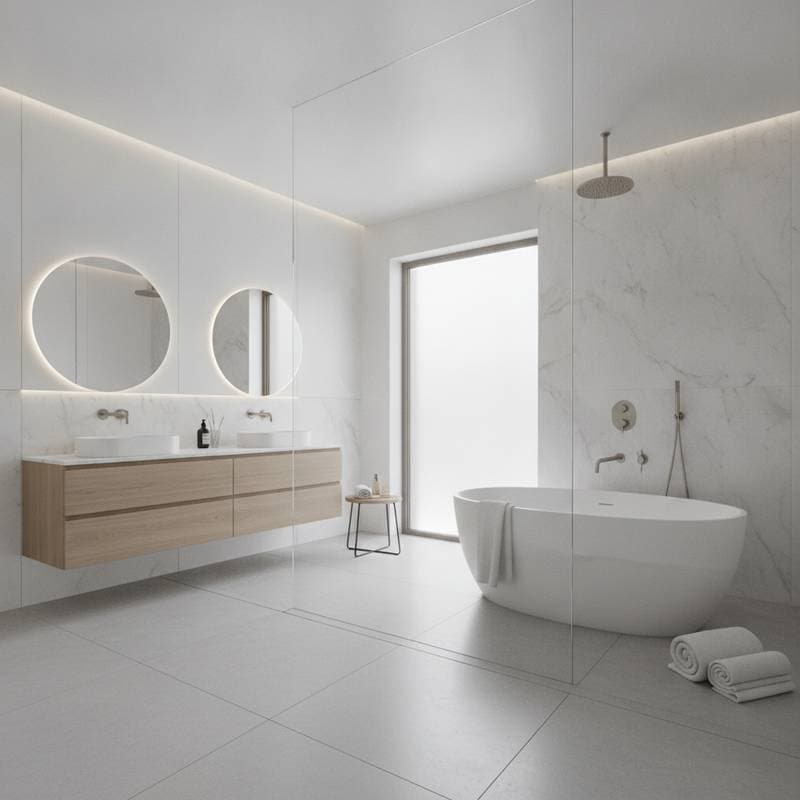
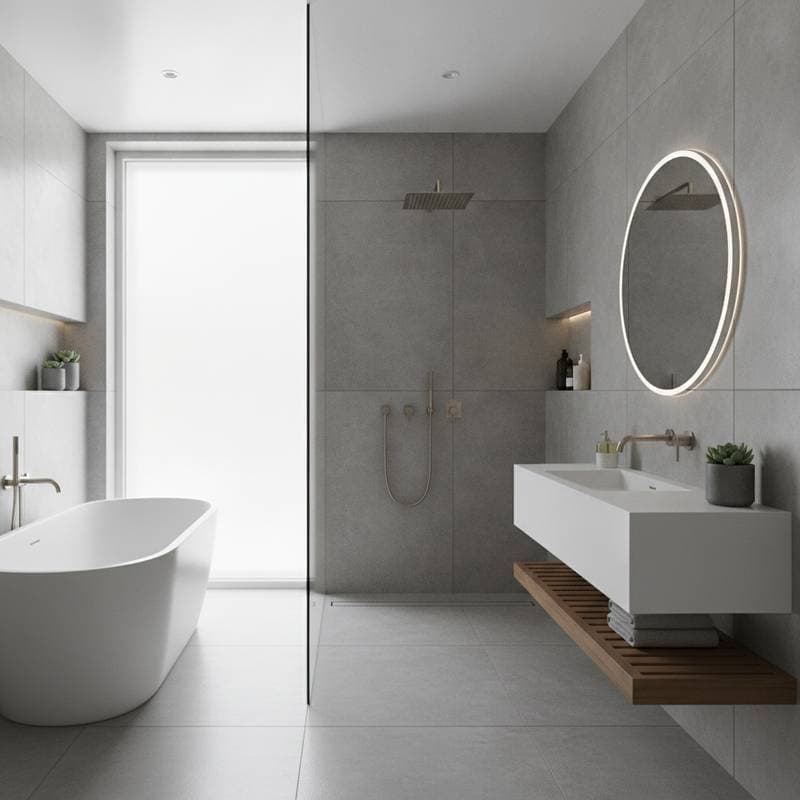
- Spacious Configurations: Employ frameless glass panels in place of traditional shower doors to facilitate entry.
- Layered Illumination: Combine overhead, vanity, and low-level lighting to ensure visibility throughout the day and night.
Such thoughtful, unobstructed designs broaden buyer appeal, contributing significantly to the projected 15 percent uplift in resale value.
Indicators for Professional Involvement
Seek expert assistance if you observe:
- Water damage concealed behind tiles or wall surfaces
- Soft or irregular flooring
- Necessity to relocate plumbing lines
- Requirement for a thorough accessibility evaluation
Professionals can identify available rebates or tax incentives for accessibility enhancements. Certain states and insurance companies provide reimbursements for modifications that mitigate fall risks.
Enduring Advantages
Aging-in-place bathrooms diminish the likelihood of accidents, elevate daily comfort, and draw buyers who prioritize safety and autonomy. These spaces also minimize the need for subsequent renovations as needs evolve.
Homeowners frequently express greater confidence in the longevity of such designs for themselves and visitors, yielding emotional benefits comparable to the financial gains.
Actionable Steps Forward
- Inspect your current bathroom and document specific challenges.
- Establish a practical budget aligned with intended upgrades.
- Arrange a meeting with a certified remodeling professional.
- Prioritize durable materials that prioritize performance alongside appearance.
- Retain documentation of purchases and warranties to support future resale claims.
Executed thoughtfully, an aging-in-Place bathroom integrates elegance, utility, and investment potential, safeguarding well-being today and asset growth tomorrow.
Frequently Asked Questions
What return on investment can one expect from an aging-in-place bathroom renovation?
Typically 10 to 15 percent, varying by local market conditions and quality of finishes.
Is a permit required for installing grab bars?
Generally not, though alterations to plumbing or electrical systems usually demand one.
Are these modifications feasible in compact bathrooms?
Yes, through solutions like corner walk-in showers, wall-mounted sinks, and pocket doors that optimize space.
Which flooring options offer the greatest safety for older adults?
Textured porcelain tiles or vinyl with a minimum slip resistance rating of 0.42.
Does a standard bathtub remain advisable?
Only with features such as a low entry threshold or integrated door; otherwise, a walk-in shower provides superior safety and maintenance ease.