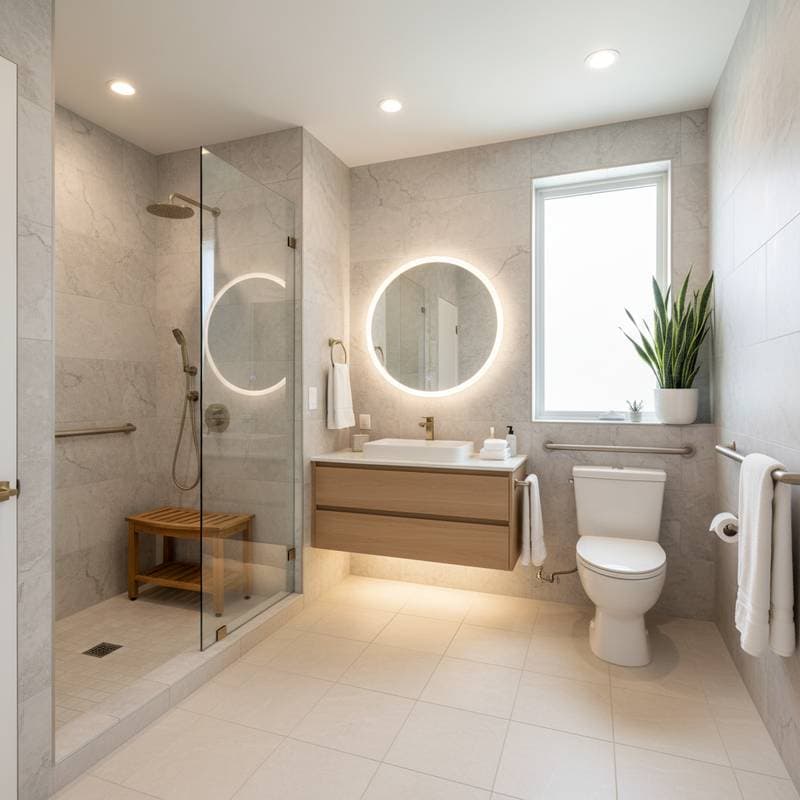
Aging-in-Place Bathroom Remodels Increase Home Value by 15 Percent
Well-executed aging-in-place bathroom remodels yield an average 15 percent rise in home value. These projects range in cost from $18,000 to $32,000 per bathroom.
An aging-in-place bathroom extends beyond basic additions like grab bars and wider doorways. Such renovations enhance safety, elevate daily comfort, and mitigate fall risks, all while appealing to buyers seeking properties designed for extended occupancy. Forward-thinking homeowners find that these modifications align with evolving market preferences for adaptable living spaces.
Key Cost Considerations
Materials Selection
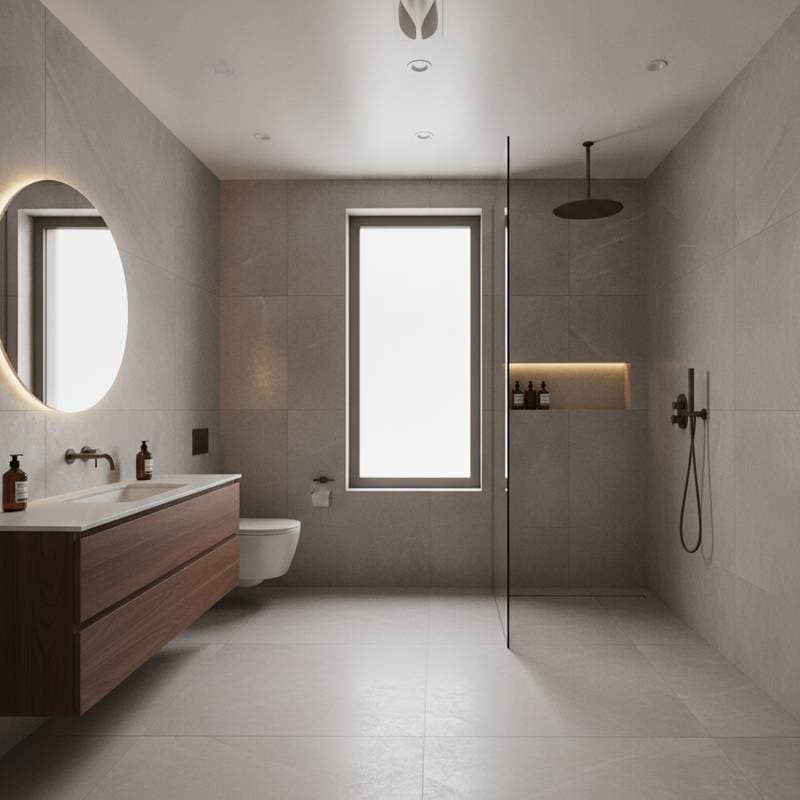
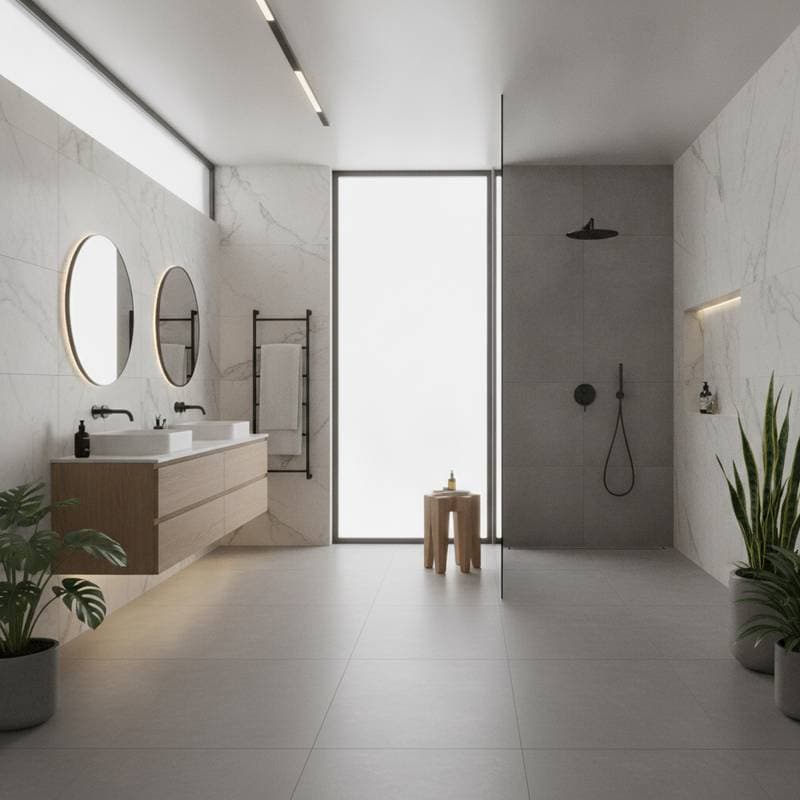
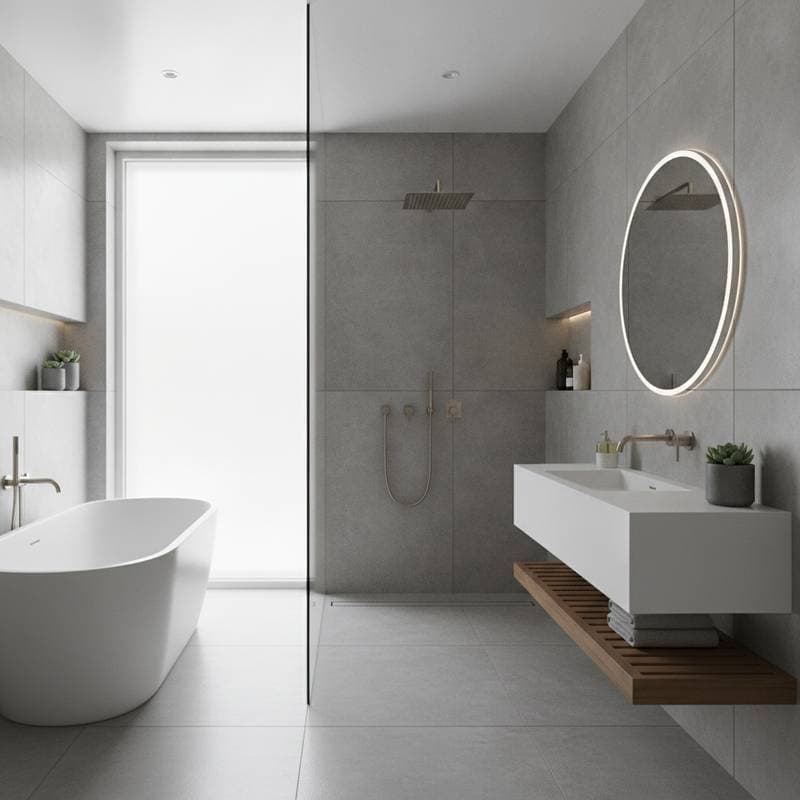
- Fixtures: Walk-in tubs typically cost $3,000 to $8,000, including installation for seamless integration. Curbless showers equipped with linear drains range from $4,000 to $9,000, offering barrier-free entry.
- Flooring Options: Slip-resistant tile or vinyl flooring averages $6 to $12 per square foot, ensuring durability in wet environments.
- Grab Bars and Accessories: Installed units cost $100 to $400, varying by length, material finish, and mounting strength.
Labor Expenses
Labor accounts for 40 to 60 percent of the total budget. Projects involve coordination among plumbers, tile installers, and electricians. Accessibility features often necessitate wall reinforcements and precise drain adjustments to meet safety standards.
Bathroom Size and Layout Impacts
Smaller 5x8-foot bathrooms may total around $15,000 with minimal changes. Larger suites or comprehensive overhauls, including barrier-free showers and integrated seating, can surpass $40,000 due to expanded scope.
Permits and Compliance
Allocate $300 to $1,000 for permits. Modifications to plumbing or electrical systems require inspections. New outlets in moisture-prone areas must incorporate ground-fault circuit interrupter protection.
Demolition and Preparation
Demolition and waste disposal add $500 to $1,200 to expenses. Older homes frequently reveal issues like mold or damaged subfloors, which demand additional remediation.
Optional Enhancements
- Heated flooring systems range from $1,000 to $2,500, providing warmth underfoot.
- Advanced lighting solutions cost $400 to $1,200, improving visibility and ambiance.
- Smart exhaust fans, priced at $250 to $600, maintain air quality efficiently.
DIY Options Versus Professional Services
Suitable DIY Projects
Homeowners with basic skills can handle tasks such as applying moisture-resistant paint to walls. Installing grab bars proves feasible if wall studs align properly. Simple replacements of faucets or light fixtures require minimal tools. Non-slip mats or adhesive strips offer quick, low-cost traction improvements.
Projects Requiring Experts
Engage professionals for plumbing relocations or drain modifications. Tiling in water-exposed areas demands precision to prevent water intrusion. Curbless shower installations and walk-in tub setups involve complex waterproofing. Electrical rewiring or new circuit additions ensure compliance and safety.
Improper execution risks water leaks, inadequate drainage slopes, or electrical faults, potentially leading to warranty invalidation and expensive fixes. Structural alterations call for intermediate to advanced proficiency in carpentry, tiling, and plumbing. Essential tools include a wet saw, power drill, stud finder, level, and waterproofing kits.
Project Timeline and Cost-Saving Strategies
Preparation Timeline
Anticipate 2 to 5 weeks for completion, influenced by project complexity. Delays often stem from tile curing periods or custom fixture lead times. Secure all materials prior to starting demolition to maintain momentum.
Optimal Scheduling
Spring or early fall seasons facilitate smoother contractor availability and prompt material shipments. Winter projects may encounter disruptions from weather-affected logistics or heightened demand.
Strategies for Savings
Preserve the existing layout to sidestep costly plumbing shifts. Opt for vinyl plank flooring over tile to accelerate installation and reduce labor. Select fixtures in matching finishes to access bulk pricing from suppliers. Inquire about discounts for seniors or veterans through material providers.
Budget Buffer
Reserve 10 to 15 percent of the total for unforeseen issues, such as concealed damage or evolving code requirements. Demolition in established homes often uncovers plumbing leaks or compromised subfloors.
The Value Proposition of Aging-in-Place Design
Aging-in-place bathrooms appeal to buyers envisioning prolonged residency and those addressing specific mobility needs. This broad market draw supports premium pricing at resale.
Impact on Resale Market
Industry experts observe that properties featuring universal design bathrooms move quickly and command higher offers. Comparable homes without these elements see a 10 to 15 percent valuation uplift from such upgrades.
Broadened Usability
Elements like curbless showers and lever-style handles accommodate users of all ages and abilities, including young children or visitors recovering from injuries. Prospective owners view these as proactive adaptations for diverse lifestyles.
Benefits for Insurance and Appraisals
Certain insurance providers reduce rates for residences with proven safety measures, such as reinforced grab bars and non-slip surfaces. Appraisers classify these as valuable functional enhancements, bolstering overall property assessments.
Deciding Between Repairs and Full Replacement
For bathrooms with solid foundational elements, targeted retrofits deliver substantial improvements at lower costs.
When Repairs Suffice
Proceed with repairs if tiles and grout remain intact, plumbing functions reliably without leaks, and grab bars or lighting can integrate without structural alterations.
When Replacement Is Necessary
Initiate a full replacement upon discovering mold, subfloor deterioration, cracked fixtures, or the need to reposition drains for better accessibility.
A professional inspection, costing $200 to $400, clarifies the best path and avoids inefficient spending on inadequate solutions.
Implementing Your Remodel
Establish Priorities
Begin by identifying critical safety needs, such as grab bars, non-slip flooring, and enhanced illumination.
Obtain Detailed Quotes
Contact at least three certified contractors and request breakdowns covering materials, labor, and permits.
Arrange Temporary Facilities
During construction, secure alternative bathing arrangements. For single-bathroom homes, portable units or brief relocations prove practical.
Secure Materials in Advance
Custom fixtures and specialized doorways may require several weeks for delivery. Verify timelines before commencing work.
Conduct Thorough Inspections
Prior to final payments, evaluate shower slopes, water flow, and control accessibility. Confirm secure grab bar mounting and complete sealing of tile joints.
Document Warranties
File all fixture and labor guarantees promptly. Maintain organized records of receipts, plans, and permits to support future property transactions.
Assessing and Advancing Your Bathroom Safety
Examine your current bathroom using a focused safety evaluation: Do floors resist slipping? Does shower access avoid high steps? Is nighttime visibility adequate?
Address deficiencies through targeted planning. Collaborate with contractors experienced in universal design principles, verify local codes, and procure materials promptly.
These renovations transcend niche applications to become strategic investments. They safeguard well-being, foster autonomy, and enhance financial returns upon selling, delivering benefits that endure for years.