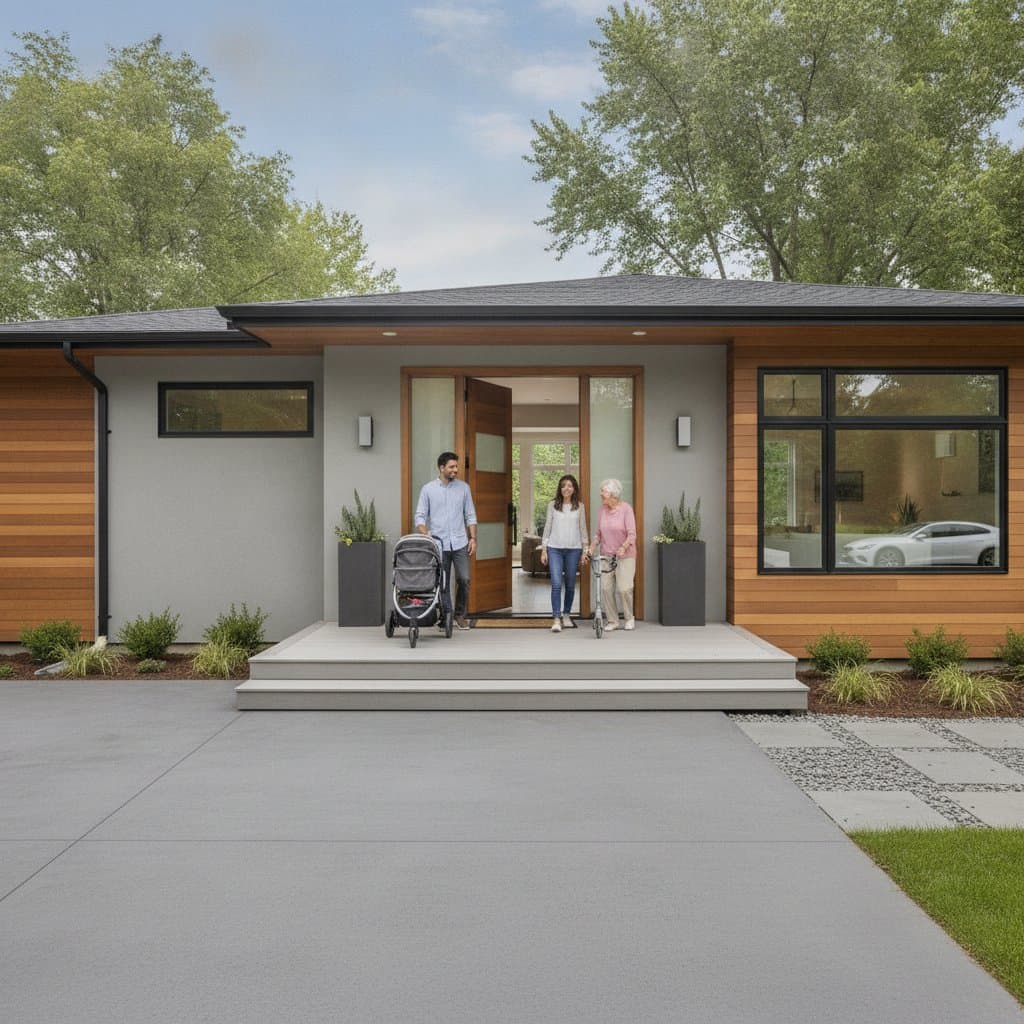
Zero-Step Entries Improve Safety and Home Value
Zero-step entries provide a practical solution for safer, more accessible homes. These modifications eliminate thresholds that create tripping hazards. They also support long-term independence for homeowners.
Typical costs range from 3000 to 9000 dollars for a standard retrofit. This investment removes exterior steps and creates a flush threshold.
Key Cost Influences
Entry type and location affect pricing. Front entries require higher finish standards and cost more. Side or rear entries reduce expenses by 20 to 40 percent with simpler materials.
Foundation type plays a role. Slab-on-grade homes need less work. Raised foundations demand additional grading or ramps that increase labor and material expenses.
Materials determine the final price. Concrete costs 8 to 14 dollars per square foot. Composite decking with flush thresholds reaches 25 dollars per square foot.
Drainage requires attention. Trench drains or slope changes add 300 to 900 dollars. These features prevent water from entering the home.
Permits add to the budget. Fees typically fall between 150 and 500 dollars. Local rules dictate exact amounts.
Finishes enhance the result. Railings and lighting cost 400 to 1200 dollars. They increase safety and visual appeal for future buyers.
Professional Installation Considerations
Some tasks suit do-it-yourself efforts. Planning the layout with a level works well for homeowners. Sealing surfaces after curing also fits this category.
Professional help becomes necessary in certain cases. Entries raised more than 6 inches require expert grading. Structural changes or drainage issues demand licensed contractors.
Proper execution avoids common problems. Incorrect slopes lead to water pooling or door issues. Professionals ensure code compliance and lasting performance.
Ongoing Care and Durability
Regular maintenance extends the life of the entry. Clean surfaces twice each year. Inspect drains after storms. Reseal concrete every 3 to 5 years.
These entries last 25 years or longer with proper construction. Minor repairs stay under 300 dollars in most situations.
Warranties vary by material. Concrete work often includes 1 to 5 years of coverage. Composite products may offer lifetime limited warranties.
Watch for warning signs. Standing water, edge cracks, or sticking doors indicate the need for attention. Address these promptly to avoid larger repairs.
Return on Investment Benefits
Accessible design attracts more buyers today. Families appreciate the convenience for strollers and daily movement. Appraisers note these features as universal design elements that can increase resale value by 3 to 7 percent.
Falls near steps represent a leading cause of injury. Removing this risk supports safer aging in place. It also reduces potential long-term care costs.
Maintenance becomes simpler without steps. Snow removal and cleaning take less time. The smooth surface resists damage from weather cycles.
Steps to Implement the Upgrade
Select the entrance with the best natural slope. Measure the area and photograph current conditions. Obtain bids from at least two qualified contractors.
Discuss drainage plans and material options during consultations. Confirm warranty details before signing agreements.
Existing porches offer conversion opportunities. Turn sections into level landings with gradual walkways. New construction allows matching slab heights to grade from the outset.
These changes deliver lasting advantages in safety and market position.