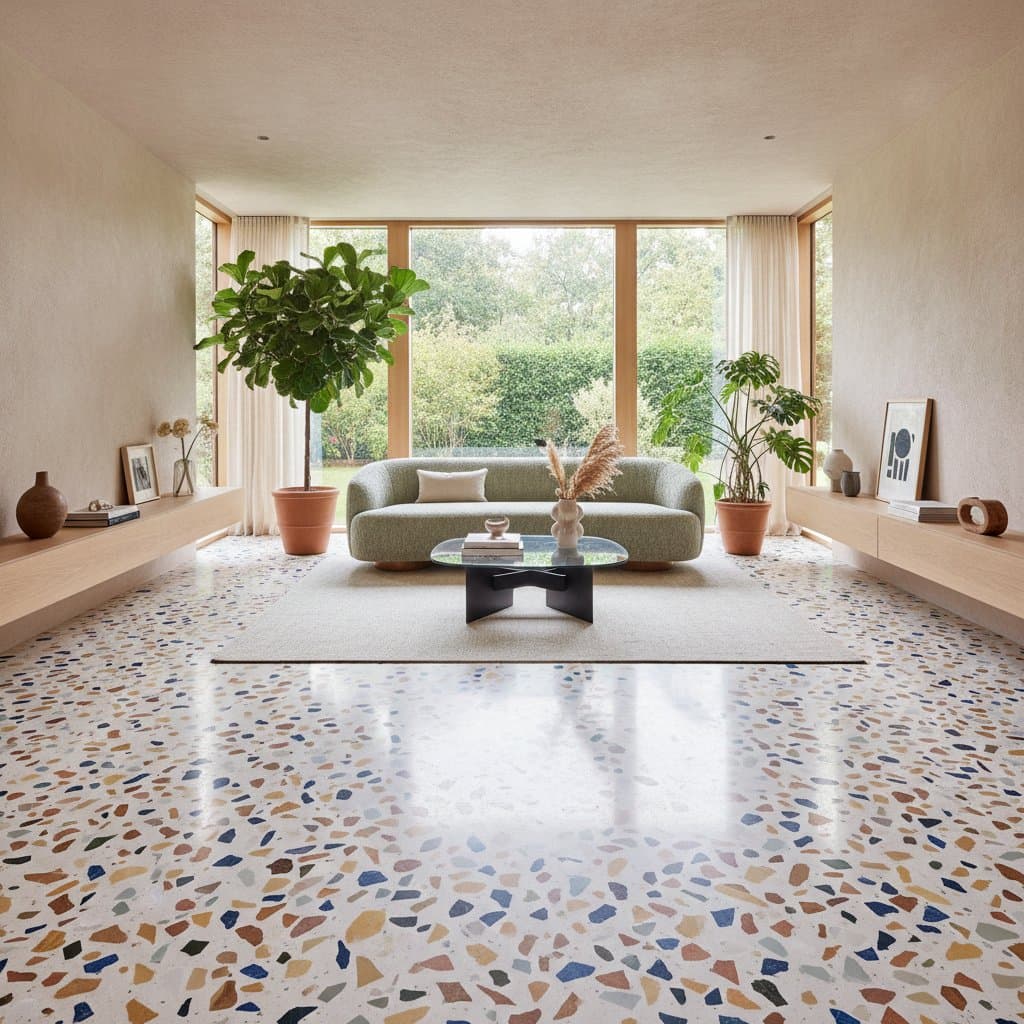
Why Terrazzo Flooring Returns to Prominence in 2026 Design Trends
Terrazzo flooring combines durability with distinctive patterns. Homeowners and designers select it for projects that require surfaces capable of withstanding decades of use while supporting clean or retro aesthetics.
Cost Snapshot
National average costs range from $25 to $90 per square foot. Most residential projects fall between $35 and $60 per square foot. Basic poured-in-place terrazzo begins near $20. High-end custom blends may exceed $100.
Several factors determine final pricing. These include the terrazzo type, aggregate quality and material, subfloor preparation requirements, labor expertise, and the number of polishing and sealing steps.
Advantages and Limitations
Terrazzo offers several practical benefits. It maintains structural integrity for many decades with routine care. Once sealed, it requires minimal upkeep. Custom color and chip combinations accommodate varied design preferences. Recycled materials support sustainable building goals. Properly finished surfaces resist moisture and stains.
Limitations warrant consideration as well. Upfront costs remain higher than many alternatives. Installation demands significant labor. Movement in the subfloor can produce cracks. The surface feels cold and hard without supplemental heating. Periodic resealing preserves surface sheen.
Available Types
Poured-in-place terrazzo creates a seamless surface suited to large rooms or commercial spaces. Professional installation ensures proper leveling and finishing.
Terrazzo tile simplifies installation for smaller areas or renovation projects. It delivers comparable appearance at reduced expense.
Epoxy terrazzo provides a lightweight, flexible option for upper floors and contemporary interiors. It performs poorly outdoors.
Cement terrazzo suits historic restorations and rustic settings. It requires extended curing time yet manages moisture effectively.
Professional Installation Requirements
Homeowners rarely succeed with DIY terrazzo projects. The process requires specialized grinders, mixers, and polishers. Most lack both equipment and technique. A professional crew typically completes a medium-sized room in four to seven days. Licensed installers handle subfloor leveling, precise mixing ratios, and final finishing. Inadequate preparation frequently leads to cracking or separation.
Installation Sequence
- Inspect and level the subfloor.
- Install a moisture barrier along with divider strips.
- Combine binder and selected aggregates.
- Pour the mixture or set tiles uniformly.
- Permit complete curing.
- Grind the surface to expose aggregate chips.
- Polish to the target sheen level.
- Apply protective sealant.
- Verify smoothness after cleanup.
Ongoing Care and Expected Lifespan
Regular sweeping or vacuuming removes abrasive particles. Damp mopping with a neutral cleaner maintains appearance. Reseal the surface every three to five years based on traffic volume. Acidic cleaners degrade the finish. Well-installed terrazzo endures for decades with limited intervention. Certain epoxy systems include extended manufacturer warranties.
Comparable Flooring Options
Polished concrete achieves a similar aesthetic at lower cost yet offers shorter service life. Luxury vinyl tile installs quickly but lacks comparable durability and environmental credentials. Ceramic or porcelain tile provides moisture resistance with restricted pattern options. Natural stone delivers premium texture while requiring more frequent sealing.
Regional Considerations
Labor rates differ across geographic areas. Coastal humidity necessitates robust vapor barriers. Cold regions benefit from integrated radiant heating systems. Local building codes may specify slip resistance standards for wet areas.
Long-Term Value
Terrazzo contributes lasting property value through durability and distinctive appearance. Buyers seeking enduring finishes respond positively to its low maintenance profile. Returns appear primarily through extended service life rather than immediate resale gains.
Safety Practices
Eye and ear protection remain essential during grinding and mixing operations. Dust extraction systems control airborne particles. Non-slip sealers reduce fall risk in bathrooms and entryways. Structural assessments confirm load capacity before placement on upper levels.
Next Steps for Implementation
Obtain material samples to evaluate color and aggregate combinations against your design goals. Collect three detailed proposals from qualified installers. Verify that selected sealers and binders comply with applicable codes. A properly executed terrazzo floor functions as a durable focal point in both contemporary and traditional interiors.