Why Basement Gyms Increase Home ROI by 15%
Homeowners often overlook the potential of unused basement space. A well-designed basement gym transforms that area into a valuable asset that enhances daily life and property worth. This conversion provides convenient access to fitness routines without leaving home, while appealing to buyers who prioritize wellness features. When executed with attention to structural integrity, moisture management, and professional finishes, such a project can elevate resale value by approximately 15 percent.
Cost Breakdown
The expense for converting a basement into a gym typically falls between $10,000 and $35,000. Many projects land in the $18,000 to $25,000 range for setups that include resilient flooring, adequate lighting, and essential equipment. Luxury options, such as those incorporating advanced climate control, custom storage solutions, or integrated sauna facilities, may exceed $50,000.
Several factors influence the total investment:
- The basement's dimensions and ceiling clearance, which determine layout feasibility.
- Requirements for moisture remediation, waterproofing applications, and thermal insulation to ensure a comfortable environment.
- Selection and volume of exercise apparatus, from basic weights to sophisticated machines.
- Necessary enhancements to electrical systems and heating, ventilation, and air conditioning (HVAC) for safety and usability.
- Quality of finishing elements, including flooring materials, wall mirrors, and illumination fixtures.
Budgeting requires consulting local contractors early to account for regional material costs and labor rates.
Gym Configuration Options
Basement gyms vary in scope to match different needs and financial plans. Each type balances functionality, aesthetics, and long-term durability.
Basic Fitness Area
This setup features rubberized mats, a set of free weights, and simple wall treatments. It suits those with modest funds or limited square footage, providing foundational workout capabilities without extensive modifications.
Comprehensive Home Gym
Equipped with cardiovascular machines, resistance cable setups, full-length mirrors, and enhanced lighting, this option supports diverse exercise regimens. Regular fitness enthusiasts benefit from its versatility and motivational design elements.
Integrated Wellness Space
Beyond standard equipment, this includes dedicated zones for yoga or flexibility training, along with embedded audio systems and soft, adjustable lighting. It caters to users seeking a blend of physical exertion and restorative activities.
Advanced Performance Facility
Reinforced subflooring, industrial-strength airflow systems, and connected smart devices define this configuration. Serious athletes or personal trainers find it ideal for high-intensity sessions and professional use.
Selecting the right type involves assessing personal fitness goals and the basement's physical constraints.
Essential Conversion Steps
A successful basement gym begins with thorough preparation to avoid future issues. Follow these steps to create a safe, effective space.
- Conduct a detailed inspection for foundation cracks, water intrusion, or structural weaknesses; repair any defects immediately.
- Measure humidity levels and apply a vapor barrier beneath the flooring if elevated moisture is present.
- Construct and insulate interior walls to regulate temperature and reduce noise transmission to upper levels.
- Install additional electrical outlets, energy-efficient lighting, and ventilation components to meet usage demands.
- Lay impact-resistant flooring, such as interlocking rubber tiles or moisture-proof vinyl planks, for stability and protection.
- Apply mold-resistant paint to walls or mount shatterproof mirrors to expand the perceived space.
- Position equipment with adequate clearance for movement, using protective mats under heavy items.
- Incorporate organizational storage for accessories like dumbbells, exercise balls, and towels.
- Perform a final cleaning, verify safety features like non-slip surfaces, and test all systems before regular use.
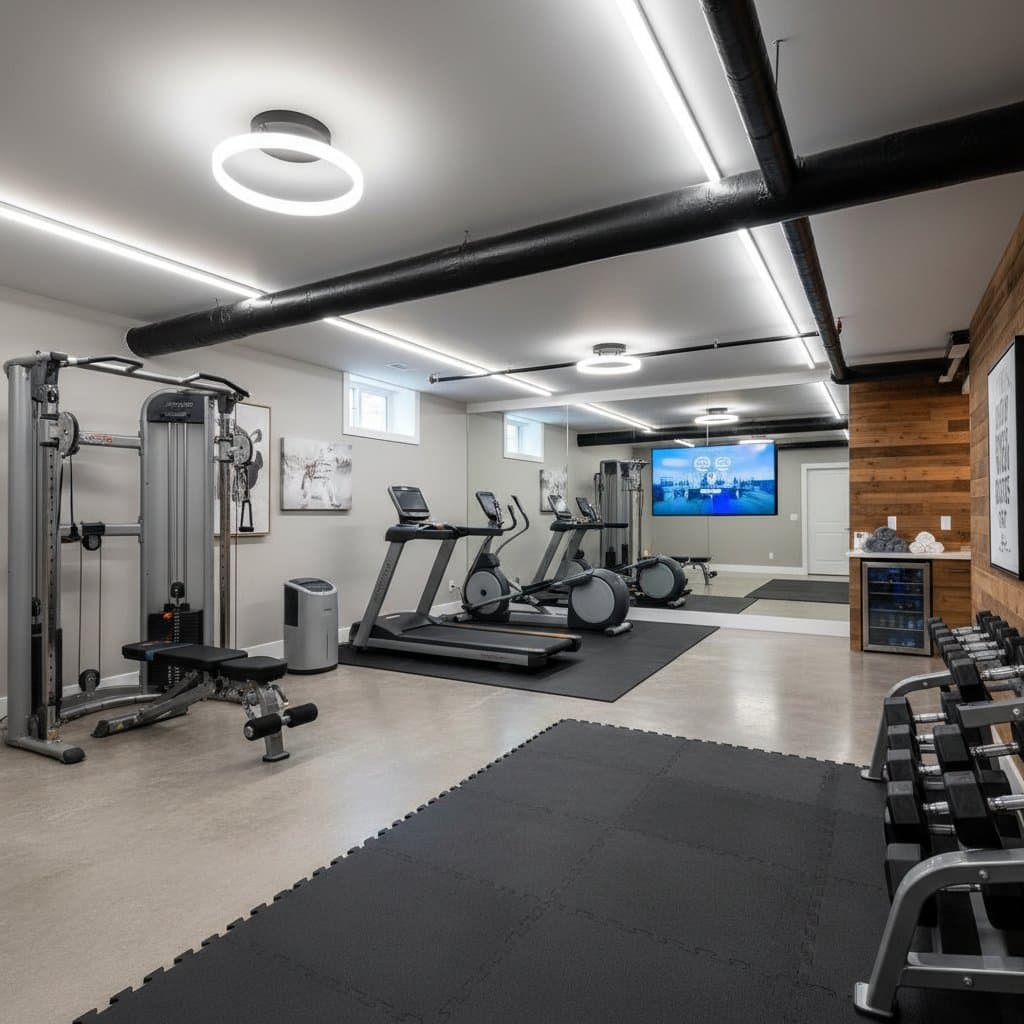
Image: A completed basement gym showcasing durable rubber flooring, expansive wall mirrors, and organized equipment layout.
Professional guidance during this process ensures compliance with building codes and optimizes the layout for efficiency.
Viable Alternatives
While a basement gym offers unique advantages, other locations present trade-offs in cost and convenience.
Garage Conversion
This approach involves lower upfront costs and simpler airflow management, though temperature fluctuations can affect comfort during extreme weather.
Repurposed Spare Room
Conversion proves straightforward with minimal alterations, yet spatial limitations restrict equipment options and workout variety.
Exterior Fitness Zone
Suitable for regions with mild weather, this setup leverages natural light but faces challenges from seasonal changes and accelerated equipment wear.
Community Fitness Center Membership
It eliminates renovation expenses in favor of subscription fees, providing access to superior facilities at the cost of reduced privacy and scheduling flexibility.
Evaluating these options helps determine the most practical solution based on available space and lifestyle preferences.
Maximizing ROI and Resale Appeal
A thoughtfully constructed basement gym serves as a compelling selling point in competitive real estate markets. Industry analyses indicate that properties with versatile, finished lower levels command premium prices and attract offers more quickly. In wellness-oriented communities, this addition can contribute 10 to 15 percent to the overall resale value.
Prospective buyers view the gym as an immediate lifestyle enhancement rather than an extravagant add-on. Its adaptability for alternative uses, such as a multipurpose recreation area or home office, further bolsters enduring marketability. To realize these benefits, prioritize high-quality materials and professional installation that withstand daily wear.
Frequently Asked Questions
How can humidity be managed in a basement gym?
Install a dehumidifier sized appropriately for the room's area, typically one capable of removing 30 to 50 pints of moisture daily. Combine this with a subfloor vapor barrier and ensure consistent air circulation through exhaust fans or ducted vents to prevent mold growth.
Which flooring options perform best in basement gyms?
Opt for rubber mats or modular interlocking tiles that cushion impacts and repel dampness effectively. Vinyl plank flooring offers a sleek alternative with similar resilience; steer clear of carpeting, which traps moisture, or unfinished concrete, which poses slip hazards.
Is it safe to place heavy gym equipment on a basement floor?
Standard concrete foundations support typical loads from weights and machines up to several thousand pounds. Distribute pressure evenly with thick rubber padding to safeguard the slab and minimize vibration transfer to the home's structure.
Are permits required for a basement gym conversion?
Permits become necessary for modifications involving electrical wiring, structural framing, or HVAC installations. Contact the local building authority to review plans and secure approvals, avoiding potential fines or insurance complications.
What lighting solutions suit a basement without natural windows?
Recessed LED fixtures or adjustable track systems deliver uniform illumination across the space. Select bulbs rated at 5000K for a crisp, daylight-like quality that enhances visibility and reduces eye strain during workouts.
Implementing Your Basement Gym Project
Focus on foundational elements like moisture mitigation and robust construction from the outset. Address electrical and airflow requirements prior to aesthetic choices, and select materials that demand minimal upkeep for sustained performance.
Solicit estimates from at least two licensed specialists experienced in basement renovations. Confirm their protocols for humidity assessments and adherence to local regulations prior to commitment.
This investment yields ongoing wellness advantages alongside tangible financial returns. It reimagines an underutilized area as a dynamic extension of the home, enriching both current enjoyment and future market position.