UV Fixtures: Revolutionizing Bathroom Hygiene in 2026
Typical installation cost: $650 to $2,200, varying by fixture type and coverage area.
Bathrooms serve as sanctuaries for relaxation, yet they harbor significant health risks from bacteria, mold, and viruses. Ultraviolet (UV) fixtures address these concerns by emitting targeted light wavelengths that neutralize pathogens on surfaces and in the air. These devices operate silently during daily use or on automated schedules, maintaining cleaner tiles, glass, and grout over extended periods.
Prioritizing Safety in Installation
Electrical work demands caution to prevent hazards. Always shut off power at the breaker before handling any components. Wear eye protection and gloves when working with UV bulbs, and ensure no one occupies the room during operation unless the unit features a certified safe-spectrum design.
Local regulations often mandate permits for hardwired fixtures or additions to circuits, particularly near water sources. Engage a licensed electrician to comply with codes and avoid safety violations.
Installation Options and Procedures
Select from three primary approaches: basic retrofits for minimal disruption, midrange replacements during renovations, and premium smart systems for comprehensive coverage.
Basic Retrofit
This option suits older bathrooms seeking efficient enhancements without extensive remodeling. Plug-in UV bars position near mirrors or under cabinets, with motion-activated features to avoid exposure during occupancy.
Cost: $400 to $900, including installation.
Timeline: One day.
Installation steps:
- Measure spaces around mirrors or vents to determine fixture size.
- Select a UL-listed UV-C or far-UV model designed for humid environments.
- Disconnect power and secure the unit using provided mounting brackets.
- Plug into an existing outlet or connect to a switch.
- Test functionality with the door closed and timer engaged, confirming even light distribution.
Midrange Replacement
Pursue this during partial remodels to integrate UV technology seamlessly. Swap out existing lights or fans for models with built-in UV capabilities.
Cost: $1,000 to $1,600, encompassing wiring updates.
Timeline: Two days.
Installation steps:
- Remove the old fixture and examine wiring for integrity.
- Install a GFCI-protected circuit if building codes require it.
- Attach the new fixture according to manufacturer guidelines.
- Adjust the timer or motion sensor for optimal performance.
- Inspect light seals to prevent UV leakage and verify secure mounting.
Premium Smart System
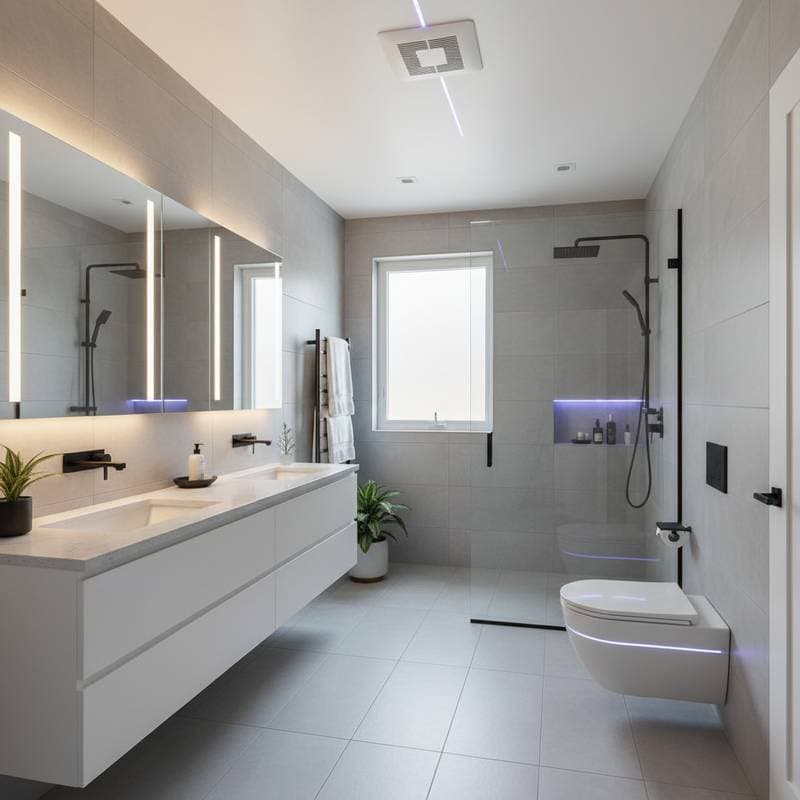
Reserve this for new constructions or luxury remodels, featuring app-based controls, occupancy detection, and surface monitoring.
Cost: $1,800 to $2,200 or higher.
Timeline: Three to four days.
Installation steps:
- Collaborate with an electrician to plan circuit configurations for broad coverage.
- Mount ceiling and wall units to encompass all areas.
- Integrate the system with existing smart home platforms.
- Set cleaning cycles for nighttime or after-use activation.
- Arrange annual testing of bulbs to maintain intensity and wavelength precision.
Project Timing and Cost-Saving Strategies
Allocating Time Effectively
Basic retrofits complete in one day, whereas smart systems involve inspections and configurations that extend to three days. Factor in preparation and testing to avoid rushed work.
Optimal Scheduling
Arrange installations in spring or early fall, when electrician availability peaks and humidity levels support accurate testing. Avoid midsummer, as elevated moisture can interfere with performance evaluations.
Exploring Incentives
Certain areas provide rebates for energy-efficient or antimicrobial technologies. Consult local utilities or health departments to identify credits applicable to UV sanitation systems.
Potential Delays
Anticipate challenges such as bulb shortages in busy seasons, permit processing queues in urban settings, or delays in sourcing smart components. Mitigate by ordering materials early.
Efficiency tip: Pair the UV upgrade with fan or lighting replacements to consolidate labor and minimize electrical expenses.
Enhancing Health Through UV Technology
UV fixtures extend beyond novelty to deliver tangible improvements in indoor environments. They significantly reduce microbial presence on frequently touched surfaces, fostering a healthier space.
Primary advantages:
- Mold and mildew control: Prevents regrowth on grout and shower enclosures.
- Odor elimination: Targets airborne bacteria responsible for persistent smells.
- Surface preservation: Decreases reliance on harsh chemicals, extending the durability of tiles and finishes.
- Air purification: Complements ventilation systems to sanitize circulated air.
Laboratory studies confirm that UV-C light eliminates up to 99 percent of prevalent bathroom pathogens, including E. coli and Staphylococcus species.
Considerations: UV systems excel at pathogen reduction but do not address dust accumulation or excess humidity. Maintain robust ventilation to achieve comprehensive hygiene.
Maintenance: Repair or Full Replacement
Address issues like flickering or diminished output by first diagnosing the ballast and wiring. Simple repairs can extend usability without major investment.
Opt for repair if:
- The fixture housing remains free of corrosion.
- Compatible bulbs are readily available at reasonable prices.
- Wiring meets current code standards.
Choose replacement if:
- The ballast is outdated and irreparable.
- Housing exhibits cracks or burn marks.
- Intensity measurements fall below effective thresholds using a UV meter.
Cost and lifespan overview:
| Aspect | Repair | Replacement |
|---|---|---|
| Cost | $120 to $300 | $650 to $2,200 |
| Lifespan | Adds one year | 5 to 10 years warranty |
| Effectiveness | Partial pathogen reduction | Restores full capacity |
Expert Recommendations for Optimal Results
- Verify specifications: Prioritize 254 nm UV-C or 222 nm far-UV wavelengths for proven efficacy and safety.
- Assess reach: Employ UV test cards to ensure illumination covers all targeted areas.
- Incorporate sensors: Motion detectors safeguard against exposure while conserving bulb longevity through targeted activation.
- Integrate with airflow: Enhanced ventilation amplifies the system's pathogen-neutralizing potential.
- Maintain inventory: Keep replacement bulbs on hand to prevent interruptions from supply disruptions.
Incomplete coverage undermines benefits, allowing mold to persist in unexposed zones. Conduct thorough verification post-installation.
Implementing Your UV Upgrade
Assess your familiarity with electrical tasks to guide your approach. Individuals comfortable with basic light fixture swaps can manage retrofits independently. For hardwired installations, hire a licensed professional to ensure compliance and safety. This investment not only elevates hygiene but also aligns with forward-thinking home improvements for sustained well-being.