Hidden Pantries: Enhancing Home Value Without Expanding Square Footage
Hidden pantries have emerged as a strategic choice for homeowners seeking to optimize kitchen spaces. These concealed storage solutions maintain the visual appeal of open layouts while addressing practical needs. In an era where efficient design drives real estate value, integrating such features proves essential for modern residences.
The concept revolves around embedding storage within existing architecture, avoiding the need for structural additions. This approach suits urban dwellings and renovated homes alike, where space constraints demand ingenuity. By 2026, industry experts predict hidden pantries will become standard in high-end listings, reflecting buyer preferences for streamlined functionality.
The Value Proposition of Hidden Pantries
Homeowners invest in kitchen upgrades to achieve measurable returns, and hidden pantries deliver substantial benefits. Real estate analyses indicate these installations can yield up to 75 percent return on investment upon resale. Buyers appreciate the illusion of spaciousness, which enhances perceived quality without altering floor plans.
Beyond financial gains, hidden pantries contribute to daily efficiency. They organize bulk items, appliances, and pantry staples out of sight, reducing visual clutter in open-concept areas. This organization fosters a calmer cooking environment, appealing to families and entertainers who prioritize both form and function.
Market trends underscore the appeal: properties with innovative storage sell 20 percent faster than comparable listings. Appraisers recognize the added utility, often factoring it into valuations. Thus, hidden pantries serve as a subtle yet powerful differentiator in competitive housing markets.
Design Variations to Suit Every Kitchen
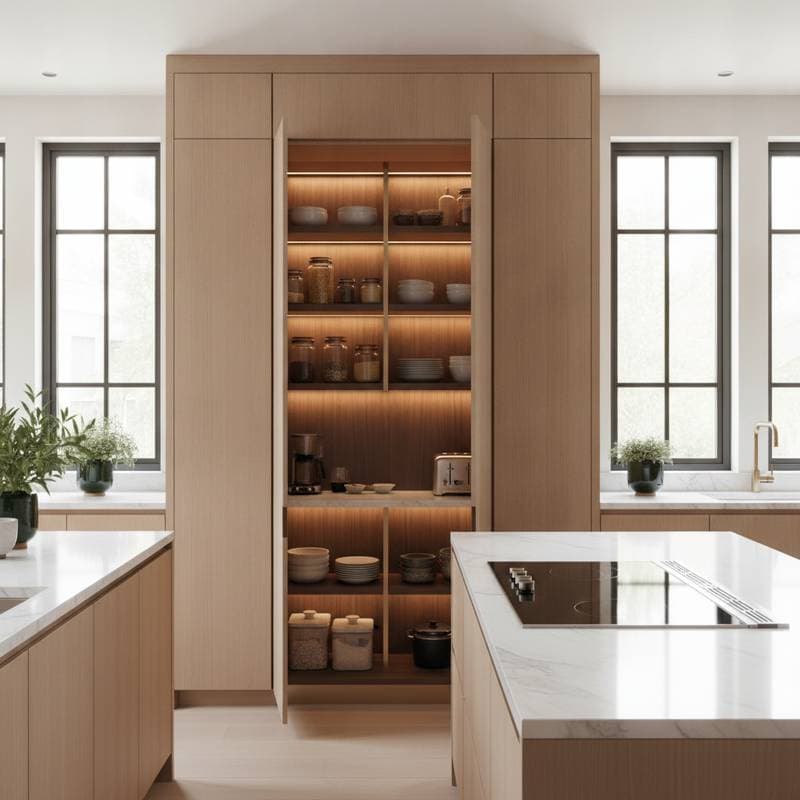
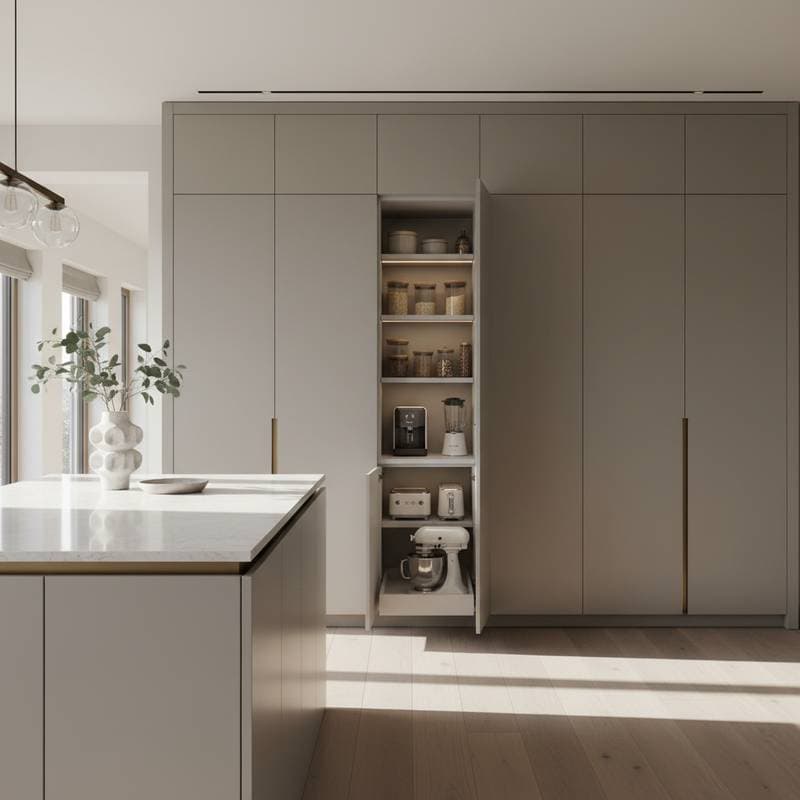
Selecting the right hidden pantry design depends on available space and aesthetic goals. Cabinet-depth pantries offer a minimalist integration, fitting seamlessly behind standard cabinetry doors. These units maximize vertical space with adjustable shelving, ideal for smaller kitchens where every inch counts.
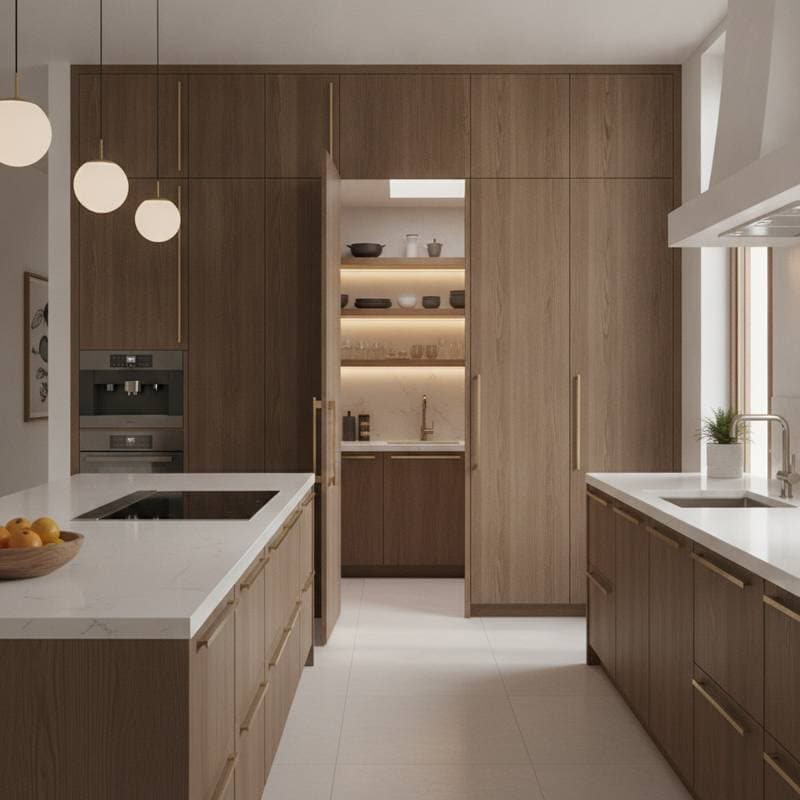
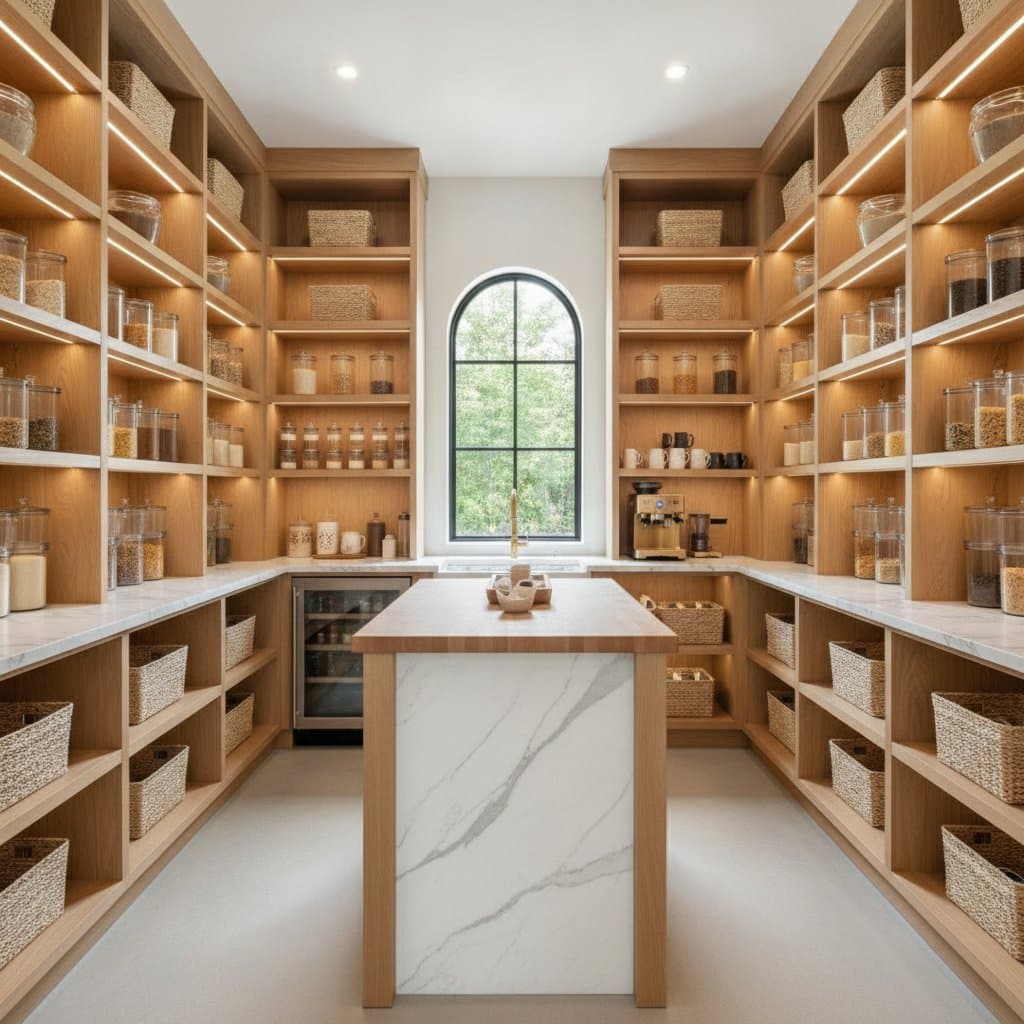
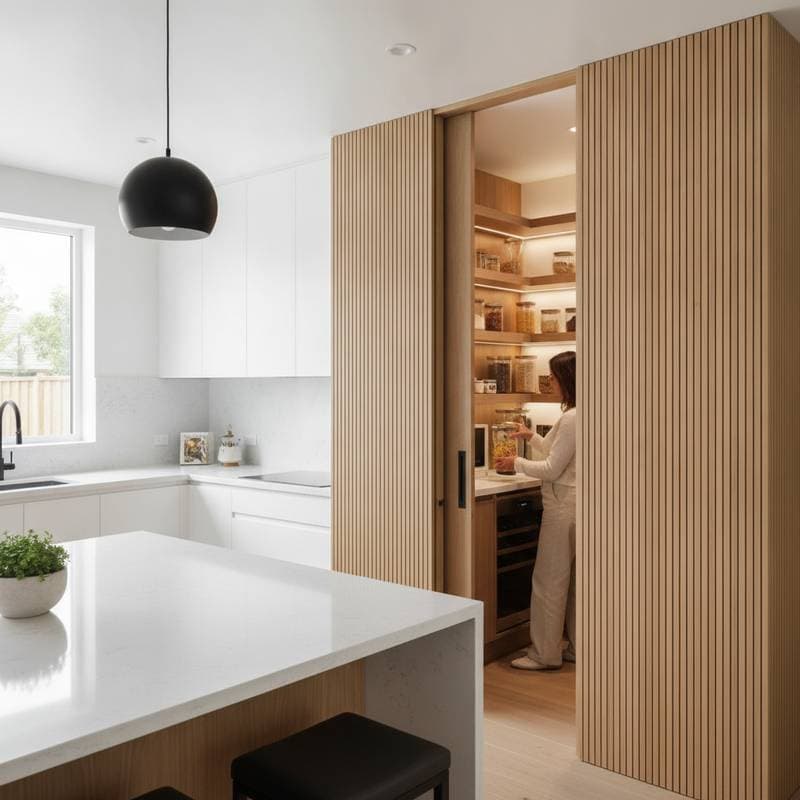
For larger layouts, full walk-in pantries provide immersive storage solutions. Accessed via discreet sliding panels or pocket doors, they accommodate extensive inventories from canned goods to small appliances. Lighting options, such as LED strips, ensure accessibility, turning storage into a functional extension of the kitchen.
Hybrid approaches blend elements of both, such as pull-out pantries within island bases. These designs incorporate soft-close mechanisms and ergonomic pulls for ease of use. Customization allows alignment with cabinetry finishes, ensuring a cohesive appearance that elevates overall kitchen elegance.
Key Design Considerations
- Assess kitchen traffic flow to position the pantry away from high-use zones.
- Incorporate multi-tiered shelving to accommodate varied item heights.
- Opt for ventilated doors to prevent moisture buildup in humid climates.
- Integrate smart features like automated lighting tied to door sensors.
These elements ensure the pantry not only conceals but also enhances usability.
Strategies for Maximizing Storage Efficiency
Effective hidden pantries go beyond basic shelving; they demand thoughtful organization. Divide interiors into zones: one for dry goods, another for baking supplies, and a dedicated area for overflow dishes. Clear bins and labeled dividers facilitate quick retrieval, minimizing search time during meal preparation.
Vertical optimization proves crucial in compact designs. Install pull-down racks for overhead access and drawer inserts for smaller items. This layered approach can double storage capacity compared to traditional cabinets, accommodating seasonal bulk purchases without overflow.
Durability remains paramount; select materials like melamine-coated wood or stainless steel liners to withstand daily wear. Ventilation systems mitigate odors and humidity, preserving food quality. Such details transform a simple storage space into a reliable kitchen asset.
Practical Steps for Implementation
Planning a hidden pantry begins with a professional assessment of your kitchen layout. Consult with a designer to map out integration points, ensuring compliance with building codes. Budgets typically range from $5,000 for basic installations to $20,000 for custom walk-ins, depending on size and materials.
Construction involves minimal disruption: contractors retrofit existing walls or cabinetry over a weekend in many cases. Post-installation, stock the space methodically, starting with essentials to establish organizational habits. Maintenance requires periodic cleaning and inventory checks to sustain efficiency.
Homeowners should consider energy-efficient additions, such as insulated doors to maintain kitchen temperatures. These enhancements not only boost functionality but also align with sustainable design trends valued by eco-conscious buyers.
Achieving Lasting Impact Through Hidden Pantries
Integrating a hidden pantry elevates a kitchen from functional to exceptional, directly influencing home equity. This upgrade appeals to buyers seeking turnkey solutions that blend innovation with practicality. The result is a residence that stands out in appraisals and showings alike.
Owners report streamlined routines and reduced stress from clutter-free zones. As open kitchens dominate contemporary designs, hidden pantries provide the balance needed for enduring appeal. Consider this addition as an investment in both lifestyle and legacy value.