Mudroom Trends Buyers Want in Los Angeles
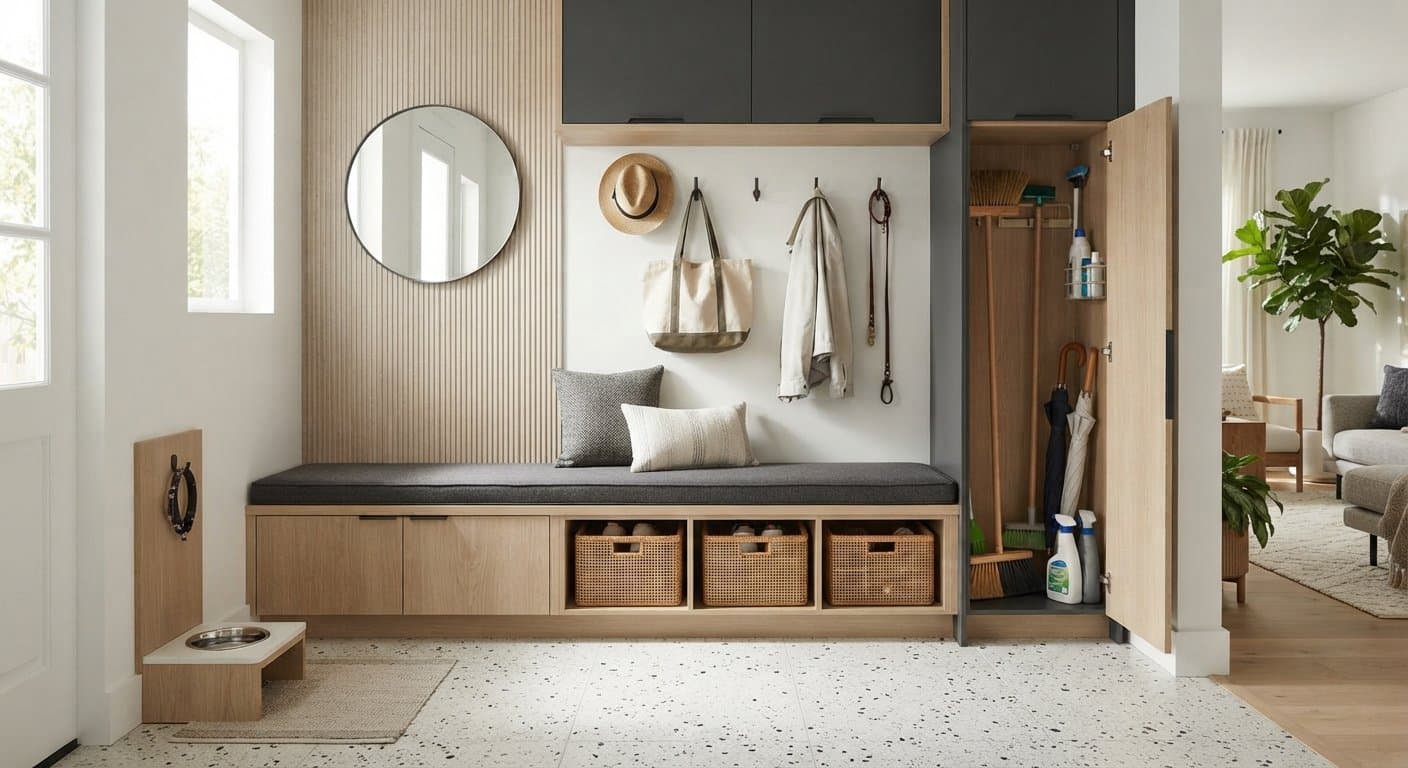
Los Angeles mudrooms focus on practical entryway storage, durable finishes, and layouts that work within limited space. A mudroom can function as a separate room, a laundry area, or a small landing zone near the door. It provides a dedicated place for shoes, bags, pet supplies, and outdoor gear.
What Local Buyers Want
In Southern California, mudrooms handle daily clutter rather than snow and heavy rain. Buyers value organized storage, easy cleaning, and a design that connects with the rest of the home.
Popular features include closed cabinets that hide shoes, cleaning supplies, and household items. Open cubbies and hooks accommodate bags, jackets, hats, and dog leashes. A bench with shoe storage makes it easier to sit while changing footwear. Tile or sealed flooring handles dirt, damp shoes, and pet paws. A charging shelf keeps phones and small devices accessible while cords stay out of the walkway.
A useful plan separates everyday items from seasonal or occasional gear. Keep frequently used shoes and bags within reach. Store less-used items in higher cabinets or labeled bins.
Cost to Add Mudroom Storage
For a basic entryway update in Los Angeles, expect a national range of about $500 to $8,000, with many projects falling between $1,500 and $4,500. A custom built-in with cabinetry, a bench, lighting, and flooring can cost $8,000 to $20,000 or more. These estimates assume an existing room or entry area, not a new addition.
Several factors drive cost. Cabinet size, material, and whether the units are stock, semi-custom, or custom affect the budget. Flooring changes, including tile removal and subfloor repairs, add expense. Electrical work for new outlets, lighting, or device charging increases the total. Wall repairs, paint, and trim work contribute to the final price. Labor rates and access conditions in the neighborhood also influence costs.
Get itemized quotes that separate materials, labor, demolition, and electrical work. This approach makes it easier to compare bids and adjust the design.
Design Options and Tradeoffs
| Option | Best use | Main tradeoff |
|---|---|---|
| Ready-made bench and hooks | Quick, lower-cost refresh | Less storage and a less tailored fit |
| Modular cabinets and cubbies | Flexible layouts and tighter budgets | Gaps may remain around walls |
| Custom built-ins | Awkward corners or a polished, integrated look | Higher cost and longer installation |
| Closet conversion | Homes with an underused coat closet | Less open space for seating |
For smaller homes and condos, a shallow cabinet, wall hooks, and a compact bench can create a defined drop zone without taking over the entry. In a larger home, tall cabinets can store household supplies alongside shoes and bags.
Pros and Cons of a Mudroom Update
Pros:
- Reduces clutter near the front or garage entry.
- Gives each household member a set place for everyday items.
- Protects nearby floors from grit and moisture.
- Adds useful storage without changing the home's footprint.
Cons:
- Custom cabinetry can raise the budget quickly.
- Poorly planned open storage can look cluttered.
- A narrow entry may feel smaller if cabinets are too deep.
- Built-ins may have limited appeal if they do not suit future owners.
DIY or Hire a Pro
A simple bench, hooks, and ready-made storage are within reach for a confident DIYer. Plan for a half day to a full weekend, depending on wall repairs and assembly. Use a level, stud finder, drill, and appropriate wall anchors. Attach heavy cabinets and hooks to studs, not just drywall.
Hire a carpenter for custom cabinetry, uneven walls, or built-ins that need precise fitting. Bring in a licensed electrician for new outlets or switched lighting. Check local permit requirements before changing electrical circuits or moving plumbing.
Planning and Installation Basics
- Measure the entry, door swing, walkway, and available wall space.
- List what needs storage, including shoes, bags, pet gear, and cleaning items.
- Choose a layout that keeps the walking path clear.
- Select durable flooring and finishes that suit the home's style.
- Confirm outlet locations and check permit needs before work starts.
- Install flooring, cabinets, bench, hooks, and lighting in the planned order.
- Secure wall-mounted items to framing and test doors and drawers.
- Remove dust and construction debris, then set up baskets or labels.
Local Factors and Resale
Los Angeles homes range from compact condos to larger houses with garage entries, so the best layout depends on the floor plan. Dust, occasional rain, pets, and sandy shoes can influence flooring and storage choices. Tile, sealed wood, or durable luxury vinyl plank are common options, but confirm the product suits the subfloor and installation area.
Mudroom Care and FAQs
Does a Los Angeles home need a full mudroom?
A full mudroom is not necessary in most Los Angeles homes. Many households benefit from a compact drop zone with storage and seating. This approach works well in condos, townhomes, and smaller houses where space is limited.
What flooring works well for a mudroom?
Tile, sealed hardwood, and luxury vinyl plank perform well in mudroom applications. These materials resist moisture and clean easily. Choose products rated for the specific subfloor and installation conditions in your home.
Do mudroom built-ins require a permit?
Permit requirements vary by location and scope of work. Electrical modifications and structural changes typically require permits. Check with your local building department before starting any work that involves wiring, plumbing, or load-bearing walls.
Creating a Functional Entryway
A well-planned mudroom supports daily routines while protecting the rest of the home from outdoor elements. The key lies in matching storage solutions to actual household needs rather than following trends. Consider how family members enter and exit the home, what items they carry, and where those items naturally land.
Start with the most frequently used items and work outward from there. This method ensures the space serves its purpose without becoming another storage area that gets ignored. The result is an entryway that works for the household while adding value to the property.