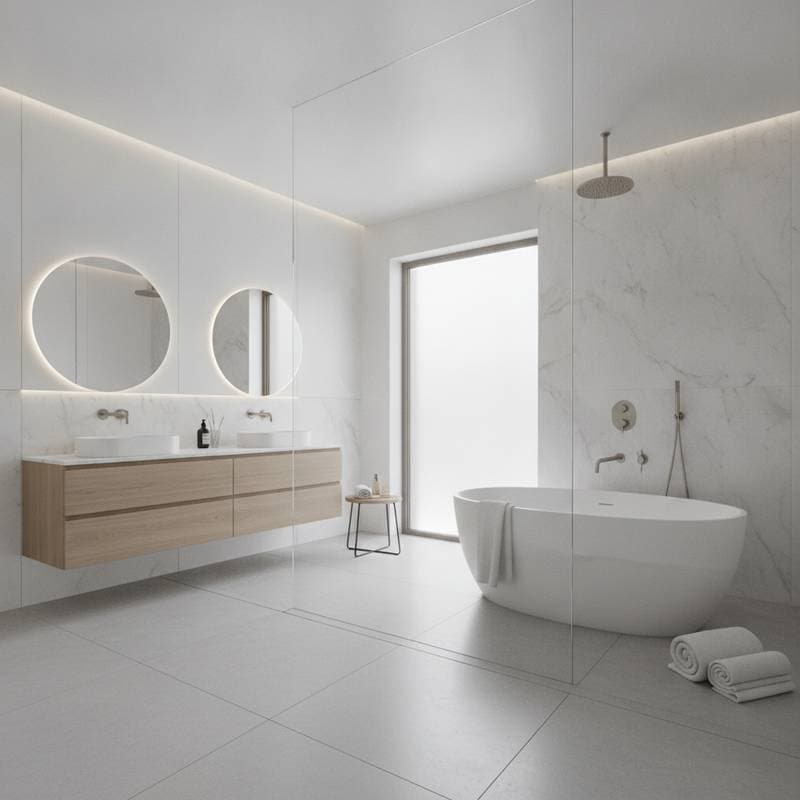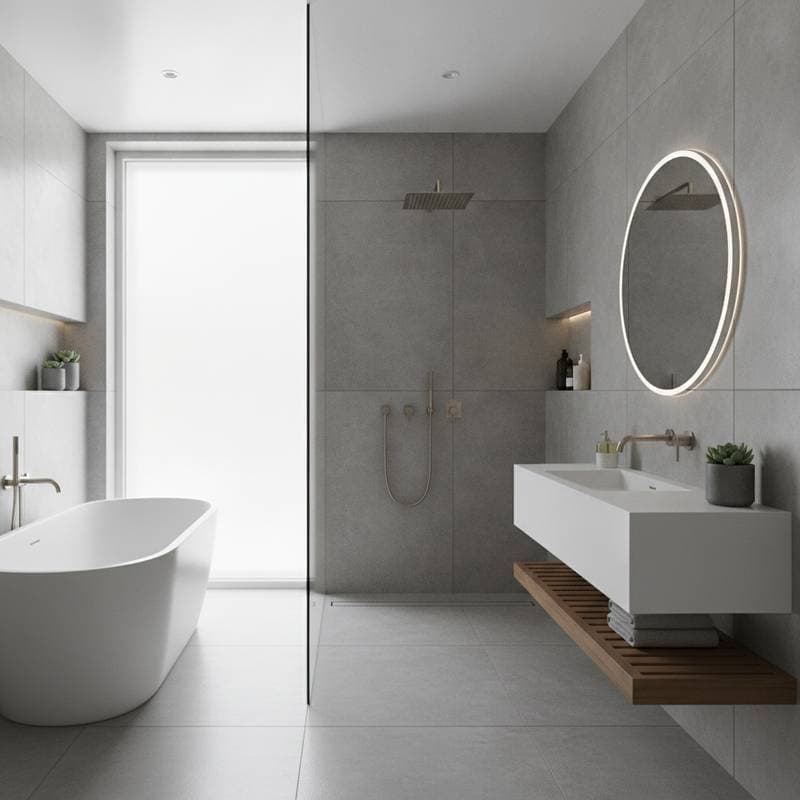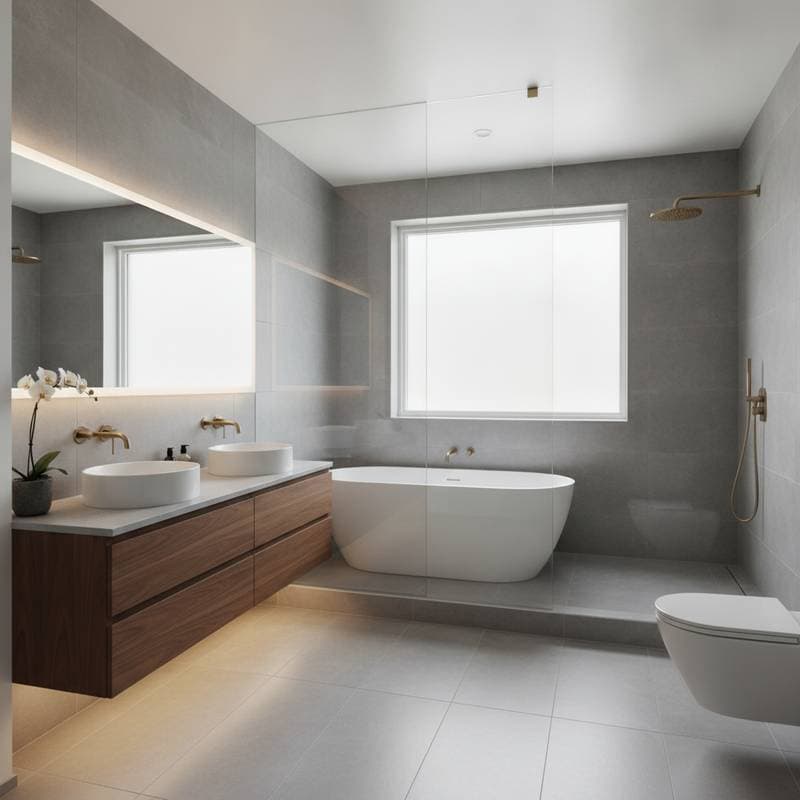
- Demolition and Preparation: Removing existing tubs, tiles, or fixtures incurs fees of $500 to $1,000.
- Optional Enhancements: Features including radiant floor heating, automated lighting, or wall reinforcements for future installations elevate expenses but enhance property worth.
Allocate an additional 10 to 15 percent of the budget for unforeseen challenges, such as subfloor deterioration or obsolete electrical systems, particularly in homes built before 1980.
Project Options Across Budget Levels
Tailor your remodel to fit financial constraints while maximizing benefits. Three tiers offer varying degrees of transformation.
Basic Level ($8,000 to $12,000)
This entry-level option emphasizes essential safety improvements with minimal disruption.
- Install a low-threshold shower in place of the tub.
- Incorporate grab bars and a flexible showerhead.
- Refresh with brighter lighting and textured flooring.
- Retain the existing layout and plumbing configuration.
Advantages: Quick completion, budget-friendly, and low disruption.
Drawbacks: Fewer visual enhancements, potentially lower impact on resale.
Midrange Level ($12,000 to $25,000)
This balanced category delivers strong value through integrated design and function.
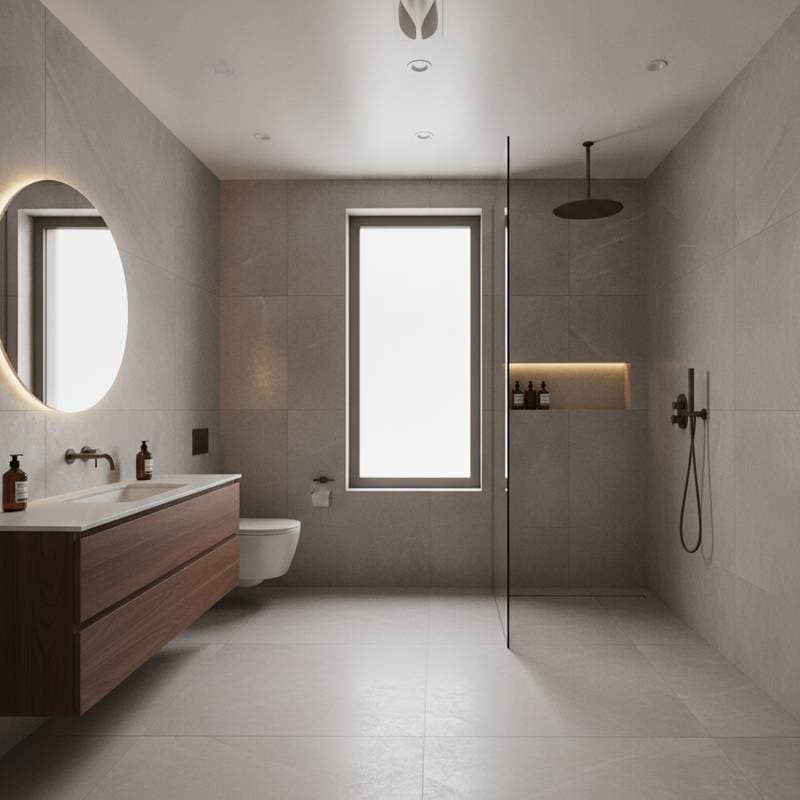
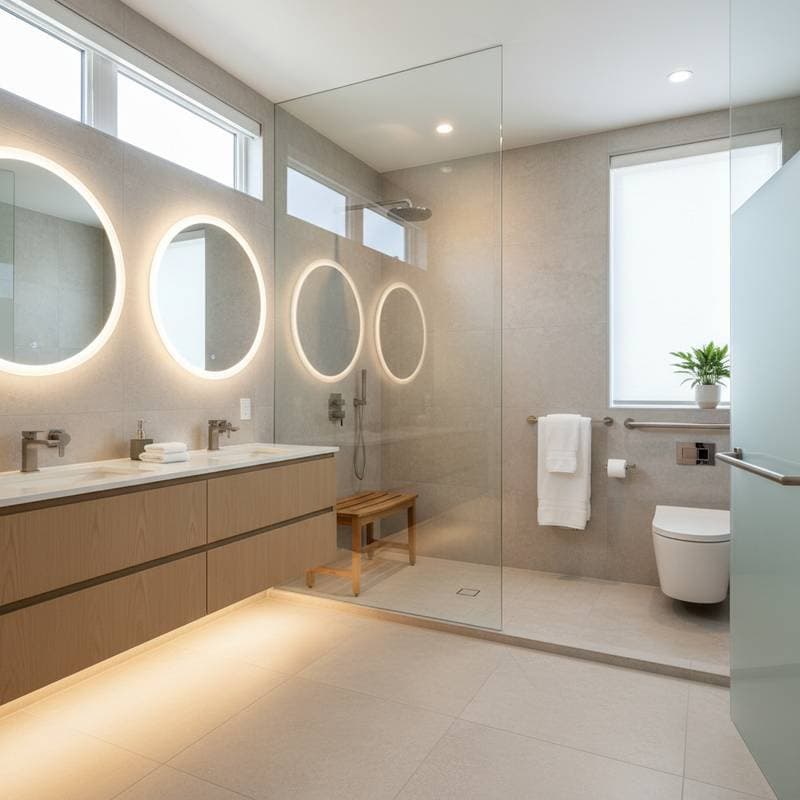
- Create a curbless shower featuring tiled walls and a linear drain.
- Install a raised toilet and an adaptable vanity with open space below.
- Use durable, non-slip porcelain tiles for the floor.
- Strengthen walls to support future grab bars or benches.
- Add energy-efficient LED lights activated by motion.
Advantages: Optimal return on investment and broad market appeal.
Drawbacks: Involves some plumbing alterations and detailed coordination.
Premium Level ($25,000 to $45,000)
High-end projects focus on comprehensive accessibility paired with upscale finishes.
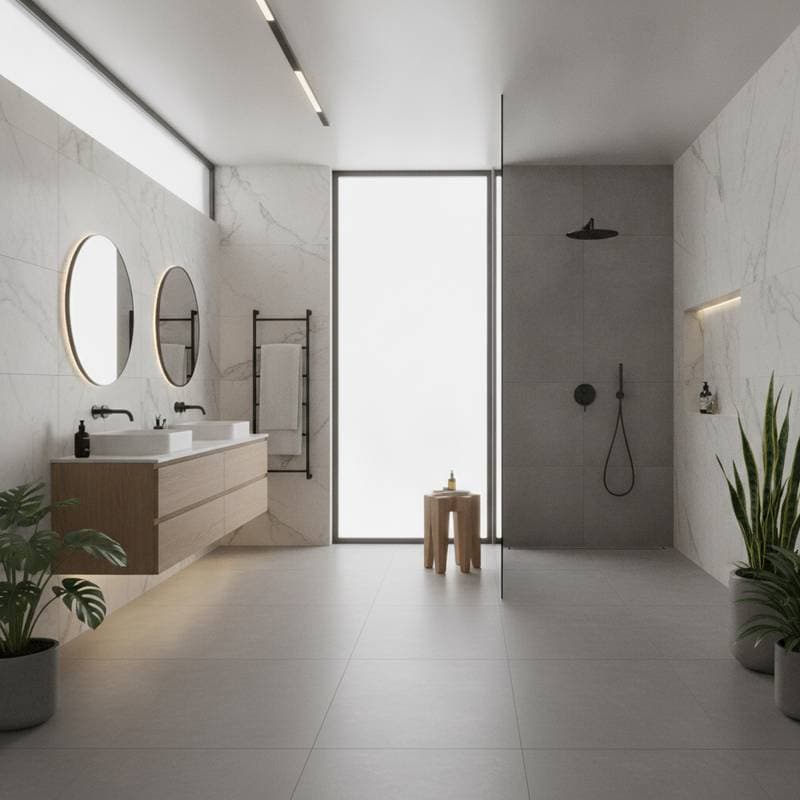
- Develop an open-plan layout with a spacious roll-in shower.
- Fit a wall-mounted vanity offering knee clearance and sensor-operated faucets.
- Include underfloor heating and advanced ventilation systems.
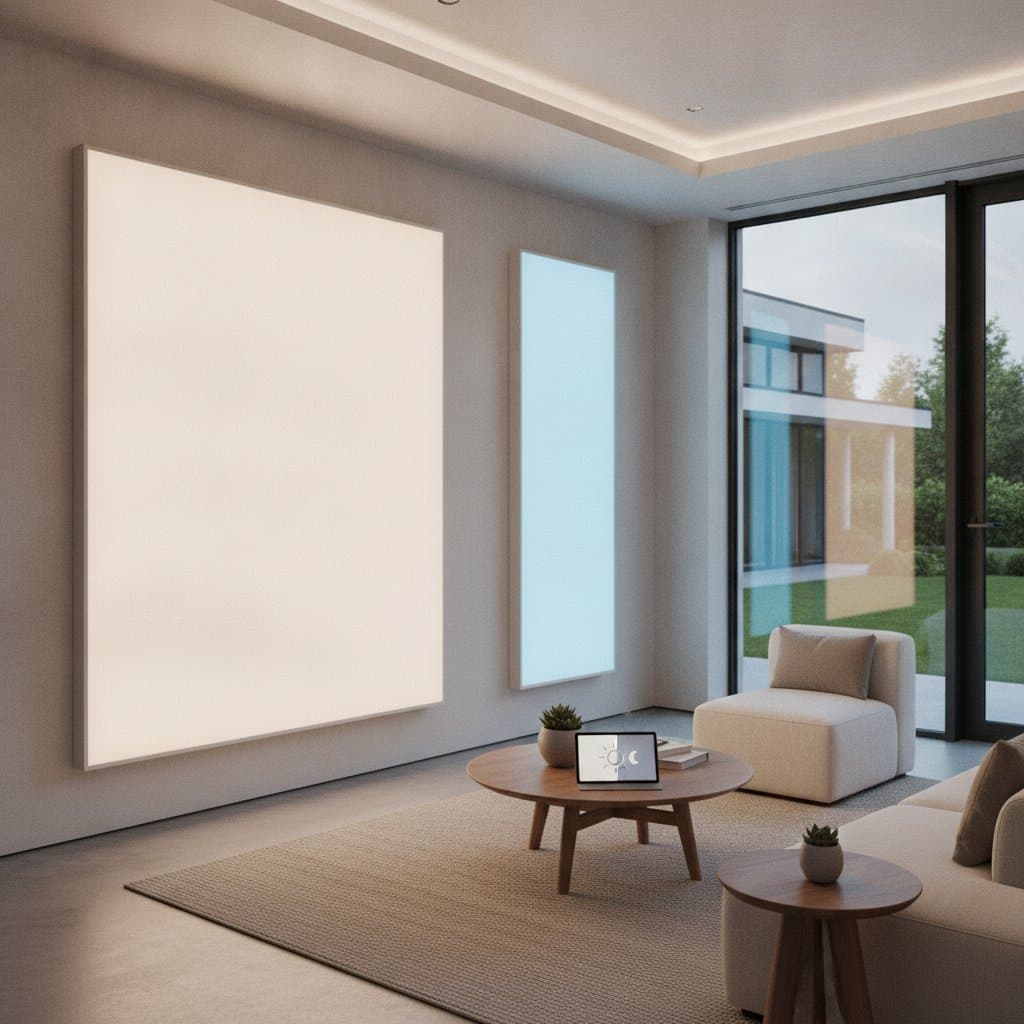
- Integrate intelligent lighting with built-in safety notifications.
Advantages: Superior performance, luxurious feel, and extended durability.
Drawbacks: Elevated pricing and extended procurement periods for custom elements.
Planning Timeline and Cost-Saving Strategies
Strategic timing helps control expenses and streamline execution.
- Procurement Delays: Materials like custom tiles or specialized fixtures may require 3 to 6 weeks for delivery. Secure orders prior to starting demolition.
- Seasonal Opportunities: Schedule during late winter or early spring when contractors face fewer demands and offer competitive rates.
- Incentive Programs: Investigate local rebates for energy-efficient or accessible installations, including those for low-flow fixtures.
- Combined Workflows: Pair the bathroom project with related tasks, such as kitchen plumbing or whole-home flooring, to reduce mobilization costs.
- Reserve Funding: Set aside 10 percent of the total budget for surprises like hidden leaks.
Prioritize a curbless shower if selecting a single upgrade. This feature enhances entry, reduces maintenance needs, and significantly attracts prospective buyers.
Elements Driving the Highest Returns
Universal remodels appeal to intergenerational households by addressing practical needs. The 15 percent ROI typically stems from targeted improvements.
- Curbless Shower Installation: Provides seamless access and contemporary styling.
- Estimated Cost: $4,000 to $8,000
- Contribution to ROI: Up to 10 percent
- Raised Toilet Addition: Supports users of varying heights and abilities.
- Estimated Cost: $400 to $800, including installation
- Contribution to ROI: 2 to 3 percent
- Enhanced Lighting and Visual Contrasts: Employ multi-layer LEDs and high-contrast materials to minimize hazards.
- Estimated Cost: $800 to $1,500
- Contribution to ROI: 2 to 4 percent
Prospective buyers prioritize intuitive, hazard-free environments over ornate details. Functional simplicity often outperforms extravagant elements that compromise usability.
Pitfalls to Steer Clear Of
Certain oversights can lead to complications and added expenses.
- Neglect proper waterproofing layers, which invite subfloor damage from leaks.
- Fail to ensure adequate space around the toilet; maintain at least 18 inches from the wall to the fixture's center.
- Secure grab bars solely to surface materials; always fasten to studs or added blocking.
- Select shiny or intricate tile patterns, which pose slip risks in damp conditions.
- Overlook comprehensive illumination; poor visibility can conceal slippery areas and heighten accident potential.
Addressing these issues upfront safeguards against future interventions.
Choosing Repairs Over Full Replacement
Assess the current condition to optimize spending.
Opt for Repairs When:
- Existing plumbing and moisture barriers remain sound.
- The layout provides sufficient 36-inch pathways.
- Updates focus primarily on surface-level refreshes.
Pursue Replacement When:
- Evidence of water intrusion affects the substructure.
- Fixtures operate inefficiently due to age.
- Current electrical or airflow systems fall short of regulations.
Addressing foundational problems promptly averts broader structural concerns.
Steps to Launch Your Project
Identify core priorities such as enhanced safety, user comfort, or market enhancement. Align these with an appropriate budget tier. Solicit detailed proposals from at least two licensed specialists experienced in accessibility work, requesting breakdowns and coverage details.
For imminent sales, target midrange enhancements to balance investment with neighborhood norms. For long-term residency, commit to thorough adaptations to eliminate the need for subsequent overhauls.
Universal design extends beyond age-specific needs; it simplifies routines for all occupants. Investments in slip prevention, optimal illumination, and efficient maintenance foster a secure, welcoming environment. Through deliberate choices, secure a 15 percent return alongside a versatile space suited to life's evolving demands.