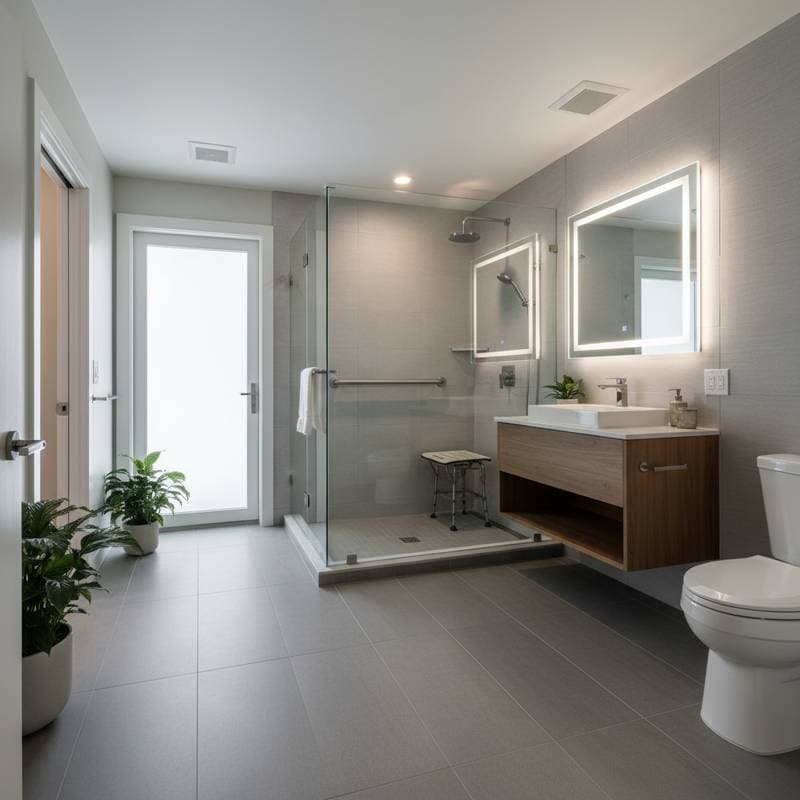
Unlocking 15% ROI Gains Through Aging-in-Place Bathroom Remodels
Aging-in-place bathroom renovations gain popularity among homeowners seeking prolonged independence alongside increased property values. These projects incorporate safety measures, comfort enhancements, and stylish elements to deliver approximately 15 percent greater returns on resale than conventional remodels. Universal design principles ensure broad appeal across age groups, extending beyond senior-specific needs.
This guide details the factors contributing to these returns, associated costs, planning strategies, and initial steps for implementation.
Cost Overview
National average range: $10,000 to $35,000
Standard range for mid-sized full bathroom: $15,000 to $25,000
Variations: $5,000 for essential modifications, escalating to $50,000 for comprehensive luxury or structural alterations
Factors Influencing Costs
- Bathroom dimensions. Larger spaces require more materials and plumbing adjustments, elevating expenses.
- Project extent. Tasks like tub removal, door widening, or plumbing relocation demand additional labor hours.
- Material quality. Premium tiles, durable fixtures, and custom cabinetry significantly impact the budget.
- Specialized accessibility components. Items such as mechanical lifts, reinforced wall structures, and integrated shower benches incur supplementary charges.
- Local labor variations. Urban or coastal regions often feature rates 25 percent above national averages due to demand and regulations.
Upgrade Categories
Aging-in-place bathroom modifications range from simple additions to extensive overhauls, accommodating diverse budgets and requirements.
1. Basic Enhancements
Incorporate grab bars, lever-style handles, and enhanced illumination. These suit compact bathrooms or rental properties with minimal interruption to daily routines.
2. Intermediate Renovation
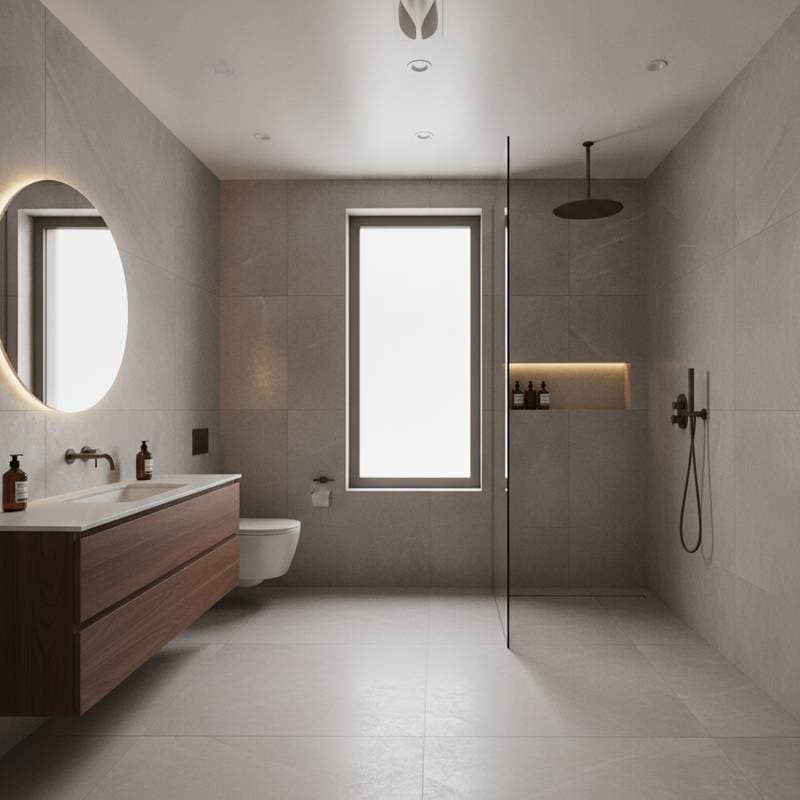
Feature a walk-in shower, non-slip flooring, comfort-height toilet, and expanded doorways. This level serves homeowners committed to long-term residency.
3. Comprehensive Accessibility Transformation
Eliminate all barriers with zero-threshold showers, roll-under vanities, and fortified walls for support fixtures. This configuration supports wheelchair navigation or anticipated mobility challenges.
4. Premium Universal Design Integration
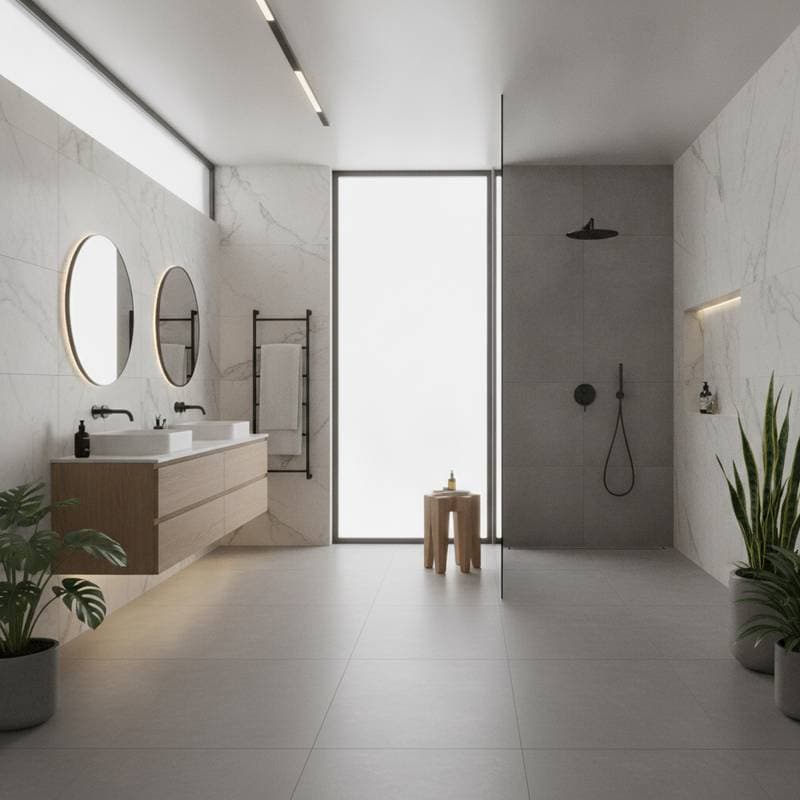
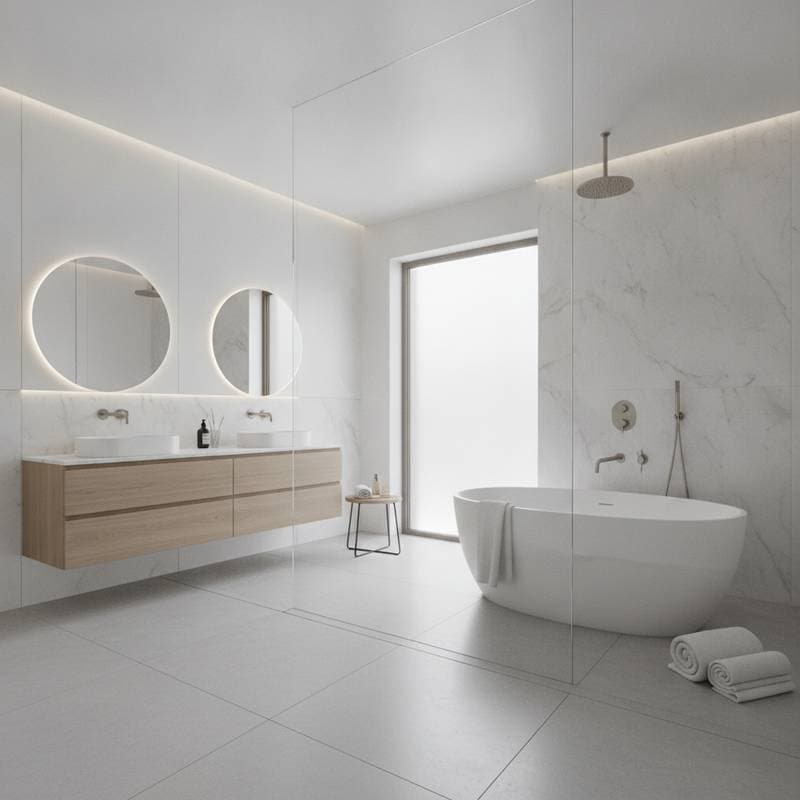
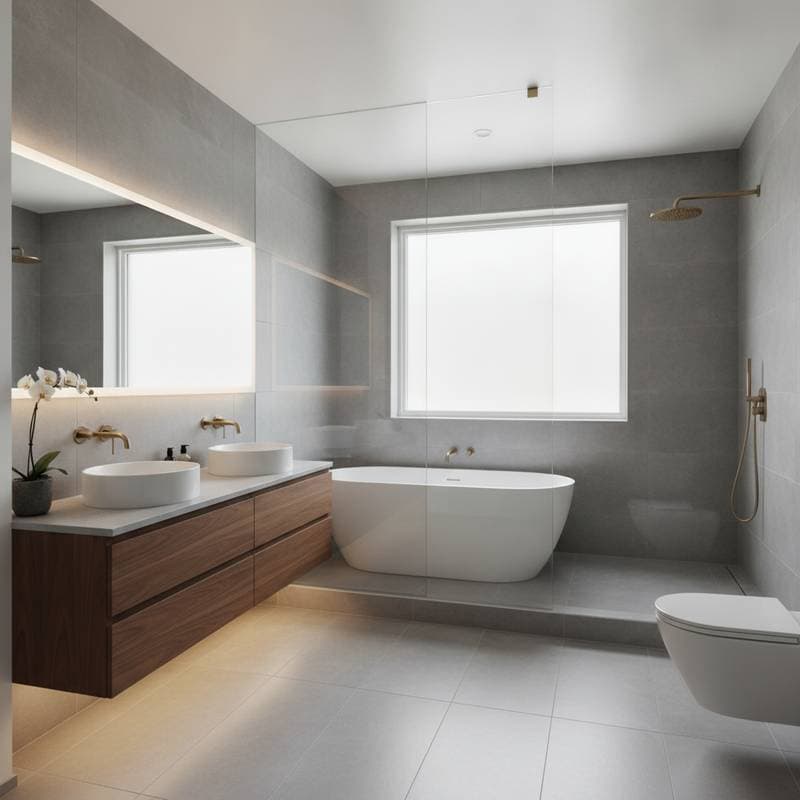
Combine accessibility with upscale elements like frameless glass enclosures, radiant floor heating, and automated fixtures. Such designs satisfy all demographics while adhering to accessibility standards.
Implementation Steps
- Evaluate requirements. Determine present and projected mobility constraints through professional assessment or self-review.
- Document measurements. Record door widths, shower dimensions, and required turning radii for compliance.
- Design the layout. Prioritize step-free entrances, broadened pathways at least 36 inches wide, and accessible storage at 15 to 48 inches high.
- Choose durable materials. Select tiles with a coefficient of friction exceeding 0.6 when wet, matte hardware to reduce glare, and ergonomic grips.
- Enhance illumination. Install multi-level lighting, including task options over mirrors and automatic sensors for low-light areas.
- Modify plumbing systems. Equip with pressure-balanced faucets to prevent scalding and adjustable-height showerheads for versatility.
- Incorporate safety elements. Securely install grab bars rated for 250 pounds, fold-down benches, and thermostatic mixing valves.
- Apply protective finishes. Use silicone-based sealants on tiles and expansion joints to ensure moisture resistance.
- Verify functionality. Test water flow, light activation, and fixture ergonomics prior to final occupancy.
Alternative Approaches
1. Powder Room Adaptation
Convert an adjacent half-bath into an accessible space. This option reduces costs but limits room for assistive devices.
2. Wet Room Redesign
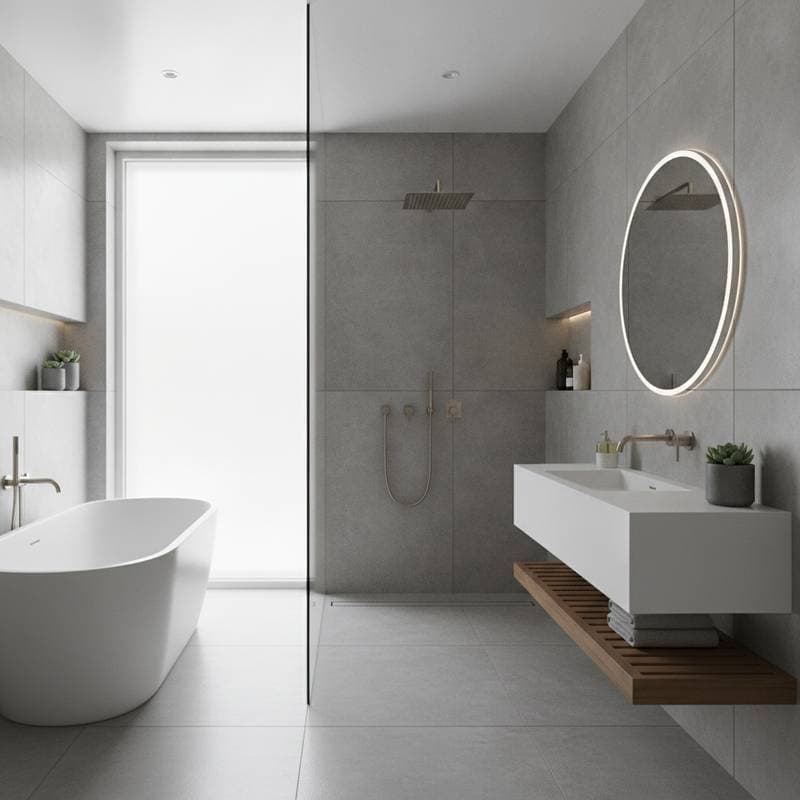
Create an open, fully waterproofed area for seamless movement. Maintenance proves simpler, though upfront investment rises.
3. Temporary Add-On Solutions
Utilize removable grab bars, portable transfer benches, and adhesive non-slip mats. These provide quick, affordable relief without permanent changes.
4. New Construction Addition
Build an dedicated accessible bathroom suite. While costly, it accommodates extended care needs or appeals to multigenerational households during resale.
Return on Investment and Market Appeal
Bathrooms designed for accessibility draw a wider array of prospective buyers valuing adaptability. Market analyses indicate that properties featuring universal design elements transact more rapidly and at premium prices.
A complete aging-in-place renovation typically yields 15 percent superior ROI relative to equivalent standard projects. Key contributors include:
- Expanded demographic reach among purchasers.
- Diminished buyer concerns over subsequent modifications.
- Alignment with evolving accessibility norms in housing.
Features like curbless entries, lever controls, and 32-inch minimum door widths preserve value over time. For investment properties, these adaptations minimize downtime by attracting mature renters or those requiring mobility support.
Frequently Asked Questions
What flooring options suit aging-in-place bathrooms?
Opt for porcelain tiles with textured surfaces, luxury vinyl planks engineered for wet areas, or sealed cork underlayment. All must achieve an ADA-compliant dynamic coefficient of friction of at least 0.6.
Is accessibility feasible in compact bathrooms?
Affirmative, with strategic choices. Install sliding pocket doors to conserve space, wall-hung sinks for knee clearance, and angled corner showers to maximize floor area.
What dimensions define a roll-in shower?
A minimum clear interior of 30 inches by 60 inches suffices for entry, with additional 36-inch turning space for wheelchair maneuvers.
Do building codes mandate grab bars?
Requirements vary by jurisdiction, yet pre-reinforcing walls with 1x6 blocking behind drywall facilitates future installations and averts higher retrofit expenses.
Are incentives available for these upgrades?
Certain state initiatives and federal programs, including those under the Americans with Disabilities Act, provide rebates or tax deductions. Consult local housing authorities or accessibility agencies for eligibility.
Executing Your Renovation Strategy
Establish precise objectives, distinguishing between essential safety measures and comprehensive universal design. Conduct thorough measurements, allocate a realistic budget accounting for 10 to 20 percent contingencies, and solicit proposals from no fewer than three certified professionals experienced in adaptive remodeling.
Older bathrooms often necessitate plumbing and electrical overhauls, such as replacing galvanized pipes with PEX lines or updating to GFCI outlets. These foundational improvements safeguard the project's longevity.
Emphasize elements that balance utility and market desirability:
- Curbless or roll-in showers with linear drains.
- Toilets elevated to 17 to 19 inches for ease of use.
- Flooring with integrated drainage slopes.
- Multifunctional grab bars serving as towel holders.
- Exhaust fans rated at 50 CFM minimum, paired with humidity sensors.
Such modifications support aging residents while resonating with buyers prioritizing practicality and elegance. They underscore a home's robustness and preparedness for life's transitions.
For those committed to their current residence, this renovation stands as a prudent investment in sustained well-being. For resale considerations, it distinguishes the property by merging immediate livability with enduring financial benefits.
Prior to commencement, review municipal building codes, secure necessary permits, and verify contractor credentials in universal design. Proceed with a tailored blueprint that aligns with your residence, finances, and evolving needs.
Strategic decisions today ensure enduring safety, efficiency, and worth in your home.