Covered Deck Conversions Return 92 Percent of Cost in 2026
A covered deck conversion typically returns about 92 percent of its cost at resale. Homeowners can expect to spend between 14000 dollars and 24000 dollars on a midrange project that lasts roughly 20 years.
This upgrade creates additional living space without the expense of a full room addition. It increases year round comfort, protects the structure from weather, and raises buyer interest. Results depend on matching the design to the home scale and regional climate.
Cost Factors
Final pricing depends on several variables. Reviewing each category helps control expenses and prevents unexpected changes.
Materials
Pressure treated lumber for framing and decking costs 5 to 8 dollars per square foot. Composite decking ranges from 10 to 15 dollars per square foot. A basic shed style roof adds 2000 to 4000 dollars, while a gable roof costs twice as much. Vinyl or beadboard ceilings run 3 to 6 dollars per square foot, and tongue and groove wood reaches 9 dollars per square foot.
Labor and Site Conditions
Skilled labor averages 45 to 70 dollars per hour. Rates increase with complex roof connections or electrical work. A standard 12 by 16 foot deck serves as the pricing baseline. Steps, multiple levels, or limited yard access add 10 to 20 percent. Permits typically cost 300 to 800 dollars, and structural drawings add 400 to 1200 dollars.
Optional Features
Installed lighting runs 150 to 250 dollars per fixture. A ceiling fan with wiring costs 300 to 600 dollars. Screens or retractable panels range from 2000 to 6000 dollars. Composite railing averages 40 to 70 dollars per linear foot. Reserve an additional 10 to 15 percent of the budget for unforeseen repairs.
DIY Versus Professional Installation
Certain tasks suit homeowners, while others require licensed contractors.
Suitable for Homeowners
Planning layouts, applying finishes, and performing basic board replacements fall within homeowner capabilities.
Professional Requirements
Structural framing, roof tie ins, electrical circuits, and permit documentation must be handled by qualified professionals. Hire a contractor if the existing deck shows sagging, rot, or leaks. A hybrid approach, with professionals completing the frame and roof while the owner handles surface finishes, saves 15 to 25 percent without risking code violations.
Project Timing
Demand peaks in spring and summer, raising labor rates. Late fall often brings lower contractor pricing, though weather delays become more likely. In mild climates, winter works well for design and permitting. Allow three to six weeks from initial design through final inspection. Ordering custom items may require one additional week.
Repair or Full Replacement
Evaluate the existing deck before adding a roof. Repair is appropriate when framing remains solid, footings meet current code, and decking can support added weight. Replacement becomes necessary if hardware is rusted, wood is soft, or the structure moves under load. A full rebuild before roofing costs 25 to 40 dollars per square foot.
Regional Performance
Covered decks add value in mixed weather zones by shielding surfaces from rain and sun. Suburban markets respond well to screened spaces that extend outdoor living. Urban buyers favor compact, high finish designs, while rural properties benefit from simple, durable shelters. Oversized or mismatched structures rarely recover full cost at resale.
Next Actions
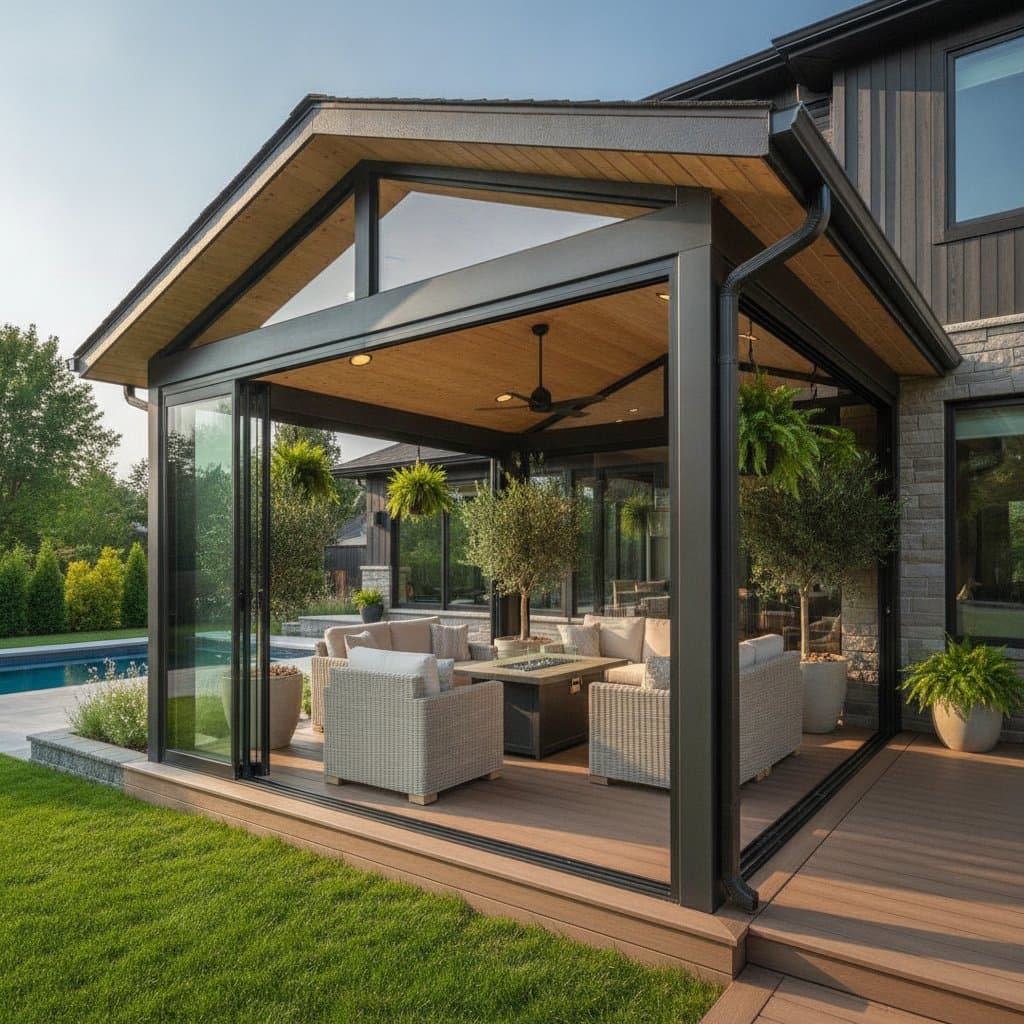
Inspect the deck for rot, loose posts, and uneven boards. Sketch the planned coverage area and roof style. Obtain two detailed estimates that list materials, labor, and permit fees separately. Confirm local code and HOA requirements for height, pitch, and setbacks. Schedule work during stable weather and set aside a 10 to 15 percent contingency. Composite decking paired with a metal or shingle roof minimizes maintenance, while screens or glass panels create a three season room. Either choice improves daily comfort and supports long term resale value.