Unlock 11% More Home Value in 2025 with Hidden Storage Walls
Average project cost: $6,800, delivering up to 11% increase in resale value across primary living areas.
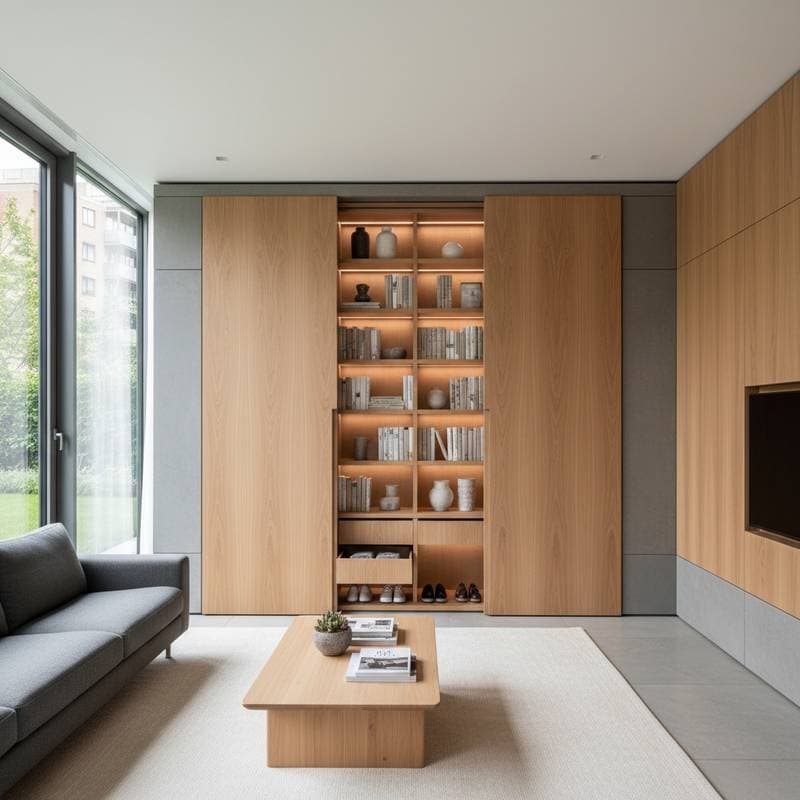
Hidden storage walls convert ordinary surfaces into multifunctional assets that enhance both aesthetics and utility. These installations seamlessly integrate storage solutions into room designs, creating an illusion of expanded space in compact or disorganized environments. Strategic planning ensures that investments translate into substantial returns through elevated buyer interest and enhanced daily functionality.
Key Cost Considerations
The expense of hidden storage walls fluctuates based on dimensions, surface treatments, and installation intricacies. Expect a foundational rate of $200 to $400 per linear foot for custom built-in units.
Material Selections
- Core panels made from medium-density fiberboard (MDF) or plywood provide robustness and consistency at $50 to $120 per sheet.
- Options like hardwood veneers or paint-grade surfaces increase costs by $1,000 to $2,000 for a standard living room application.
- Essential components such as concealed hinges, push-to-open latches, and soft-close mechanisms contribute an additional $300 to $600.
Labor Expenses
- Skilled custom carpentry typically charges $75 to $125 per hour.
- Ready-to-assemble modular units reduce rates to $40 to $60 per hour for on-site assembly.
Scale and Configuration
- Basic setups spanning 8 feet with simple door access total approximately $3,200.
- Elaborate full-height systems incorporating drawers, integrated lighting, and decorative trim may exceed $10,000.
Utility Integrations
- Incorporations of electrical outlets, illumination, or ventilation systems necessitate certified professionals like electricians or HVAC specialists.
- These additions range from $250 to $800, scaled to the extent of modifications.
Regulatory and Cleanup Aspects
- Interior storage enhancements generally bypass permitting requirements unless structural or electrical changes occur.
- Demolition waste disposal incurs $100 to $300 in fees.
Deciding Between DIY and Professional Installation
Ideal for DIY Projects
- Projects suit those equipped with tools including a table saw, miter saw, and cordless drill.
- Target non-structural walls devoid of embedded wiring.
- Opt for pre-engineered plans or kit-based assemblies.
- Maintain precision by ensuring panel alignments stay within 1/8 inch tolerances.
When to Engage Professionals
- Designs featuring embedded lighting or power elements demand expert handling.
- Configurations with doors serving dual purposes as access points require specialized craftsmanship.
- Irregular floor or wall surfaces complicate installations, often needing advanced trimming techniques.
- Systems integrating ventilation covers or seamless baseboard alignments benefit from pro oversight.
Practical Advice: Seasoned do-it-yourself enthusiasts frequently consult carpenters for finishing touches. Imperfect joints can compromise the invisible aesthetic. Allocate $400 to $600 for expert assistance in trimming and leveling.
Project Timeline and Cost-Saving Strategies
Production Schedules
- Bespoke cabinetry from specialty workshops demands 3 to 5 weeks for construction.
- Stock modular components arrive within 1 to 2 weeks of order.
- Factor in an extra 1 week for surface treatments like painting or staining to dry properly.
Environmental Planning
- Schedule work during periods of consistent weather to minimize material expansion or contraction.
- In areas with high humidity, acclimate panels inside for a minimum of 48 hours prior to fitting.
Efficiency Tactics
- Pair the installation with concurrent renovations such as repainting walls or replacing floors to consolidate labor efforts.
- Select paint-ready MDF over veneered options to cut expenses by 20 to 30 percent.
- Incorporate salvaged trim elements where feasible to further reduce outlays.
Financial Safeguard: Incorporate a 10 to 15 percent buffer in your budget to cover unforeseen needs like supplementary fittings or subsurface repairs.
Demonstrated Value in Practice
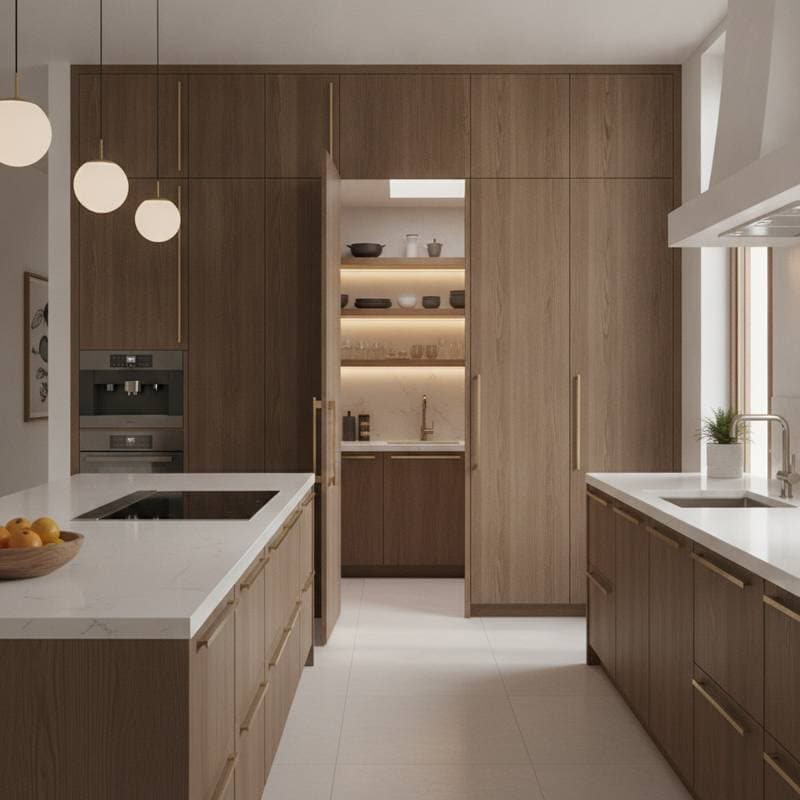
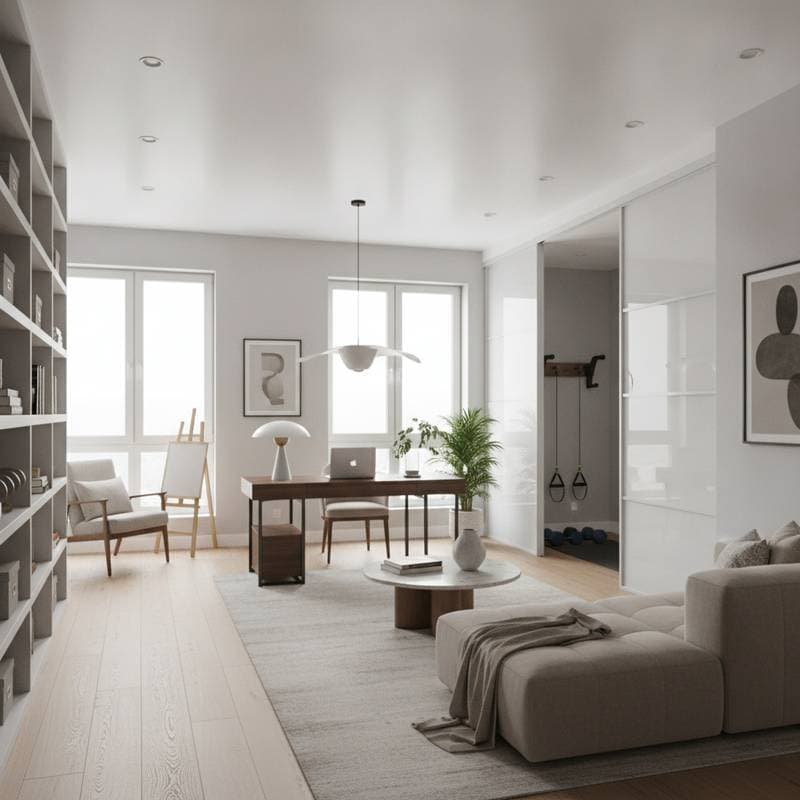
Hidden storage solutions have evolved into standard expectations among discerning homebuyers seeking optimized multipurpose areas. A well-executed installation that masks extensive storage or dedicated workspaces exemplifies efficient spatial utilization.
Quantifiable Benefits:
- A concealed cabinetry wall in the living area can elevate appraised worth by $8,000 to $10,000.
- Bedroom applications with integrated wardrobes enhance perceived roominess by up to 15 percent.
- In contemporary open layouts, these features also mitigate visual clutter and acoustic distractions.
For optimal marketability, employ timeless finishes that complement diverse decors. Prioritize subtle tones such as satin white, light oak, or soft gray over fleeting hues.
Steps to Implement Your Project
-
Conduct Precise Measurements and Planning.
Document wall dimensions including height to ceiling, positions of outlets, and baseboard placements. Capture multiple photographs for detailed reference. -
Establish a Realistic Budget.
Target $6,000 to $7,000 for a complete wall transformation in average residences. Include an extra $1,000 for any electrical or lighting integrations. -
Select Appropriate Materials.
- Paint-grade MDF delivers a clean, contemporary finish.
- Hardwood veneers or plywood offer enduring warmth and strength.
-
Solicit Multiple Estimates.
Obtain proposals from local custom fabricators and modular providers. Inquire about timelines and request physical finish samples for evaluation. -
Coordinate Installation Effectively.
Time the work alongside broader interior refreshes to minimize household disruption. -
Verify Compliance and Utilities.
For relocations of outlets or controls, secure approval from a qualified electrician prior to enclosing any areas. -
Design for Future Adaptability.
Incorporate adjustable shelves and detachable panels to accommodate evolving needs. Such provisions prolong usability and bolster long-term resale potential.
Hidden storage walls deliver dual advantages in style and practicality. When executed thoughtfully, they foster organized living spaces and tangible property appreciation. Initiate with a prominent wall to gain experience, then scale to additional areas as confidence builds.