Hidden Pantries: The 2026 Feature Accelerating Home Sales
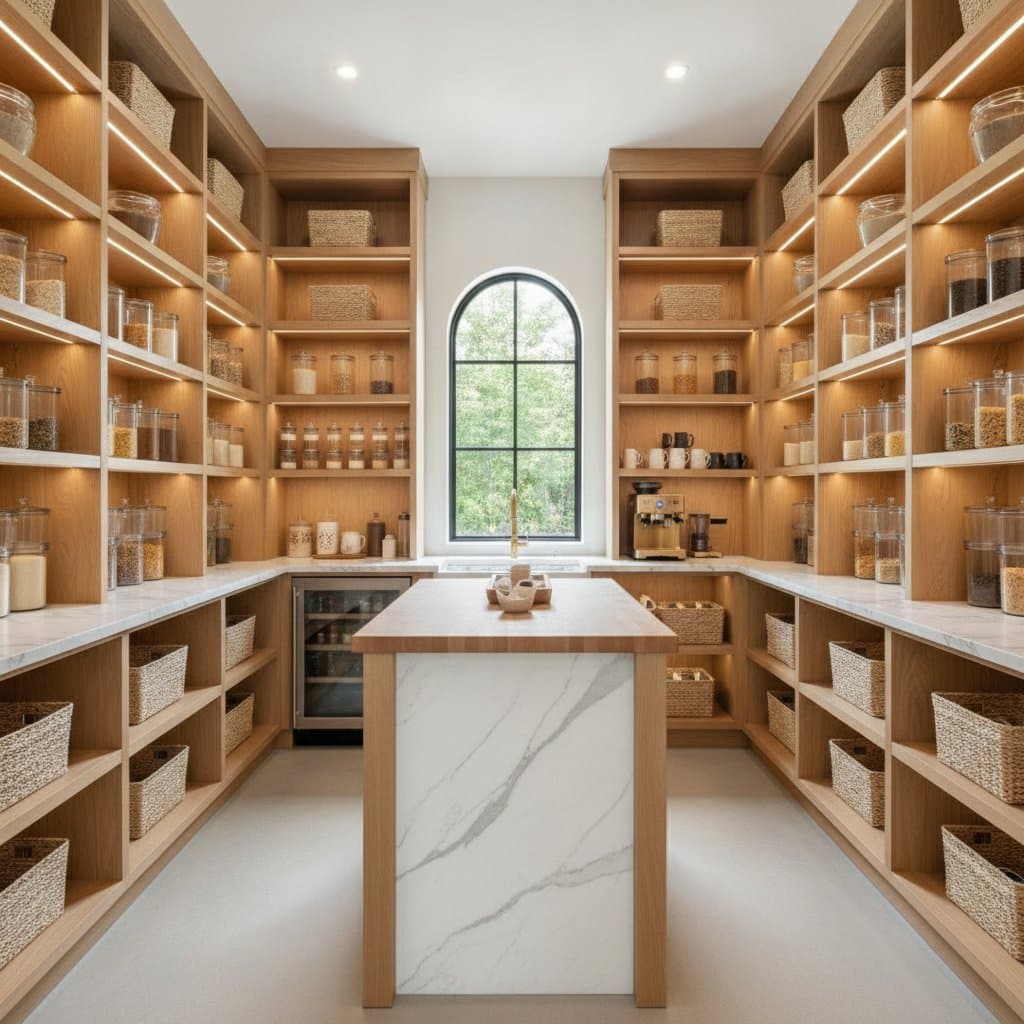
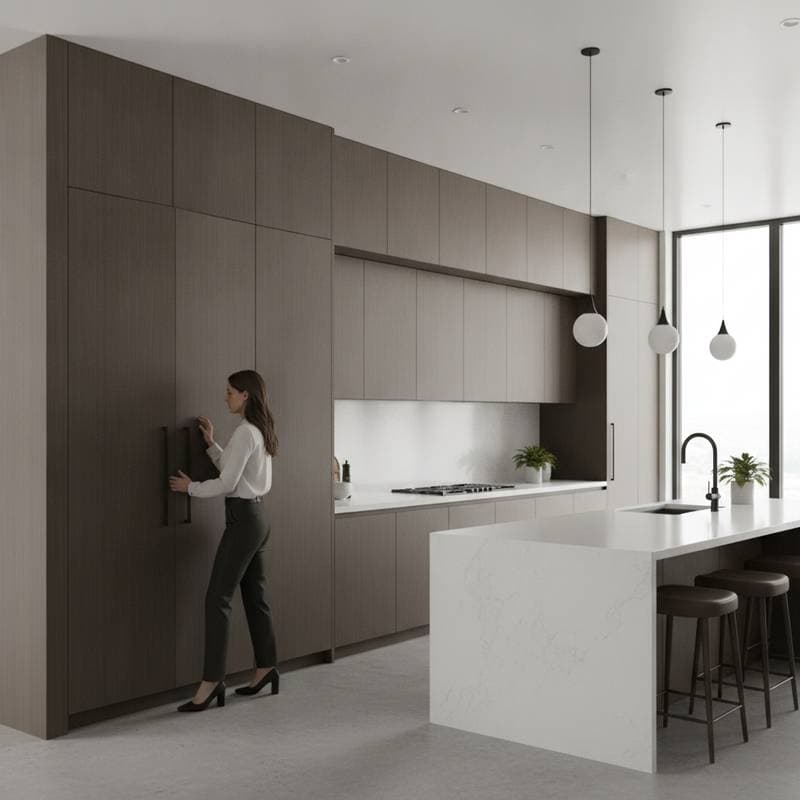
Hidden pantries represent a strategic enhancement for homeowners and real estate professionals alike. These concealed storage solutions eliminate visual clutter, optimize kitchen workflows, and introduce an element of understated luxury, all without expanding the home's footprint. In the evolving real estate landscape of 2026, prospective buyers prioritize functional designs that integrate seamlessly into daily life, making hidden pantries a compelling differentiator that can elevate a property's appeal.
Real estate data indicates that such features contribute to faster market times, often reducing days on market by 10 to 15 percent in competitive urban areas. The investment yields a typical return of 3 to 5 percent on resale value for midrange homes valued between $300,000 and $600,000. This boost stems from the perception of enhanced organization and sophistication, qualities that resonate with modern buyers seeking efficient, clutter-free living spaces.
Understanding the Value Proposition
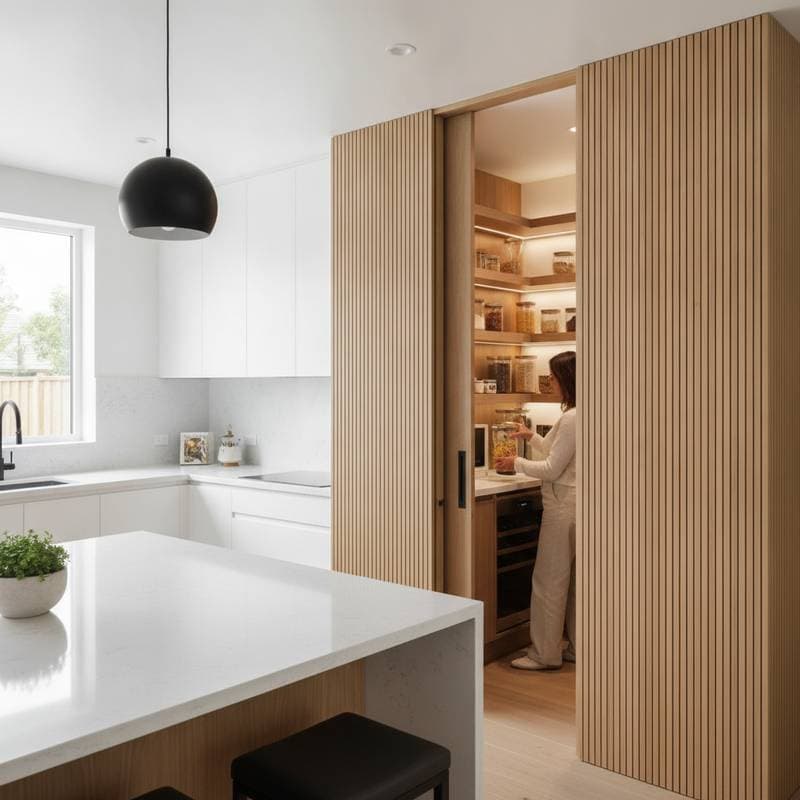
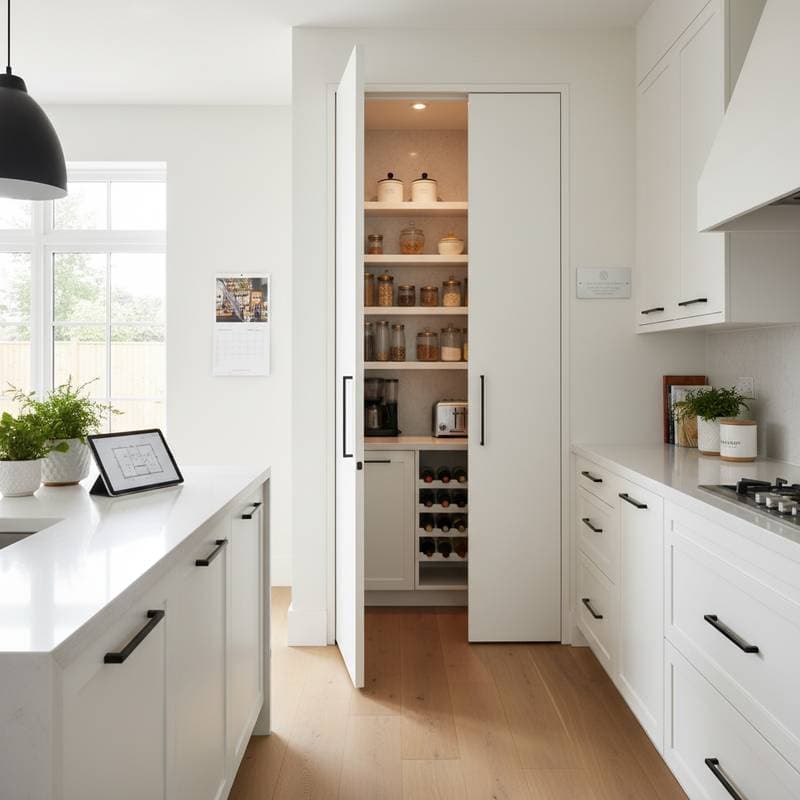
Beyond mere storage, hidden pantries transform underutilized spaces into versatile assets. Consider a former coat closet adjacent to the kitchen: converting it into a pantry conceals appliances, dry goods, and bulk items behind a disguised door, preserving counter space for meal preparation. This design choice not only streamlines routines but also aligns with sustainability trends by maximizing existing square footage.
Market surveys from leading design firms highlight that 68 percent of homebuyers in 2025 viewed integrated storage as a top priority, a figure expected to rise in 2026 amid rising material costs and space constraints. For sellers, this translates to broader appeal across demographics, from young families needing organization to empty-nesters desiring simplicity. The result is a home that feels larger and more luxurious, commanding premium offers without structural overhauls.
Detailed Cost Breakdown
Implementing a hidden pantry involves several components, with total expenses typically ranging from $4,000 to $12,000 for a 20- to 40-square-foot space. Factors such as location, materials, and complexity influence the final figure. Homeowners should allocate funds thoughtfully to achieve the desired return on investment, which often exceeds 70 percent within two years of installation.
- Framing and Drywall Installation: Creating a new wall or modifying an existing one costs $1,000 to $2,500. This step ensures structural integrity, particularly in load-bearing areas.
- Cabinetry and Shelving Systems: Custom options, including pull-out drawers and adjustable shelves, range from $3,000 to $6,000. Opting for prefabricated units reduces expenses by up to 50 percent while maintaining quality.
- Door Mechanisms: Concealed panels, pivot hinges, or sliding tracks vary from $800 to $3,000 based on wood species or metal finishes. Soft-close features add durability and quiet operation.
- Lighting and Ventilation Additions: Recessed LED lights and exhaust fans contribute $300 to $1,000, preventing moisture buildup and improving accessibility in dim corners.
- Surface Finishes and Flooring: Matching kitchen aesthetics with tile, laminate, or engineered wood incurs $5 to $10 per square foot, ensuring a cohesive look.
Professionals recommend budgeting an additional 10 to 15 percent for unforeseen adjustments, such as adapting to historic home constraints or integrating smart storage solutions like automated lighting.
Do-It-Yourself Approaches Versus Professional Installation
Homeowners with moderate skills can tackle simpler projects, saving 30 to 40 percent on labor costs. However, complexity determines feasibility, and safety remains paramount.
Pursue a DIY Project When:
- Existing walls and structures remain unchanged, minimizing demolition.
- Basic tools like a miter saw, stud finder, and level are available, along with proficiency in carpentry and painting.
- The design focuses on shelving additions without electrical or plumbing modifications.
Engage a Professional For:
- Structural alterations, such as adding walls or relocating utilities, which demand expertise.
- Precision elements like hidden doors requiring exact alignment to avoid operational issues.
- Compliance with local building codes, especially for ventilation, electrical outlets, and fire-rated materials.
Hiring certified contractors guarantees adherence to regulations, often including permits for projects exceeding basic modifications. In regions with stringent energy standards, professionals can incorporate efficient features that qualify for rebates, further enhancing ROI.
Ongoing Maintenance and Longevity
Hidden pantries demand minimal routine care, focusing on preservation to extend their lifespan beyond 15 years. Regular cleaning with mild solutions keeps surfaces pristine, while annual hinge lubrication prevents wear.
Standard warranties cover cabinetry for five years and hardware for up to 20 years under normal use. Monitor for indicators of needed attention:
- Noisy hinges or uneven door panels signaling misalignment.
- Damp smells from inadequate airflow, addressable with filter replacements.
- Intermittent lighting due to wiring vibrations, best resolved by licensed electricians.
Prompt interventions, such as tightening screws or resealing edges, avert costly repairs. Integrating durable, low-maintenance materials from the outset minimizes future disruptions and sustains the feature's value-adding potential.
Design Strategies for Maximum Impact
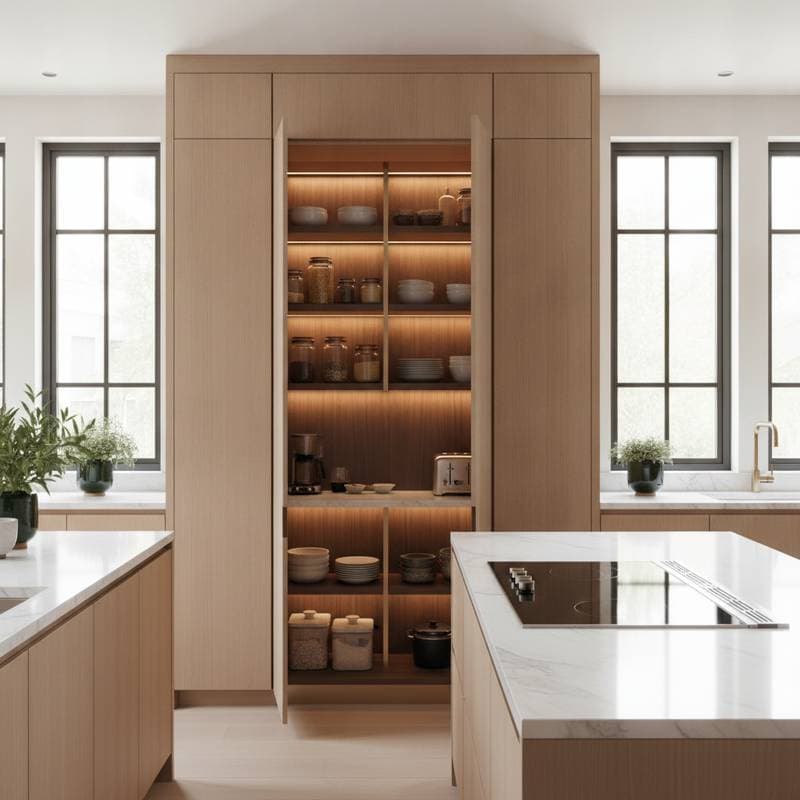
Effective hidden pantry designs balance functionality with aesthetics. Prioritize vertical space utilization through tiered shelving for canned goods and lazy Susans for spices. Incorporate zones: one for dry storage, another for small appliances, fostering efficiency.
Material selections matter; moisture-resistant plywood withstands humidity, while matte finishes blend seamlessly with cabinetry. For luxury appeal, add touchless doors or integrated charging stations, appealing to tech-savvy buyers. Consult trend reports to align with 2026 preferences, such as biophilic elements like wood grains evoking natural calm.
Implementing Your Hidden Pantry Plan
Transition from concept to completion with structured steps. Begin by evaluating your kitchen's layout to identify viable spaces, such as alcoves or adjacent rooms.
- Assess Available Space: Measure potential areas, ensuring at least 24 inches of depth for usability.
- Develop a Detailed Layout: Sketch configurations, specifying storage needs like bulk food zones or prep surfaces.
- Establish a Realistic Budget: Factor in all elements, reserving 15 percent for contingencies like material price fluctuations.
- Seek Expert Input: Obtain at least one professional quote to validate feasibility and code compliance, even for DIY efforts.
- Procure Supplies in Advance: Source specialized items like concealed hinges and ventilation kits early to sidestep supply delays.
Realizing Everyday and Long-Term Benefits
A thoughtfully executed hidden pantry delivers immediate organizational relief, simplifying meal prep and reducing daily stress. Over time, it positions your home advantageously in the market, attracting offers that reflect its enhanced value. Homeowners report heightened satisfaction from the seamless integration, while sellers benefit from the feature's role in creating memorable first impressions that drive competitive bidding.